Daegu District Court, Plaintiff's Loss Ruling
A court ruling has determined that it is lawful to deny support funds to delivery workers who submitted paper tax invoices instead of credit card sales records when applying for COVID-19 quarantine support funds.
The Administrative Division 1 of Daegu District Court (Presiding Judge Chae Jeong-seon) ruled against Mr. A in a cancellation lawsuit he filed against the Small Enterprise and Market Service last month on the 20th (2023GuHap21398).
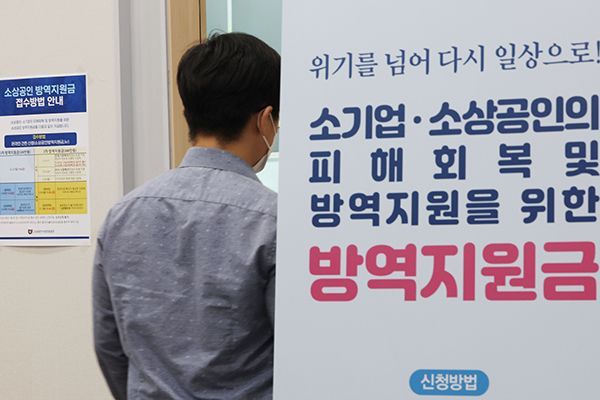
The Ministry of SMEs and Startups has provided quarantine support funds of 1 million KRW in the first round and 3 million KRW in the second round per business to help small business owners and small enterprises recover from damages and support quarantine measures due to the strengthened COVID-19 restrictions since the end of 2021. The eligibility criteria for this support required that the sales amount correspond to that of a small enterprise (including small business owners) and that there was a decrease or expected decrease in sales.
Mr. A, who works in the delivery industry, applied for the first and second rounds of quarantine support funds from the Small Enterprise and Market Service in February 2022. However, the Service decided not to provide the support funds to Mr. A, citing failure to meet the sales decrease requirement. Mr. A filed an objection, which was dismissed, and after being rejected by the Central Administrative Appeals Commission, he filed a lawsuit.
In court, Mr. A argued, "As a self-employed delivery worker subcontracted by an intermediate distribution center contracted with a large corporation, I do not have credit card sales or cash receipt issuance amounts, which are part of the tax infrastructure data, but according to paper tax invoices and value-added tax standard certificates, it is confirmed that sales in 2021 decreased compared to 2019 and 2020."
The court did not accept Mr. A's claim. The court stated, "The Service has been granted broad discretion by the Ministry of SMEs and Startups to carry out revenue administrative dispositions, so unless there are special circumstances that objectively deem the Service's interpretation of the support fund criteria presented in each announcement as irrational or invalid, it should be respected as much as possible. As Mr. A himself stated, as a self-employed delivery worker, the commission received from the intermediate distribution center is his only sales amount, and there are no other documents such as cash receipts or electronic tax invoices that can verify monthly sales."
Furthermore, the court ruled, "The Service made the non-payment decision because there was no data to verify whether Mr. A's sales decreased compared to the previous year. The payment criteria are based on supporting documents that can relatively objectively verify sales decrease by period to prevent cases of fraudulent or erroneous payments in advance, and thus the criteria are deemed reasonable."
Han Su-hyun, Legal Times Reporter
※This article is based on content supplied by Law Times.
© The Asia Business Daily(www.asiae.co.kr). All rights reserved.
![Clutching a Stolen Dior Bag, Saying "I Hate Being Poor but Real"... The Grotesque Con of a "Human Knockoff" [Slate]](https://cwcontent.asiae.co.kr/asiaresize/183/2026021902243444107_1771435474.jpg)















