Billions of Won for Panda Protection Fund and Maintenance
Investment in Research and Facilities to Protect Rare Species
How much did the 'meal expenses' of the Fu Bao family, which caused a domestic syndrome, cost? The cost of protecting and raising the giant panda, a rare animal classified as 'endangered,' is considerable. It is estimated that the cost of bamboo, directly supplied from Gyeongnam, alone amounts to hundreds of millions of won.
All pandas residing in Korea were 'rented' from China. Each zoo must also pay a conservation fund to China as a fee for renting pandas. Fu Bao's parents, Ai Bao and Le Bao, pay an annual conservation fund of 1 million USD (about 1.35 billion KRW), and the one-time conservation fund for Fu Bao, born to this couple, reached 500,000 USD (about 670 million KRW).
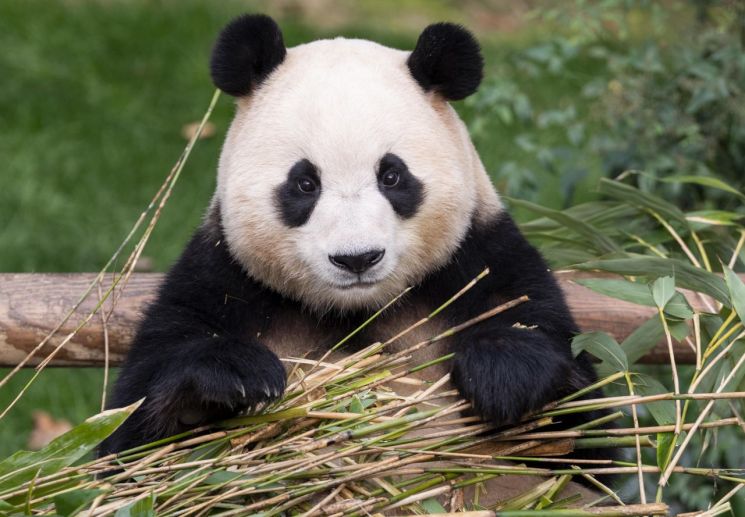
The giant panda is classified as 'endangered' on the International Union for Conservation of Nature (IUCN) Red List. Only a handful of individuals are active worldwide. Accordingly, the costs for raising, breeding, and health management of pandas are inevitably high. The conservation fund paid by Samsung C&T, the parent company of Everland, to China is used entirely for panda breeding and research, as well as the operation of panda conservation bases within China.
Even excluding the conservation fund, pandas are animals with high maintenance costs. In particular, the bamboo, which is the staple food for the Fu Bao family, was supplied twice a week by the Hadong Forest Cooperative in Gyeongnam, with an estimated annual cost of about 200 million KRW.
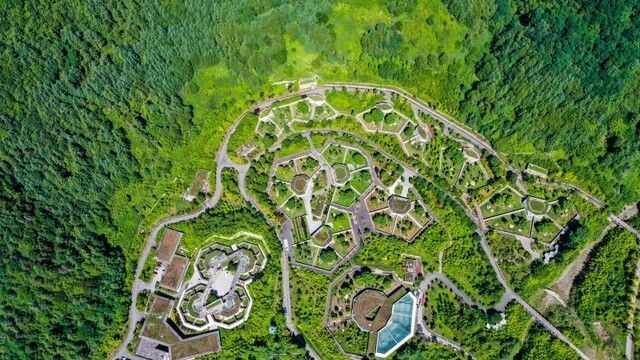 The enclosures where giant pandas living in China mate. Conservation funds are invested in the operation and expansion of such facilities.
 [Image source=Facebook]
However, despite fixed costs amounting to tens of billions of won, Fu Bao appears to have brought considerable profits to Everland. According to Everland data, from January 4, 2021, when Fu Bao was first revealed to the public, until last month, the cumulative number of visitors to Panda World reached 5.5 million, exceeding 10% of South Korea's population. The Everland park admission fee rose from 56,000 KRW in 2021 to 62,000 KRW last year.
Additional revenue was also generated through so-called 'Fu Bao goods.' Everland released over 400 products featuring Fu Bao, all of which continued to sell out. The sales volume reached approximately 3.3 million units. In November last year, the Fu Bao pop-up store operated for two weeks at 'The Hyundai Seoul' in Yeouido, Seoul, achieved sales of 1 billion KRW.
Riding the Fu Bao craze, Samsung C&T's resort division, to which Everland belongs, also succeeded in improving its performance. The resort division posted an operating loss of 32.2 billion KRW in 2021 but turned to an operating profit of 66.1 billion KRW last year.
© The Asia Business Daily(www.asiae.co.kr). All rights reserved.
![Clutching a Stolen Dior Bag, Saying "I Hate Being Poor but Real"... The Grotesque Con of a "Human Knockoff" [Slate]](https://cwcontent.asiae.co.kr/asiaresize/183/2026021902243444107_1771435474.jpg)
















