March Vulnerable Elderly Safety Management Solution (IoT) Prevents Solitary Elderly Deaths
Abnormal Signal Detected from IoT Device → Immediate Response by Staff with On-site Visit and Notification to Guardian
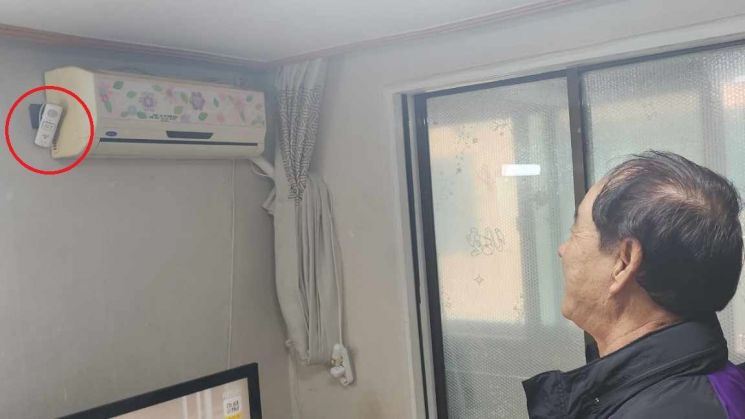
Songpa-gu (Mayor Seo Gang-seok) announced that through the ‘Vulnerable Elderly Safety Management Solution’ used to care for high-risk elderly individuals prone to solitary death in the area, they timely detected signs of solitary death of an elderly person at the end of March and guided the family accordingly.
At around 9 a.m. on March 16, an IoT device installed in the home of an 86-year-old single elderly person in Ogeum-dong detected a crisis sign indicating no activity and sent a danger signal.
The dedicated social worker and life support worker, who had checked on the elderly person’s well-being by delivering sponsored goods just the day before, confirmed this signal and urgently called the elderly person but could not reach them.
Sensing the possibility of solitary death, the life support worker immediately headed to the elderly person’s home and simultaneously informed the guardian, who was traveling far away, through a pre-secured contact number.
Upon arrival, knocking on the locked door yielded no response. After promptly reporting to 119, the elderly person was handed over to the guardian who arrived simultaneously with the ambulance. This allowed the family to be by the elderly person’s side during their final moments.
The life support worker said, “My heart races and aches over the sudden passing of the elderly person. With a sense of mission to prevent lonely deaths of the elderly, I will continue to care wholeheartedly.”
As such, the ‘Vulnerable Elderly Safety Management Solution (IoT)’ is part of the senior customized care service promoted by the district, distributing IoT devices to each household to timely detect crisis signs of elderly individuals who have difficulty moving or live alone. At that time, the elderly person was classified as a priority care group among 1,700 service recipients and was supported with the device.
The IoT device collects six types of data such as temperature and movement through infrared sensors to understand living conditions and special circumstances. In particular, if there is no movement for a certain period, it sends abnormal signals such as caution (8?12 hours), alarm (12?24 hours), and danger (over 24 hours). In this case, the motion detection function was crucial in preventing solitary death.
Abnormal signals sent by the device are checked by the dedicated social worker and life support worker for prompt response. Through a mobile app linked to devices installed in each home, the elderly person’s safety is monitored more than three times a day. If an abnormal signal occurs, they attempt to contact the elderly person, and if unreachable, they immediately visit the site to prevent lonely deaths.
A district official said, “Starting with 84 devices in 2017, we have distributed a total of 538 devices in the area up to this year,” adding, “This year, we plan to expand services by replacing existing devices with advanced new models that have lower malfunction rates and reducing the number of care recipients per life support worker.”
Seo Gang-seok, Mayor of Songpa-gu, stated, “This case is a good example of dedicated administration achieved not only through advanced technology but also through the efforts of frontline personnel who responded promptly,” and added, “We will continue to strive to create a warm and inclusive city without lonely deaths by thoroughly caring for even the marginalized.”
© The Asia Business Daily(www.asiae.co.kr). All rights reserved.
![Clutching a Stolen Dior Bag, Saying "I Hate Being Poor but Real"... The Grotesque Con of a "Human Knockoff" [Slate]](https://cwcontent.asiae.co.kr/asiaresize/183/2026021902243444107_1771435474.jpg)















