"Expansion of Government Medical School Quotas is Populism" Shared by Professor Seong Wonyong
"Moon Jae-in - former lawyer, Yoon Seok-yeol - former prosecutor, Lee Jae-myung - former lawyer, Han Dong-hoon - former prosecutor... I sincerely apologize for dividing people like this. However, these days, it is hard to shake the thought that the country, which the science and engineering (STEM) citizens have revived, is being ruined by leaders from the liberal arts (humanities) side."
Former President of the Korean Medical Association, Noh Hwan-gyu, continued his criticism of the government’s policy to increase medical school admissions.
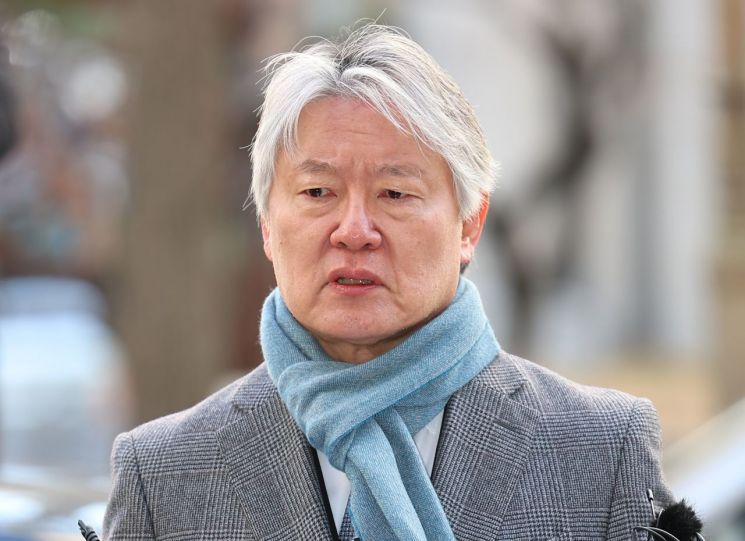
On the 6th, Noh shared on his Facebook a post titled "More Important Than Increasing Doctors" by Sung Won-yong, Professor Emeritus of Electrical and Computer Engineering at Seoul National University. He said, "Since the medical corruption incident on February 6, I would like to introduce this excellent article that I believe summarizes the core issues."
He criticized the government’s plan to increase medical school admissions and directly mentioned former President Moon Jae-in (former lawyer), President Yoon Seok-yeol (former prosecutor), Lee Jae-myung, leader of the Democratic Party of Korea (former lawyer), and Han Dong-hoon, Emergency Response Committee Chairman of the People Power Party (former prosecutor).
A few hours later, former President Noh also stated, "Our citizens receive 2.5 times more hospital treatments and are hospitalized 2.4 times longer than citizens of other OECD countries, despite paying less."
He continued, "This is because the government-mandated medical expenses are only one-third of the OECD average, so doctors work three times harder. This has been the secret behind the high cost-effectiveness of medical care that Korean citizens have enjoyed, which is impossible in other countries."
Thanks to this, "the life expectancy of our citizens has greatly increased, and we boast various outstanding medical performance indicators. While K-POP is now shining globally, K-MEDI, which is cheap, high-quality, and allows access to doctors anytime and anywhere, has long been ranked as the best in the world," he emphasized.
"Our citizens easily visit hospitals"
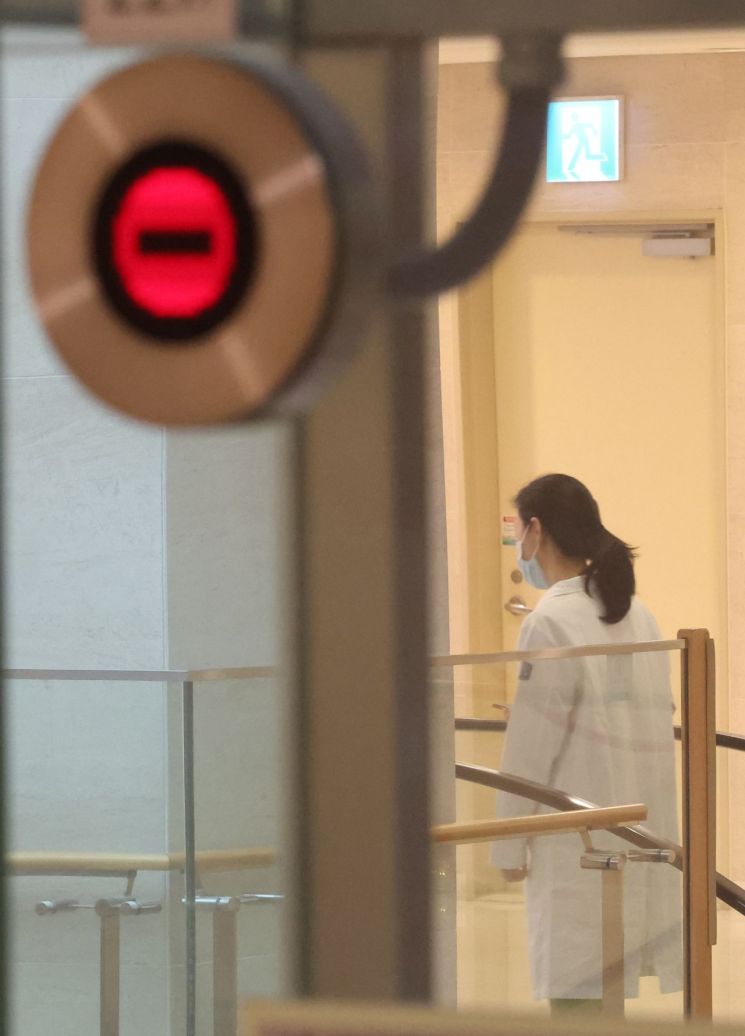 On the afternoon of the 29th, as the collective action of residents continues, a medical official is moving inside a large hospital in downtown Seoul.
 [Photo by YTN News]
Earlier, the article by Professor Sung, cited by former President Noh, included the content that "our citizens visit hospitals much more frequently than those in any other advanced country," and "although the number of doctors may seem small, each doctor treats many patients, which makes hospital visits easy."
Professor Sung said, "This efficiency is naturally an advantage of the Korean medical system, not a disadvantage," adding, "About 0.4% of high school graduates entered medical school 10 years ago, but now it is about 0.6%, and it is expected to reach 1.2% in 20 years. Nowadays, medical school dropouts after admission at any university are disrupting academic operations." He also explained, "Needless to say, expanding medical school quotas means a depletion of talent in other fields."
He continued, "In some medical fields, a reduction should rather be considered," stating, "In my observation, dentists are already in an oversupply, and many Korean medicine doctors are expanding their business through manual therapy." He criticized, "The government’s expansion of medical school quotas, which appeals to public opinion instead of reforming the medical system, is populism that turns a blind eye to future crises."
He concluded, "In the industrial sector, areas with low added value should exit orderly, and manpower should be concentrated in promising fields. Will we deepen the weakening of national competitiveness through populism, or reduce unnecessary manpower waste and focus on enhancing industrial competitiveness to leave a strong and debt-free country?"
© The Asia Business Daily(www.asiae.co.kr). All rights reserved.
![Clutching a Stolen Dior Bag, Saying "I Hate Being Poor but Real"... The Grotesque Con of a "Human Knockoff" [Slate]](https://cwcontent.asiae.co.kr/asiaresize/183/2026021902243444107_1771435474.jpg)

















