Seoul Apartment Sale and Jeonse Prices Remain Calm Before General Election
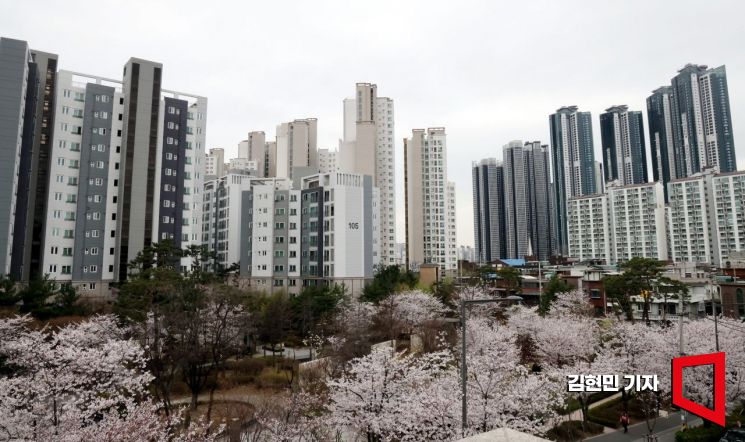
The Seoul jeonse (lease) prices, which had been rising for five consecutive weeks, have now halted their movement. According to Real Estate R114 on the 6th, the real estate market in the first week of April remained generally quiet ahead of the general elections, with demand inquiries mainly concentrated in mid-to-low price dense areas, resulting in varied fluctuations in jeonse prices.
In newly built large apartment complexes within 10 years of completion, such as Gaepo-dong in Gangnam-gu, Garak-dong in Songpa-gu, Sinjeong-dong in Yangcheon-gu, and Gireum-dong in Seongbuk-gu, jeonse prices were adjusted downward. Conversely, small-to-medium-sized apartments in the southwestern and northeastern areas, including Naebalsan-dong in Gangseo-gu, Bongcheon-dong in Gwanak-gu, and Sanggye-dong in Nowon-gu, rose by approximately 5 to 10 million KRW. A Real Estate R114 official stated, "Demand is concentrated in preferred areas and desired sizes, and mixed price trends are expected to continue for the time being."
The Seoul apartment sale prices remained flat (0.00%) for the third consecutive week. There were no significant price changes in both reconstruction and general apartments, and new towns also recorded a flat rate (0.00%). Gyeonggi and Incheon have shown limited movement for 11 consecutive weeks. In Seoul, prices mainly fell in large complexes with over 1,000 households, slightly increasing the number of areas with price declines compared to the previous week.
By individual areas, Yangcheon (-0.03%), Mapo (-0.02%), Seongbuk (-0.02%), Gangnam (-0.01%), Guro (-0.01%), Nowon (-0.01%), and Yeongdeungpo (-0.01%) declined. Dongjak (0.03%) and Dongdaemun (0.01%) rose. Among new town areas, Sanbon fell by 0.03%, marking a decline for three consecutive weeks. Ilsan also dropped by 0.01%, while Gwanggyo was the only area to rise by 0.04%.
In Gyeonggi and Incheon, individual areas such as Icheon (-0.05%), Incheon (-0.02%), Bucheon (-0.02%), Anyang (-0.02%), Gwangmyeong (-0.01%), Guri (-0.01%), and Pyeongtaek (-0.01%) were adjusted downward. On the other hand, Uijeongbu (0.01%) and Ansan (0.01%) saw increases.
The jeonse market saw steady inquiries mainly for small-to-medium-sized units, with Seoul and Gyeonggi-Incheon recording flat rates (0.00%) and new towns rising by 0.01%.
In Seoul, individual areas such as Gangseo (0.04%), Seongbuk (0.03%), Dongjak (0.03%), Dobong (0.03%), Gwangjin (0.03%), Gwanak (0.03%), Seongdong (0.02%), and Nowon (0.02%) increased. Conversely, Songpa (-0.03%), Gangnam (-0.02%), and Mapo (-0.01%) declined. In new towns, Gwanggyo (0.04%) and Ilsan (0.02%) rose. All other areas remained flat (0.00%).
In Gyeonggi and Incheon, individual areas such as Icheon (0.06%), Suwon (0.05%), Hwaseong (0.04%), and Ansan (0.03%) rose, mainly in the southern Gyeonggi region. Conversely, Incheon (-0.02%), Bucheon (-0.01%), and Uiwang (-0.01%) declined.
A Real Estate R114 official explained, "As the 22nd general election approaches, various real estate pledges reflecting regional voter sentiment, such as transportation network plans, utilization of idle land, and measures against jeonse fraud, have been pouring out. Especially in the metropolitan area, administrative district reorganization remains a hot issue, including the Seoul Mega City, the division of the Northern Gyeonggi Special Self-Governing Province, and local government district splits."
However, the official added, "Since policy volatility is high depending on the election results, the current impact of these issues on housing prices is limited. Ultimately, the movement of prospective buyers will be determined by the policy direction and institutional visibility of the newly formed National Assembly after the election, so it is necessary to carefully monitor transaction volume changes and price trends after the election."
© The Asia Business Daily(www.asiae.co.kr). All rights reserved.
![Clutching a Stolen Dior Bag, Saying "I Hate Being Poor but Real"... The Grotesque Con of a "Human Knockoff" [Slate]](https://cwcontent.asiae.co.kr/asiaresize/183/2026021902243444107_1771435474.jpg)















