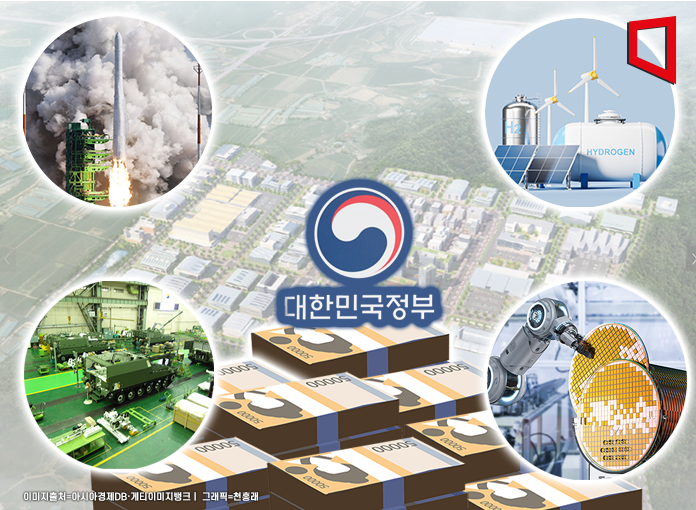
The government has decided to invest 500 billion KRW over five years in five additionally selected specialized complexes for materials, parts, and equipment (SoBuJang) to develop them into key supply chain hubs. The core strategic technologies for SoBuJang, which previously covered 150 items across seven fields, will be expanded to 200 items with the addition of three new fields: space and aviation, defense industry, and hydrogen.
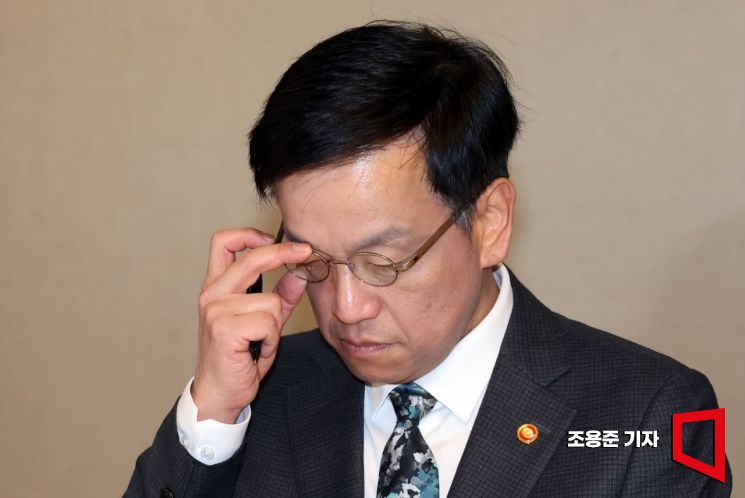
On the 3rd, the Ministry of Economy and Finance announced that it held the 'Materials, Parts, and Equipment Competitiveness Enhancement Committee' at the Government Complex Seoul, chaired by Deputy Prime Minister and Minister of Economy and Finance Choi Sang-mok, where it approved the 'Customized Support Plan for SoBuJang Specialized Complexes' and other agenda items.
Deputy Prime Minister Choi stated, "The competition in advanced industries among major countries is no longer a battle between individual companies but has shifted to competition between clusters and industrial ecosystems. To lead in this industrial ecosystem competition, securing the competitiveness of the SoBuJang industry and establishing a stable supply chain is essential."
First, the government will invest a total of 506.7 billion KRW over five years from this year through 2028 in five SoBuJang specialized complexes additionally designated last July: Osong in Chungbuk (bio), Gwangju (autonomous vehicle parts), Daegu (electric vehicle motors), Busan (power semiconductors), and Anseong in Gyeonggi (semiconductor equipment).
The Chungbuk Osong bio specialized complex will support joint research and development (R&D) among companies in the cultivation and purification sectors. The Daegu electric vehicle motor specialized complex will establish a 'Motor Performance Certification Support Center,' while the Gwangju autonomous driving specialized complex will newly designate a pilot autonomous driving zone within the complex to support the accumulation of autonomous driving technology track records.
Additionally, the core strategic technologies for SoBuJang have been significantly expanded. Originally, there were 150 core strategic technologies across seven fields such as semiconductors, displays, and bio, but now 50 more have been added, including 20 in space and aviation, 2 in defense, and 18 in hydrogen, bringing the total to 200.
In the space and aviation field, technologies include space launch vehicles, aircraft lightweighting, and autonomous components for unmanned aerial vehicles. In the defense field, multifunctional semiconductor packaging and AI semiconductor technologies for automotive electronics are included.
Previously, in February 2021, the government designated five SoBuJang specialized complexes in Yongin, Gyeonggi (semiconductors), Cheongju, Chungbuk (secondary batteries), Cheonan, Chungnam (displays), Jeonju, Jeonbuk (carbon materials), and Changwon, Gyeongnam (precision machinery) as the first batch, and added five more last July.
Furthermore, at the meeting, the government selected seven additional 'SoBuJang cooperation models.' These are projects where the government supports specific product development collaborations between SoBuJang supply companies and their customers. A representative success case is the localization of rare earth permanent magnet production technology used in motors, the heart of electric vehicles, through the SoBuJang cooperation model project.
The government designated seven projects including vehicle communication and security system semiconductors, energy storage systems (ESS) based on used batteries, and biodegradable synthetic fibers, and will support product development related to these with 100 billion KRW in the future.
© The Asia Business Daily(www.asiae.co.kr). All rights reserved.
![Clutching a Stolen Dior Bag, Saying "I Hate Being Poor but Real"... The Grotesque Con of a "Human Knockoff" [Slate]](https://cwcontent.asiae.co.kr/asiaresize/183/2026021902243444107_1771435474.jpg)

















