Mayor Kang Ki-jung Declares 'Openness, Transparency, Speed' 3 Principles
First Live Broadcast of Urban Planning Committee and Civic Group Discussions
Encouraging Hesitant Officials to Achieve Public and Civic Benefits
Gwangju Metropolitan City (Mayor Kang Gi-jung) is being recognized for setting a new milestone in urban planning while carrying out the Central Park District 1 Private Park Special Project.
Following Mayor Kang Gi-jung's three major principles of ‘openness, transparency, and promptness,’ the entire development administration process was made public, enhancing the interests of citizens and the public, and resolving social conflicts.
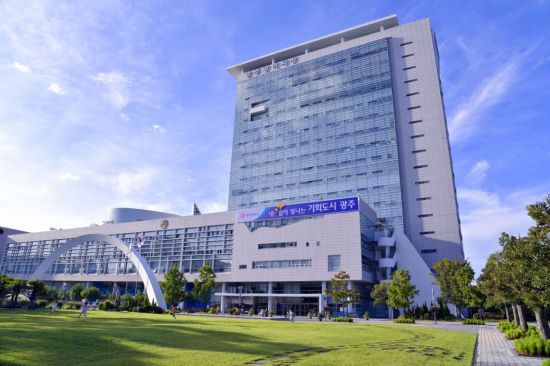
According to Gwangju City on the 2nd, the city promoted the private park special project to protect urban parks. The nine urban parks in question had an average of 81.5% private land ownership. If these lands were not purchased, the park land would be deregulated under the Park Sunset Policy, allowing landowners to develop the land independently. This means that parks could disappear and various houses, pensions, and restaurants could be indiscriminately built there.
To prevent this, the city is applying the Special Act to develop 9.6% of the total park area, while using the development profits to purchase private land and maintain it as a park.
One of these projects is the Central Park District 1 project. However, Central Park District 1 faced serious social conflicts due to frequent changes in the apartment construction sales method (pre-sale → post-sale → pre-sale) and conflicts among private developers. Gwangju City established the three principles of ‘openness, transparency, and promptness’ and sought social consensus to resolve the confusion.
◆ Declaration of the Three Major Principles: ‘Openness, Transparency, and Promptness’
On February 27, Mayor Kang met with reporters and firmly stated, “If the sales method is to be changed back to ‘pre-sale’ based on the 2021 agreement, the benefits gained from the previous agreement changes must be fully returned.” The benefits mentioned by Mayor Kang include ▲402 apartment units due to increased floor area ratio ▲2.5 billion KRW reduction in public contribution fees ▲financial cost savings, among others.
Mayor Kang also presented the three major principles of ‘openness, transparency, and promptness’ for promoting the Central Park District 1 project.
Accordingly, Gwangju City immediately published summaries of the ‘Post-sale Project Feasibility Verification Report’ and the ‘Pre-sale Project Feasibility Verification Report’ on the city’s official website. On March 8, the city disclosed the entire ‘Total Project Cost Calculation Statement,’ and on March 18, it released the ‘2021 Amendment Agreement’ signed with Bitgoeul Central Park Development (SPC).
Additionally, at the request of Hanyang, one of the shareholders of the private developer (Bitgoeul Central Park Development), a public debate was held on March 6, and an expert public verification meeting was conducted on March 18 for more professional scrutiny.
The principles of openness and transparency shone through with the online live broadcasts of the Gwangju City Urban Planning Committee meetings on March 21 and 28. The live streaming of the Urban Planning Committee was the first of its kind nationwide, marking a new milestone in development administration that had previously been conducted under a ‘closed-door principle.’ In response to increasing demands from the city council and civil society for public access to the Urban Planning Committee, Gwangju City revised ordinances after several consultations to allow public access. This live broadcast was evaluated as a ‘model of transparent administration,’ enhancing administrative trust.
Mayor Kang notably demonstrated his role as a problem solver by resolving conflicts over the Central Park District 1 project and maximizing public interest through a final debate with civic groups at the citizen public hearing held on the 26th of last month.
◆ Securing an Additional 137.1 Billion KRW in Public Contribution Fees and Lowering Apartment Prices
Gwangju City exceeded its negotiation target of 120.6 billion KRW for changing the sales method (post-sale → pre-sale) (▲95.6 billion KRW from increased floor area ratio ▲25 billion KRW from public contribution fee reductions ▲financial cost savings to be settled later), finalizing the public contribution fee at 137.1 billion KRW. This was secured through cost reductions by private developers, including a 10% reduction in their profits, reduced contractor profits, and cuts in promotional and contingency expenses.
Gwangju City also lowered the apartment sale price from 24.25 million KRW per 3.3㎡, as suggested in the feasibility verification, to 23.95 million KRW per 3.3㎡.
Public officials worked hard to minimize citizen confusion and maximize public interest by adhering to the principles of openness, transparency, and promptness. Analysts attribute the securing of 137.1 billion KRW in public contribution fees to Mayor Kang’s strong will and negotiation skills emphasizing ‘maximizing citizen benefits,’ combined with his conflict resolution ability demonstrated through uncompromising debates.
Mayor Kang Gi-jung of Gwangju said, “Central Park District 1 marks the end of the seven-year-long controversy over apartment construction and must now transition to a new phase. Along with Pungam Lake, the Children’s Imagination Playground, and the opening of Urban Railway Line 2, we must pool wisdom and strength to complete a city forest that protects Gwangju and a premium park enjoyed by all.”
© The Asia Business Daily(www.asiae.co.kr). All rights reserved.
![Clutching a Stolen Dior Bag, Saying "I Hate Being Poor but Real"... The Grotesque Con of a "Human Knockoff" [Slate]](https://cwcontent.asiae.co.kr/asiaresize/183/2026021902243444107_1771435474.jpg)















