Korea Consumer Agency Investigates 40 Products
'Short-chain Chlorinated Paraffins' Found in 10
5 Products Exceed EU Standards
It has been found that short-chain chlorinated paraffins, a type of persistent pollutant, were detected in some synthetic resin products distributed on the market, including those for children.
The Korea Consumer Agency announced on the 2nd that after investigating 40 synthetic resin products sold on the market, such as kitchen mats, gym balls, slippers, and children's raincoats, these results were obtained. Specifically, short-chain chlorinated paraffins were detected in 10 products, and among them, 5 products (1 kitchen mat, 2 gym balls, 2 slippers) exceeded the EU standards, ranging from a minimum of 4,120 mg/kg to a maximum of 163,000 mg/kg.
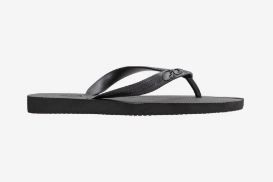 Short-chain chlorinated paraffins exceeding EU standards were detected in joomang mats and slippers.
The products in which short-chain chlorinated paraffins exceeding the EU standards were detected include ▲'Northern Europe PVC kitchen mat' (4,120 mg/kg) ▲'Premium gym ball' (7,610 mg/kg) ▲'Grand premium gym ball' (5,960 mg/kg) ▲'Kkolekkolle New Wave Black slippers' (20,000 mg/kg) ▲'VIENTO slippers' (163,000 mg/kg).

Short-chain chlorinated paraffins are used as additives to make synthetic resin products such as polyvinyl chloride (PVC) and polyurethane (PU) flexible or flame retardant. However, they are one of the persistent organic pollutants that do not easily decompose in nature and accumulate in animals and plants, potentially affecting the ecosystem, and their use is regulated through international agreements.
In the European Union (EU), to reduce persistent organic pollutants, the content of short-chain chlorinated paraffins, which may exist as impurities in finished products, is limited to 1,500 mg/kg, and finished products exceeding this limit are subject to recalls and other measures. South Korea also prohibits the use of these substances except when present in trace amounts as unintentional impurities or by-products during manufacturing processes, under laws such as the Persistent Organic Pollutants Control Act.
However, the Consumer Agency pointed out that in South Korea, chemical-containing products are managed through individual laws under different ministries, making it difficult to effectively filter out persistent pollutants in products. In particular, while individual safety standards for household chemical products and food utensils, containers, and packaging explicitly prohibit the use of substances managed under the Persistent Organic Pollutants Control Act, including short-chain chlorinated paraffins, there are currently no related standards in the safety regulations for household goods, including synthetic resin products.
The Consumer Agency recommended that businesses suspend sales and take corrective actions for products exceeding the EU standards in this investigation. They also plan to request relevant government departments to consider establishing safety standards for short-chain chlorinated paraffins in synthetic resin products.
© The Asia Business Daily(www.asiae.co.kr). All rights reserved.

















