Eight Sites Including Geumgangmun at Songgwangsa in Wanju
Seosan Munsusa Geungnakbojeon Also Designated
Eight Geumgangmun and Cheonwangmun gates are managed as nationally designated cultural heritage treasures. The Cultural Heritage Administration announced on the 2nd that Geumgangmun of Songgwangsa in Wanju, Cheonwangmun of Beopjusa in Boeun, Cheonwangmun of Tongdosa in Yangsan, Sacheonwangmun of Songgwangsa in Suncheon, Cheonwangmun of Hwaeomsa in Gurye, Cheonwangmun of Bulgapsa in Yeonggwang, Cheonwangmun of Bogyeongsa in Pohang, and Cheonwangmun of Jikjisa in Gimcheon have been designated as treasures.
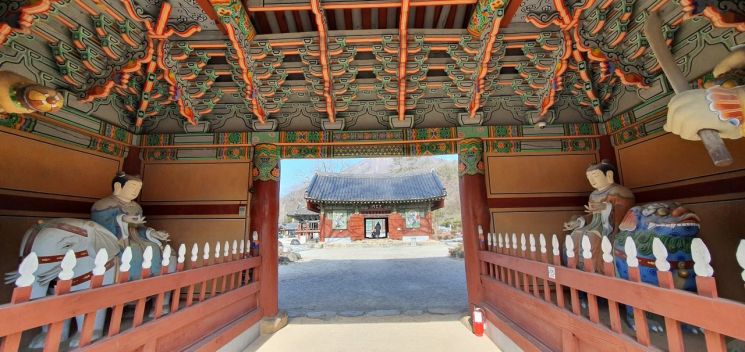
Geumgangmun and Cheonwangmun are architectural structures that appeared with the establishment of the three-gate system in Joseon temples. They are located at the second and third entrances of the temple, respectively. The first gate is Iljumun.
The buildings designated as treasures were all constructed or renovated during the 17th to 18th centuries. In particular, Geumgangmun of Songgwangsa in Wanju, Cheonwangmun of Beopjusa in Boeun, Sacheonwangmun of Songgwangsa in Suncheon, and Cheonwangmun of Hwaeomsa in Gurye are temple cultural heritages that were ruined during the Imjin War and the Byeongja Horan. Byeokam Gakseong and his school were directly or indirectly involved in or influenced the construction and renovation, making them significant in terms of temple layout and architectural history in the late Joseon period. Byeokam Gakseong was a figure who served as a victorious monk during the Imjin War and the Byeongja Horan. In 1624, he was appointed as Paldodochongseop and rebuilt temples nationwide that were destroyed by war.
Cheonwangmun of Tongdosa in Yangsan, Cheonwangmun of Bulgapsa in Yeonggwang, Cheonwangmun of Bogyeongsa in Pohang, and Cheonwangmun of Jikjisa in Gimcheon also confirm the architectural style changes of the late Joseon period, making them academically important. The Cultural Heritage Administration stated, "These temple gates retain regional characteristics and have great historical and artistic value."
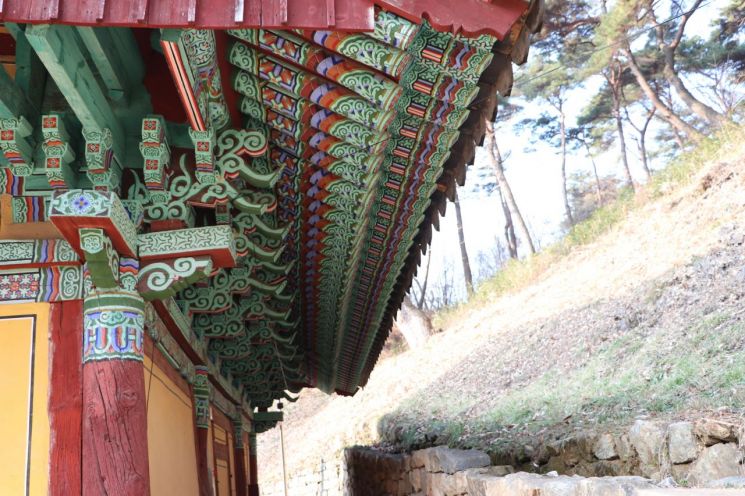
On the same day, the Cultural Heritage Administration also designated Geungnakbojeon Hall of Munsusa in Seosan as a treasure. It is a Buddhist hall with three bays in the front, three bays on the side, a Dapo-style bracket system, and a gable roof. Although there is no documentary evidence regarding the reconstruction period, dendrochronological dating and radiocarbon analysis of the main structural timber indicate the 1630s.
The internal layout style points to the period before the mid-Joseon era. A sumidan altar, which enshrines the Buddha statue, is placed in the center, with a rear wall behind it. The hall retains the form well from its 17th-century reconstruction, making it architecturally significant. The Cultural Heritage Administration explained, "17th-century dancheong patterns and coloring are confirmed on the main members, and changes in dancheong from the 18th to 19th centuries appear on the main beams and bracket parts, giving it high artistic and academic value."
© The Asia Business Daily(www.asiae.co.kr). All rights reserved.
![Clutching a Stolen Dior Bag, Saying "I Hate Being Poor but Real"... The Grotesque Con of a "Human Knockoff" [Slate]](https://cwcontent.asiae.co.kr/asiaresize/183/2026021902243444107_1771435474.jpg)

















