Announcement of Overseas Hallyu Survey Results
68.8% Like Korean Cultural Content
No Hit Work to Surpass 'Ojingeo Game' and 'Gisaengchung'
Seven out of ten foreigners welcomed Korean cultural content.
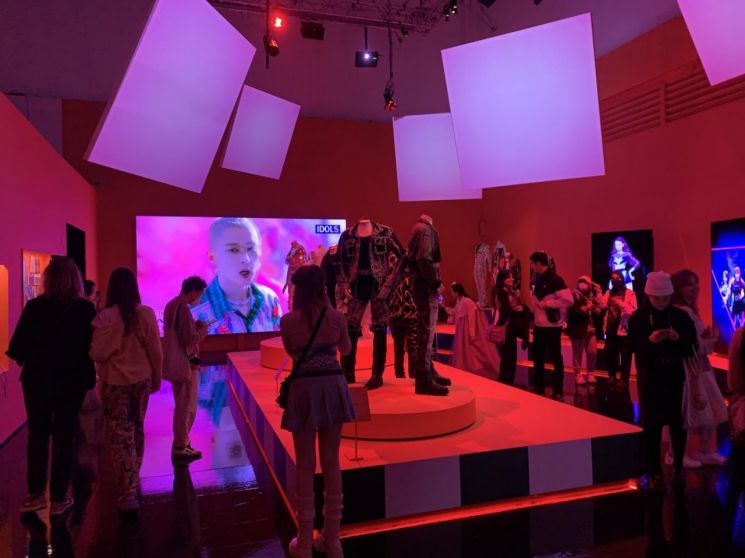
The Ministry of Culture, Sports and Tourism and the Korea Foundation for International Cultural Exchange announced the results of the overseas Hallyu survey (based on last year) on the 2nd. It is an indicator that gauges the usage status and perception of Hallyu content in major overseas countries. The survey targeted 25,000 people who have experienced Korean cultural content in 26 countries including the United States, China, and Japan. It collected opinions on eleven fields such as dramas, entertainment shows, movies, music, animation, publishing, webtoons, games, fashion, beauty, and food.
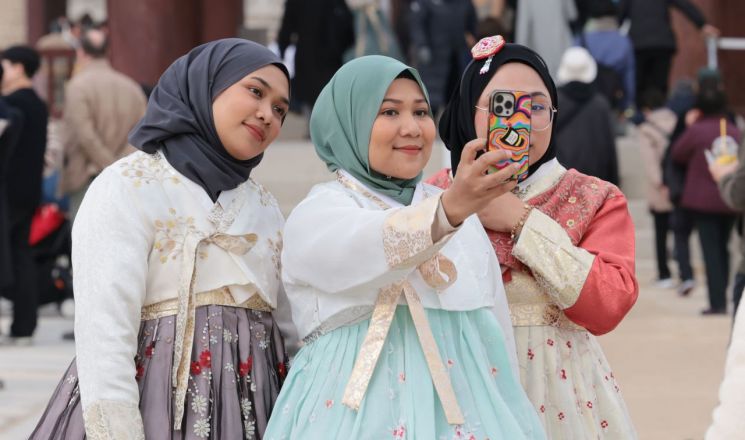
68.8% of respondents said they liked Korean cultural content. Favorability was highest in Indonesia (86.3%), India (84.5%), Thailand and the United Arab Emirates (83.0%), and Vietnam (82.9%). Positive responses were mainly from Southeast Asia.
45.9% of respondents said their interest in Korean cultural content had increased compared to a year ago. Representative countries were Egypt (67.6%), India (67.1%), and Saudi Arabia (65.1%). Favorability increased relatively in the Middle East. 43.5% responded that their interest remained similar.
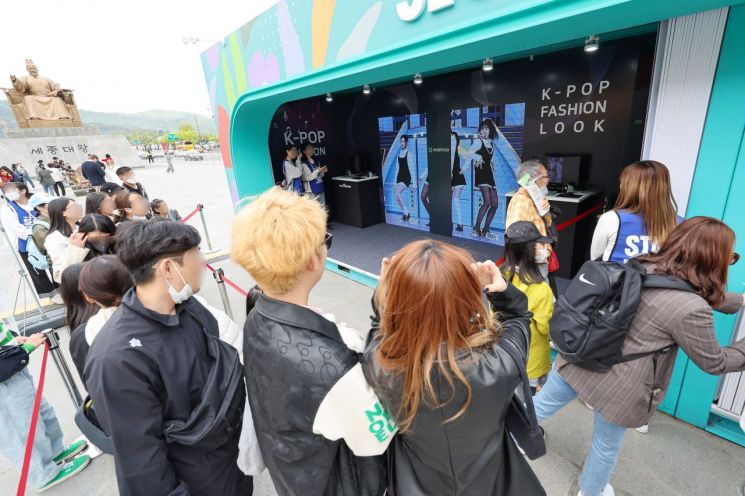 Foreign tourists and citizens are lining up at the K-pop booth at Seoul Culture Square set up in Gwanghwamun Plaza, Seoul. [Image source=Yonhap News]
When asked about the image that comes to mind when thinking of "Korea," K-pop (17.2%) was the most frequently chosen. This trend has remained unchanged since 2017. Following that were Korean food (13.2%), dramas (7.1%), information technology (IT) products and brands (6.3%), and beauty products (5.2%) in order.
Regarding how perceptions of Korea changed after experiencing Korean cultural content, 66.1% said it changed positively, 30.1% said there was no change, and 3.8% said it changed negatively. Countries with particularly high rates of "positive change" were the United Arab Emirates (85.9%), India (85.3%), and Vietnam (84.7%). In contrast, Japan (38.8%) and Italy (48.7%) were relatively low.
The average monthly consumption of Korean cultural content per person was 11.6 hours. India (18.6 hours), Thailand (18.4 hours), Indonesia (17.0 hours), and Vietnam (16.4 hours) ranked highest. On the other hand, Japan (4.4 hours), Canada (5.8 hours), Australia (6.2 hours), and Italy (6.3 hours) consumed less than 10 hours. A Ministry of Culture official explained, "Countries with high consumption of Korean cultural content also showed positive changes in their perception of Korea."
Negative views were not insignificant at 32.6%. The main reasons cited were "excessively provocative and sensational (24.9%)," "uniform and boring (22.0%)," and "excessively commercial (21.1%)."
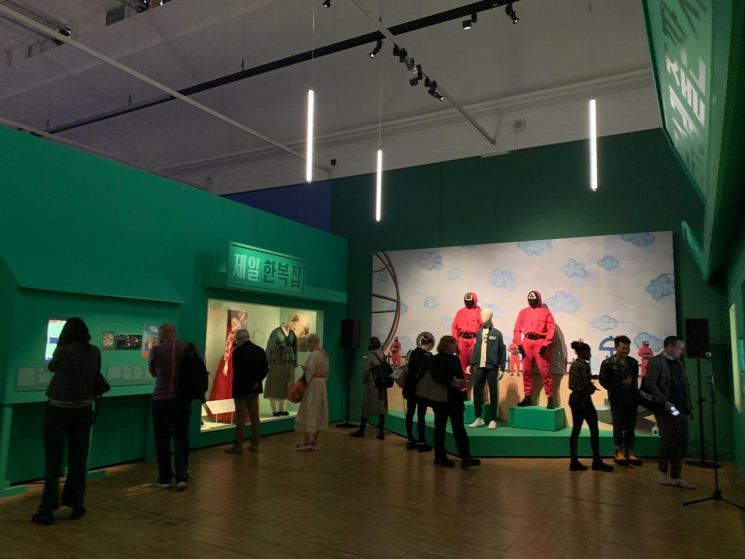
As for preferred dramas, "Squid Game" was still the top choice. The response rate decreased from 21.2% in 2021 to 9.0%. The second was "The Glory" (3.4%), and the third was "King the Land" (2.6%). A Ministry of Culture official added, "'Squid Game' enjoyed popularity mainly in Europe (23.7%) and the Americas (8.3%), while 'The Glory' was popular in Asia-Pacific (5.4%)." Preferred movies remained "Parasite" (7.9%) and "Train to Busan" (6.0%) for the fifth consecutive year, as no new blockbuster has surpassed them.
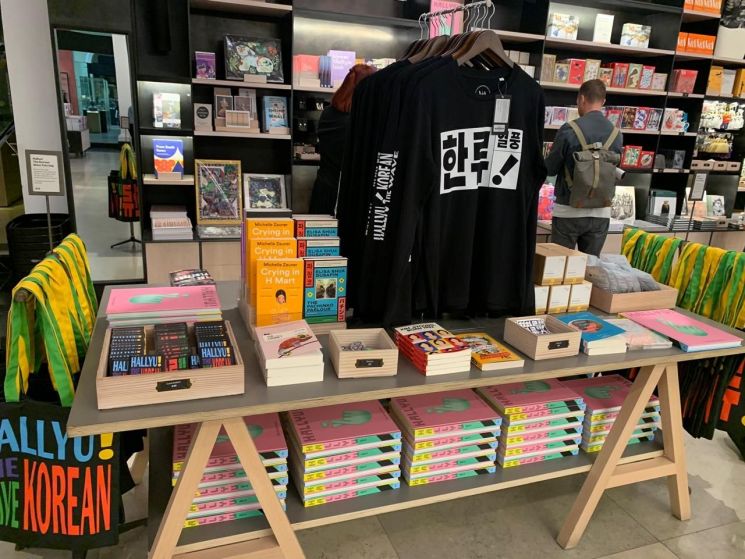
In the survey on interest in Korean products and services, more than half (50.7%) said they were "willing to purchase." Interest was especially high in Egypt (75.6%), Saudi Arabia (73.0%), the United Arab Emirates (72.9%), Vietnam (72.1%), and India (70.7%). By product and service, food (64.7%), visiting Korea (61.8%), dining at Korean restaurants (61.4%), cosmetics (54.0%), and clothing purchases (52.8%) ranked highest. In contrast, Japan (41.7%), Italy (20.4%), and Spain (20.8%) had relatively high rates of "no intention to purchase."
When asked whether Hallyu influences the use of products and services, 57.9% answered "yes." It was especially valued in Indonesia (81.4%), Vietnam (78.6%), and Saudi Arabia (74.5%). A Ministry of Culture official said, "K-content consumption significantly impacts related industries such as food, cosmetics, and clothing," and added, "We plan to promote various projects to expand the overseas advancement of K-content."
This year, the Ministry of Culture will expand the Korea Creative Content Agency's overseas business centers to 25 locations and establish a corporate support center for content companies in Japan. Additionally, "Korea 360," a permanent Korean culture promotion center, will open in Dubai, United Arab Emirates, and a "K-Expo" connecting K-content and related industry consumption will be held in Jakarta, Indonesia.
© The Asia Business Daily(www.asiae.co.kr). All rights reserved.
![Clutching a Stolen Dior Bag, Saying "I Hate Being Poor but Real"... The Grotesque Con of a "Human Knockoff" [Slate]](https://cwcontent.asiae.co.kr/asiaresize/183/2026021902243444107_1771435474.jpg)













