Medical AI company Lunit announced on the 1st that it will present seven latest research results utilizing its AI biomarker platform ‘Lunit Scope’ at the 2024 American Association for Cancer Research (AACR 2024), held from June 5 to 10 (local time) in San Diego, California, USA.

AACR is considered one of the world's top three cancer conferences alongside the American Society of Clinical Oncology (ASCO) and the European Society for Medical Oncology (ESMO). Lunit, which has continuously demonstrated the clinical effectiveness of Lunit Scope in predicting immune checkpoint inhibitor responses by analyzing immune cells around cancer cells using AI, will participate in AACR for the sixth consecutive year and disclose research results on predicting cancer treatment efficacy using AI.
The company's most notable study analyzed the correlation between ERBB2 gene mutations and human epidermal growth factor receptor (HER)2 expression using a total of 194,259 patient samples. HER2 expression levels are considered one of the critical factors in determining cancer treatment methods and prognosis.
Using Lunit Scope to measure this, the research team confirmed that cancer cells with specific types of ERBB2 gene mutations exhibited stronger HER2 expression. This trend was particularly prominent in non-small cell lung cancer patients with the ex20ins mutation and urothelial carcinoma, non-small cell lung cancer, and breast cancer patients with the S310x mutation.
A Lunit representative explained, "Through this study, we identified gene mutations that cause cancer cells to highly express the HER2 protein. This provides meaningful information for deciding which drugs to use for cancer patients and improving the precision of cancer treatment."
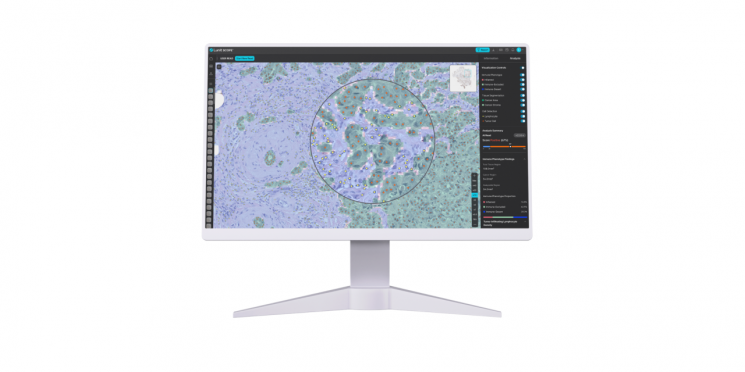
Lunit also conducted research related to programmed cell death protein (PD)-L1, a key biomarker for immune checkpoint inhibitors, through collaboration with Genome & Company. They explored the association between contactin (CNTN)4 and PD-L1 via AI-based immunohistochemistry (IHC) analysis on 795 cancer patient samples across 18 cancer types.
The study confirmed that contactin 4 expression was most prevalent in cancer types such as hepatocellular carcinoma, endometrial cancer, gastric cancer, pancreatic cancer, and prostate cancer. Conversely, all samples with high contactin 4 expression showed low PD-L1 expression. The company stated, "There is an inverse relationship between the expression levels of contactin 4 and PD-L1," suggesting that contactin 4 could be considered a new target for immunotherapy in cancers with low PD-L1 expression.
Another collaborative study with Genome & Company analyzed the relationship between responsiveness to the PD-L1 immune checkpoint inhibitor Keytruda and contactin 4 expression in gastric cancer patients.
After classifying 45 patients based on the median levels of contactin 4 and PD-L1 expression and evaluating treatment responses, patients with low contactin 4 expression and high PD-L1 expression were more likely to respond positively to Keytruda, showing an objective response rate (ORR) of 64.3%. In contrast, patients with high expression of both contactin 4 and PD-L1 exhibited a 0% ORR. The Keytruda non-responder group had lower PD-L1 expression and higher contactin 4 expression compared to the responder group.
In terms of prognosis, patients with higher contactin 4 expression showed a median progression-free survival (PFS) of 9.73 months and a median overall survival (OS) of 2.1 months, indicating worse outcomes compared to other patient groups. The PFS for the low contactin 4 expression group was 5.47 months, and OS has not yet been determined.
ORR refers to the proportion of patients who experience tumor shrinkage or complete disappearance as a result of anticancer treatment. PFS is the duration a patient survives without cancer progression or recurrence, and OS is the time from treatment initiation until death. Median values, representing the time point at which more than half of the patients have either started the next treatment or died, are primarily used rather than averages for PFS and OS.
The company stated, "These research results demonstrate that contactin 4 can be effectively used as a biomarker to predict immune checkpoint inhibitor treatment responses," adding, "This suggests that AI can play a crucial role in identifying new biomarkers."
Seobum Seok, CEO of Lunit, said, “At this year’s AACR conference, we expanded the scope beyond previous studies predicting immune checkpoint inhibitor responses to offer more effective options for patients with specific gene mutations or those who do not respond to certain drugs. Our goal is to realize personalized cancer treatment through AI, and the research outcomes presented at this conference will further enhance that potential.”
© The Asia Business Daily(www.asiae.co.kr). All rights reserved.
![Clutching a Stolen Dior Bag, Saying "I Hate Being Poor but Real"... The Grotesque Con of a "Human Knockoff" [Slate]](https://cwcontent.asiae.co.kr/asiaresize/183/2026021902243444107_1771435474.jpg)
















