Benjamin Netanyahu, the Prime Minister of Israel, will undergo hernia surgery under general anesthesia during wartime conditions.
The Prime Minister's Office announced on the 31st of last month (local time) that "the Prime Minister is scheduled to have surgery tonight" and that "the surgery will be performed under general anesthesia."
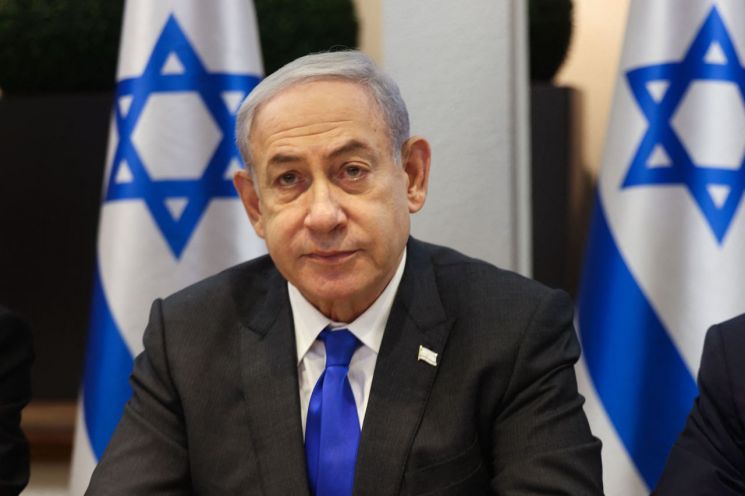
Netanyahu's hernia was discovered during a routine check-up the night before. The Prime Minister's Office disclosed this information just a few hours before the surgery.
During the treatment period, including the surgery, Deputy Prime Minister and Minister of Justice Yariv Levin will act as the interim head of duties.
This is the first time in eight months since July last year that Netanyahu has been hospitalized due to health issues. At that time, Netanyahu underwent pacemaker implantation ahead of the final legislative vote to neutralize the judiciary.
Before the hernia surgery, Netanyahu held a press conference at his office in Jerusalem, stating, "The Israel Defense Forces are prepared for the ground operation in Rafah, civilian evacuation, and humanitarian aid." He added, "This is the right thing to do both operationally and internationally," and emphasized, "Without the Rafah operation, Hamas cannot be defeated."
Meanwhile, during the press conference, anti-government protests were held across Israel, calling for the resignation of Netanyahu and all ministers, early elections, and an agreement on the release of hostages. According to local media, around 100,000 citizens gathered near the Knesset building in Jerusalem that day.
Responding to protesters' criticism that the government is doing nothing to bring back hostages taken by Hamas, Netanyahu said he is making every effort and explained, "Only by combining military pressure and flexibility at the negotiation table can we bring the hostages back."
Regarding demands for resignation and early elections, he replied, "If early elections are held, this country and the hostage release negotiations will be paralyzed for at least 6 to 8 months."
© The Asia Business Daily(www.asiae.co.kr). All rights reserved.

















