February Housing Transactions Up 10%, Special Newborn Loan Benefits
Increase in Transactions Among 30s and 40s Age Groups
In the recent situation where low-priced apartment sales in the Seoul metropolitan area have increased, it has been revealed that more than half of the transactions in February to March this year were price-increasing deals.
On the 31st, Yonhap News analyzed the actual transaction prices of Seoul metropolitan area apartments (based on the same complex, area, and floor) contracted between February and March this year and between December last year and January this year, as disclosed by the Ministry of Land, Infrastructure and Transport's actual transaction price system. The analysis showed that 51.9% of the compared transactions were price-increasing deals compared to previous contracts.
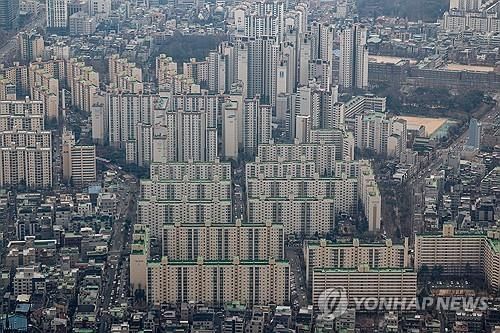
This is a significant increase compared to the 38.7% of price-increasing transactions recorded between December last year and January this year, compared to the previous two months (October to November last year).
On the other hand, while the proportion of price-decreasing transactions was 54.5% between December last year and January this year compared to October to November last year, it decreased to 41.2% in February to March this year compared to the previous two months.
The situation was similar nationwide. The proportion of price-increasing transactions rose from 41.9% between December last year and January this year to 48.7% in February to March, while price-decreasing transactions fell from 51.7% to 43.9%, respectively.
The increase in Seoul was also notable. Price-increasing transactions in February to March recorded 53.4%, a 22.7 percentage point increase compared to the previous two months (30.7%).
Districts such as Dongdaemun-gu (85.7%), Dongjak-gu (71.4%), Guro-gu (69.2%), Seongdong-gu, Yongsan-gu, Gangbuk-gu (66.7%), and Songpa-gu (63.6%) showed a high proportion of price-increasing transactions.
For example, the 84.98㎡ exclusive area of Raemian Roy Park in Sadang-dong, Dongjak-gu, was sold for 1.43 billion to 1.48 billion KRW from the end of last year to early this year, but in March this year, transactions were made at around 1.48 billion to 1.5 billion KRW.
Also, the 84.95㎡ exclusive area of Helio City in Garak-dong, Songpa-gu, was sold on the 16th floor for 1.96 billion KRW in January this year, but in March, the 13th floor was contracted for a higher price of 2.05 billion KRW.
"More Newlywed Couples to Use Ultra-Low 1% Interest Rates"
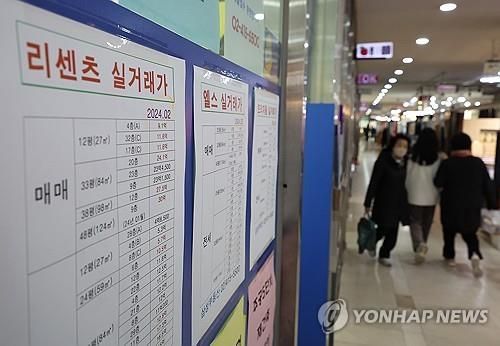
In Gyeonggi-do, the proportion of price-increasing transactions rose from 39.7% between December last year and January this year to 52% in February to March this year, and in Incheon, it increased from 40.6% to 50.6%. Yonhap News analyzed that the reason for the increasing trend in price-increasing transactions since last month is due to more transactions focusing on low-priced listings, which has driven up asking prices.
The Ministry of Land, Infrastructure and Transport announced that the nationwide apartment sales volume last month (based on the reporting date) was 33,333 cases, a 3.8% increase compared to January (32,111 cases).
Seoul apartment sales increased by 8.5% from 2,456 cases in January to 2,665 cases last month.
Some local real estate agencies explained that ahead of the introduction of the stress DSR (Debt Service Ratio) on the 26th of last month, some buyers rushed to purchase homes before loan restrictions tightened. The implementation of a newborn special loan with ultra-low interest rates in the 1% range, following the end of the preferential special Bogeumjari Loan (for loans under 600 million KRW) at the end of January, also helped ease the market.
Kyunghee Yeo, senior researcher at Real Estate R114, said, "The newborn special loan has limited eligibility and thus less impact compared to the special Bogeumjari Loan, but if the housing market shows a clear recovery trend, more newlywed couples will use the ultra-low interest rates starting from the 1% range to purchase homes."
By age group, the rise of those in their 30s and 40s is prominent. According to the Seoul apartment transaction volume by age group in February, released by the Korea Real Estate Agency, the proportion of buyers in their 30s was 32.8%, and those in their 40s were 31.6%, both up from the previous month (31.5% and 29.1%, respectively).
This contrasts with other age groups, such as those in their 20s, whose share decreased from 3.2% to 2.5%. Nationwide, the proportion of buyers in their 30s slightly declined from 26.2% in January to 26.0% in February, pausing a three-month increase, while those in their 40s rose from 25.2% to 26.7%.
© The Asia Business Daily(www.asiae.co.kr). All rights reserved.
![Clutching a Stolen Dior Bag, Saying "I Hate Being Poor but Real"... The Grotesque Con of a "Human Knockoff" [Slate]](https://cwcontent.asiae.co.kr/asiaresize/183/2026021902243444107_1771435474.jpg)
















