"Final Voting Lobbying Intensifies for Chairmanship Election"
International Community Opposes... "Saudi Arabia Is Not Qualified"
Saudi Arabia, a country known for its low level of women's rights, has sparked intense controversy in the international community after being appointed to lead a UN women's agency.
On the 30th (local time), British daily The Guardian and others reported that Abdulaziz Alwasil, Saudi Arabia's ambassador to the UN, was elected chairperson of the UN Commission on the Status of Women (CSW) at the annual meeting held in New York on the 27th. Alwasil will lead the CSW for at least the next two years.
The CSW is composed of representatives from 45 countries and plays a role in submitting reports on the improvement of women's status in political, economic, and social fields to the UN Economic and Social Council, as well as recommending necessary measures.
The Guardian reported, "Following the Philippines, Bangladesh was expected to become the next chair country of the CSW, but Saudi Arabia launched a full-scale lobbying effort at the last minute and secured the chair position." Among the 45 attendees at the time, no member voted against Alwasil's election, and there were no competing candidates. The Guardian described Saudi Arabia's lobbying as "an attempt to polish the kingdom's image."
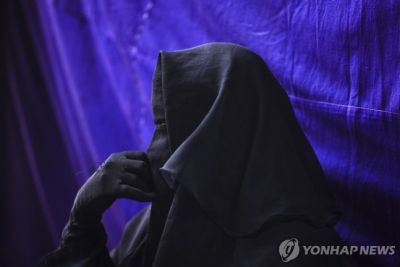
The international community has voiced opposition to Saudi Arabia's election as CSW chair. Sherine Tadros, director of Amnesty International's New York office, pointed out, "Saudi Arabia has taken control of the CSW, but its record on women's rights is terrible and far from the commission's mission." Saudi Arabia was ranked 131st out of 146 countries in the 2023 Global Gender Gap Report released by the World Economic Forum (WEF) last year, placing it among the lowest in gender equality.
Louis Charbonneau, UN director at Human Rights Watch (HRW), also criticized, "Saudi Arabia's election as CSW chair completely disregards women's rights," adding, "A country that imprisons women for advocating for their rights does not deserve to be the face of the UN's highest forum for women's rights."
He further urged, "Saudi authorities must release all detained women human rights activists, end the male guardianship system, and guarantee equal rights for women and men."
In Saudi Arabia, women must obtain permission from a male guardian to marry. The law also stipulates that a wife must obey her husband in a reasonable manner, and the husband's financial support depends on the wife's obedience. If a wife refuses sexual relations or travel with her husband without just cause, the husband can suspend economic support.
Meanwhile, The Guardian reported that "the Saudi mission to the UN did not respond to requests for comment regarding this matter."
© The Asia Business Daily(www.asiae.co.kr). All rights reserved.

















