There has been a claim that the suspect interrogation records prepared by prosecutors during the investigation process should be recognized as evidence if voluntariness and authenticity at the time of the statement are guaranteed, regardless of whether the defendant denies the content in court.
There was also an opinion that even if the defendant or defense attorney denies the content of the suspect interrogation records prepared by the prosecutor in court, the evidentiary value should be excluded only for the specific parts of the record that are denied.
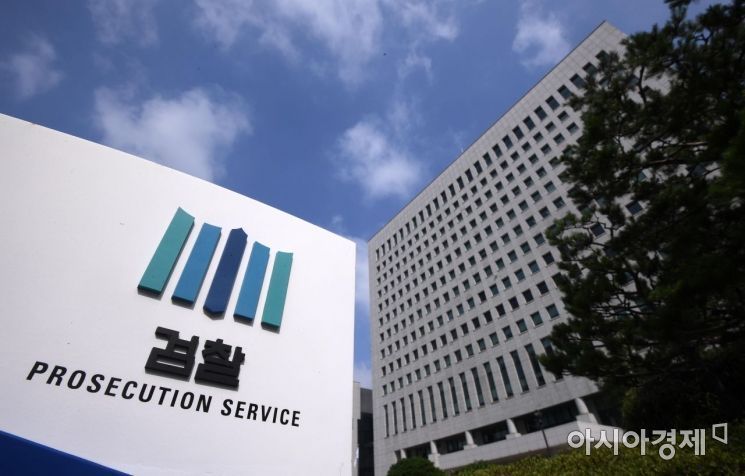
On the afternoon of the 29th, the Supreme Prosecutors' Office and the Criminal Procedure Law Society jointly held the 2024 1st Criminal Law Forum at the Yegreena Hall on the 4th floor of the annex building of the Supreme Prosecutors' Office in Seocho-dong, Seoul, under the theme "A Study on the Evidentiary Value of Suspect Interrogation Records Prepared by Prosecutors."
Professors and students from law schools, lawyers, and prosecutors attended the forum, which was divided into two parts.
Repetition of Defendant and Witness Interrogations in Court Due to Amendments to the Criminal Procedure Act... Prolongation of Trials Deepens
In the first part, Prosecutor Choi Yoon-hee of the Seoul Central District Prosecutors' Office presented on the topic "Practical Issues Arising from the Amendment of Article 312 of the Criminal Procedure Act."
Prosecutor Choi pointed out, "According to the amended Criminal Procedure Act, which has been in effect since January 2022, if the defendant denies the contents recorded in the interrogation record in court, the suspect interrogation records prepared by the prosecutor cannot be used as evidence not only against the defendant but also against accomplices. As a result, defendant and accomplice witness interrogations inevitably repeat the questioning conducted during the investigation stage, leading to prolonged trials, including cases where detained defendants are released due to the expiration of detention periods."
The amended Article 312(1) of the Criminal Procedure Act, revised in February 2020 and effective from January 1, 2022, states that "suspect interrogation records prepared by prosecutors are admissible as evidence only when they are prepared in accordance with lawful procedures and methods, and the defendant who was the suspect or their defense attorney acknowledges the contents during the preparation for trial or trial proceedings."
Before the amendment, Article 312(1) of the Criminal Procedure Act stipulated that interrogation records prepared by prosecutors containing the statements of suspects who became defendants were admissible as evidence only when it was recognized during the preparation for trial or trial proceedings that the records were made in accordance with lawful procedures and methods and accurately reflected the defendant's statements, and it was proven that the statements were made under particularly credible conditions.
So-called "특신상태 (特信狀態)," meaning a particularly credible state under which the suspect's statements were made, allowed the evidentiary value of the interrogation records to be recognized even if the defendant denied the statements in court. However, after the amendment, if the defendant denies the contents recorded in the interrogation records in court, the records cannot be used as evidence.
Prosecutor Choi cited actual cases such as ▲a case involving a lease fraud amounting to approximately 30 billion KRW where all four main detained defendants were released during the trial while witness interrogations of accomplices were ongoing, ▲a case involving embezzlement of about 25.5 billion KRW where the main defendant fled abroad and was forcibly repatriated after nine years, and was released due to the expiration of detention during the trial while witness interrogations of accomplices were ongoing, and ▲a false hospitalization insurance fraud case where defendants denied all interrogation records, causing the suspect investigation to be repeated in court, resulting in the first trial lasting over one and a half years.
Prosecutor Choi also stated, "There is concern that the main defendant may abuse the amended law to prevent the statements of the defendant and accomplices during the investigation from being presented in court, causing accomplices to retract their statements and evade punishment, thereby making it difficult to ascertain the truth."
As a specific example, Prosecutor Choi mentioned a marijuana sale case where seller A requested buyer B, who had been previously detained, to retract his confession made during the investigation that he purchased marijuana from A. B refused to agree to the suspect interrogation record and reversed his testimony in court, falsely stating that he had never purchased marijuana from A. Prosecutor Choi reported that B is currently on trial for perjury, and A is on trial for instigating perjury.
Following Prosecutor Choi's presentation, discussions were held by Professor Kim Woong-jae of Seoul National University Law School, Lawyer Kim Eun-jung of Law Firm Lium, Associate Researcher Kim Min-gyu of the Korea Institute of Criminology and Justice Policy, and Professor Ryu Bu-gon of the Police University Department of Law.
The discussants offered various perspectives on the causes and current status of these practical issues.
One discussant pointed out, "The amended Criminal Procedure Act was hastily revised and implemented without sufficient discussion or prior preparation, causing trial delays and side effects such as the criminal procedure, which aims to discover substantive truth, showing tendencies to become civil litigation where outcomes depend on the competence of defense attorneys."
Another discussant said, "It is necessary for academia and practitioners to conduct in-depth research on how much difficulty the amended Criminal Procedure Act has caused in proving criminal charges."
There was also an opinion that "it is necessary to institutionalize the exclusion of evidentiary value only for the specific parts of the interrogation records that are denied."
The first part was moderated by Professor Kim Hee-gyun of the University of Seoul Law School.
Germany and the United States Broadly Grant Evidentiary Value to Defendant Statements Made During Investigation... Current System May Cause Distrust in the Entire Judicial System
In the second part, Professor Lee Chang-on of Ewha Womans University Law School presented on the topic "Improvement Measures for Regulations on the Evidentiary Value of Suspect Interrogation Records."
Professor Lee stated, "Statements made by suspects during investigations have superior and irreplaceable evidentiary value compared to court testimony. The current Criminal Procedure Act allows suspect interrogations by investigative agencies and can even be interpreted as mandatory. Nevertheless, the Act prohibits the use of suspect statements made during investigations solely based on the suspect's will, regardless of detention, defense attorney participation, voluntariness of the statement, or video recording, which is a systemic contradiction."
Professor Lee added, "Compared to major foreign countries such as Germany and the United States, the current Criminal Procedure Act is excessive and lacks reasonable grounds. In Germany, when a defendant retracts statements made during investigation in court, the retracted statements can still be used as evidence. In the United States, confessions made during investigation are excluded from the hearsay rule and are granted evidentiary value."
He emphasized, "If cases accumulate where suspect statements made during investigations are not presented in court due to the defendant's unilateral denial, hindering the ascertainment of the truth, it will lead to public distrust in the entire judicial system. Ultimately, suspect statements made during investigations should be admissible as evidence regardless of whether the defendant denies the content in court, provided that voluntariness and authenticity at the time of the statement are guaranteed."
Professor Lee also added, "It is appropriate to use video recordings and other means to reliably guarantee the voluntariness and authenticity of suspect statements and to enable efficient trial proceedings."
Following Professor Lee's presentation, Professors Lee Soon-wook of Chonnam National University Law School, Lawyer Kwak Jun-young of Law Firm Wave, Prosecutor Kim Sung-jin of Daejeon District Prosecutors' Office, and Professor Choi Jun-hyuk of Inha University Law School participated as discussants in the second part, offering various opinions on how to utilize suspect statements made during investigations as evidence.
During the discussion, opinions were raised on ▲using video recordings as primary evidence while summarizing the recordings in investigation reports, ▲allowing suspect interrogation records prepared by prosecutors that contain denied content to be presented to the court only after certain conditions such as defendant interrogation are met, and ▲the need for research to secure scientific methods to guarantee the authenticity and voluntariness of interrogation records, leveraging the digitization of criminal procedures.
The second part was moderated by Professor Jung Woong-seok of Seokyeong University Department of Public Human Resources.
Supreme Prosecutors' Office Holds Quarterly Criminal Law Forums... Four Held Last Year
The Criminal Law Forum is an academic event held quarterly by the Supreme Prosecutors' Office to gather diverse opinions from academia and practitioners on desirable improvements to criminal justice procedures.
Last year, the Supreme Prosecutors' Office held the 1st forum on March 31 with the theme "Penalty Reduction System for Judicial Cooperation," the 2nd on June 30 with the theme "Participation of Crime Victims in Criminal Procedures," the 3rd on September 8 with the theme "Legal Issues Regarding Regulation of Virtual Assets," and the 4th on December 8 with the theme "A Study on Arrest and Detention Systems."
A representative from the Supreme Prosecutors' Office stated, "Since 2017, the 'Criminal Law Academy,' which held seminars on overseas criminal law systems, resumed in 2023 after COVID-19, holding quarterly academic conferences on topics such as 'Regulation of Virtual Assets.' From this year, it has been newly reorganized as the 'Criminal Law Forum' to further strengthen academic research functions related to criminal law systems."
© The Asia Business Daily(www.asiae.co.kr). All rights reserved.
![Clutching a Stolen Dior Bag, Saying "I Hate Being Poor but Real"... The Grotesque Con of a "Human Knockoff" [Slate]](https://cwcontent.asiae.co.kr/asiaresize/183/2026021902243444107_1771435474.jpg)
















