Northeastern China Hit Before Striking the Korean Peninsula
On the 29th, as yellow dust covered the entire country, the source of this yellow dust, the Inner Mongolia Autonomous Region of China, along with nearby areas, also experienced the worst yellow dust storm.
According to reports from the China Central Meteorological Observatory and local media on that day, the yellow dust that originated from the Inner Mongolia Plateau on the 26th hit the metropolitan areas including Beijing, Tianjin, Hebei Province the next day, as well as northeastern regions such as Shandong and the three northeastern provinces (Liaoning, Jilin, Heilongjiang), and the northwestern Xinjiang Uygur Autonomous Region.
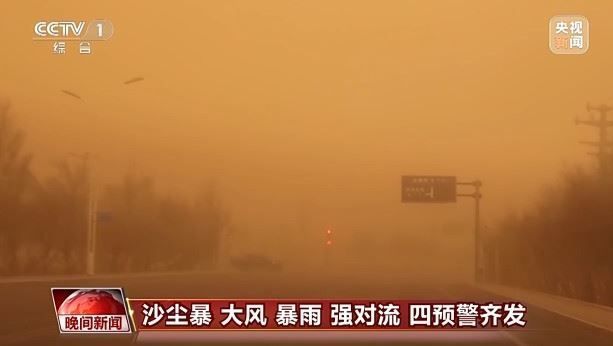
Areas close to the source, such as the northeastern part of Baotou City in Inner Mongolia, the north-central part of Ulanqab City, and the western part of Chifeng City, were reported to have particularly severe sandstorms. The visibility in these areas was less than 1 km. The most severely affected region, Xilingol, experienced a serious sandstorm with visibility as low as 60 meters.
Local government offices, businesses, and schools have suspended work and classes. Major factories are also reported to have temporarily halted operations. Additionally, two local highways were completely closed, and emergency traffic control measures were implemented on some roads, according to the meteorological observatory.
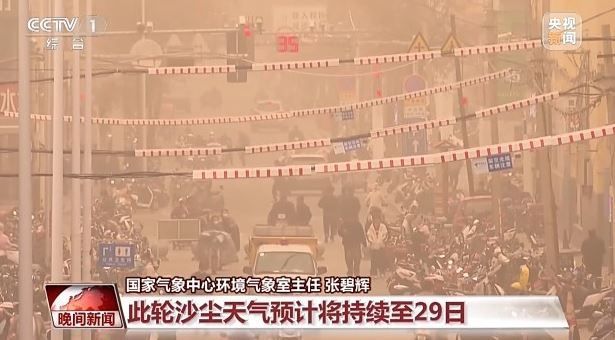
The yellow dust in northeastern China somewhat eased on the morning of the 29th. However, the meteorological observatory warned, "Some areas still have a high possibility of strong sandstorms," urging caution.
Meanwhile, the yellow dust is moving into the country starting from this day, carried by northwesterly winds. The Korea Meteorological Administration forecasted that air quality would remain poor on the 30th as well.
© The Asia Business Daily(www.asiae.co.kr). All rights reserved.
![Clutching a Stolen Dior Bag, Saying "I Hate Being Poor but Real"... The Grotesque Con of a "Human Knockoff" [Slate]](https://cwcontent.asiae.co.kr/asiaresize/183/2026021902243444107_1771435474.jpg)
















