Volker T?rk, the UN High Commissioner for Human Rights, stated that the famine in the Gaza Strip in Palestine could constitute a war crime.
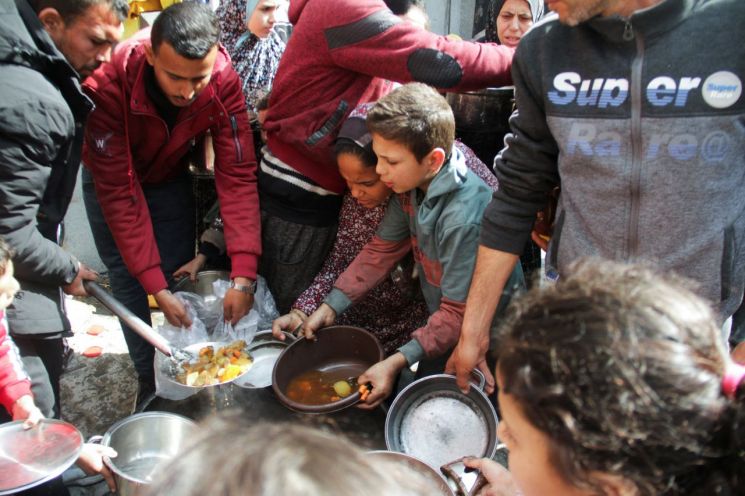
On the 28th (local time), in an interview with the BBC held in Geneva, Switzerland, Commissioner T?rk expressed understanding that an investigation is necessary regarding Israel's restrictions on the entry of relief supplies into the Gaza Strip, but added, "It cannot take several days to do that," making this statement.
Commissioner T?rk pointed out that despite the urgent situation in the Gaza Strip, Israel is making all sorts of unreasonable demands related to the entry of relief supplies.
In this regard, he said, "It raises the question of whether there is a valid argument that famine is a weapon of war or could be used as a weapon of war."
Commissioner T?rk mentioned, "If intent is proven, this would constitute a war crime."
He also revealed that there is evidence that Israel is delaying or withholding the transportation of relief supplies.
Commissioner T?rk stated, "All my colleagues say there are many unnecessary formalities there. There are obstacles and hindrances," pointing out that this is Israel's responsibility.
The International Criminal Court (ICC), the permanent court for war crimes, considers "deliberately blocking relief supplies" a violation of international humanitarian law (laws of war) related to armed conflict.
Previously, claims have been continuously raised that Israel is systematically blocking the entry of relief supplies into the Gaza Strip, intentionally causing famine. Israel denies this, but recently, reports supporting these claims have been emerging mainly from international organizations and relief groups.
It is known that Israel applies complicated and unclear inspection procedures during the entry process of aid supplies, reducing the quantity and types of relief goods entering the Gaza Strip.
According to the United Nations, before the outbreak of the war, about 500 relief trucks entered the Gaza Strip daily on average, but this number dropped to 170 in January this year and further decreased to 98 last month.
Since the war began in October last year following an attack by the Palestinian armed faction Hamas on Israel, the humanitarian crisis in the Gaza Strip has deepened.
Since the start of the conflict, nearly 32,000 people have died in the Gaza Strip. Additionally, with the blockade preventing proper delivery of relief supplies, local residents are now facing a severe food crisis.
The United Nations predicts that about 1.11 million people, nearly half of the Gaza Strip's population of 2.3 million, will face the highest level of food crisis severity, a catastrophic famine situation.
© The Asia Business Daily(www.asiae.co.kr). All rights reserved.
![Clutching a Stolen Dior Bag, Saying "I Hate Being Poor but Real"... The Grotesque Con of a "Human Knockoff" [Slate]](https://cwcontent.asiae.co.kr/asiaresize/183/2026021902243444107_1771435474.jpg)















