Increased Additional Rate for High-Risk Surgery in Low Birth Weight Neonates Up to 1000%
New Regional Differential Public Policy Fees Worth Approximately 67 Billion KRW Annually Established
The government will significantly improve the age-based additional fees for high-risk and complex pediatric surgeries and establish and support regional policy fees for high-risk neonatal care. This means that the age-based additional fees for surgery, treatment, and anesthesia for 281 complex surgical procedures for children under 6 years old will be greatly expanded, reflecting the difficulty and risk of the surgeries.
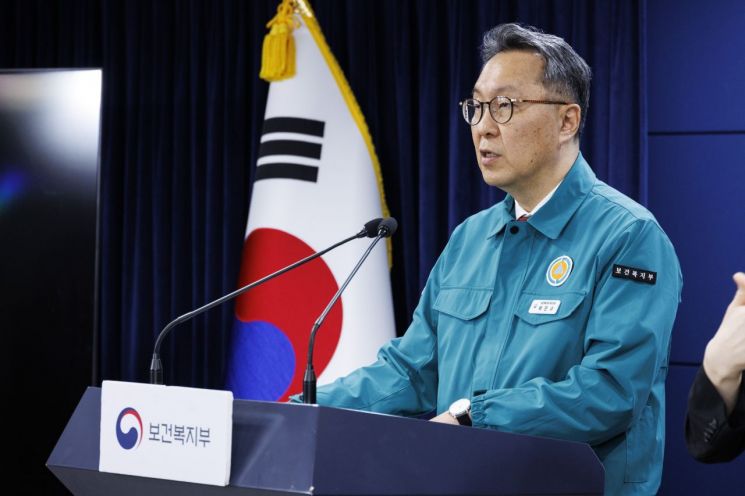 Park Min-su, Deputy Minister of Health and Welfare and Deputy Head of the Central Accident Response Headquarters, is briefing the Central Accident Response Headquarters on the doctors' collective action on the morning of the 29th at the Government Seoul Office in Jongno-gu, Seoul.
 [Image source=Yonhap News]
The Central Accident Response Headquarters (CARH) of the medical professionals' collective action held a meeting on the morning of the 29th and announced that they discussed the direction of fee improvements to enhance the pediatric care system. Park Min-su, the 2nd Vice Minister of the Ministry of Health and Welfare, stated in a briefing, "Starting in May, the age-based additional fees for surgery, treatment, and anesthesia for 281 items designated as high-risk and complex surgeries will be significantly expanded. The age-based additional fees, which were previously applied at a higher rate only for newborns under 1500g and children under 1 year old, will be extended to children under 6 years old, and the additional fee rate will be substantially increased from a maximum of 300% to 1000%."
He added, "When the age-based additional fee is applied, for example, the total surgical fee for patent ductus arteriosus closure surgery, a high-risk and complex surgery required for premature infants under 1500g, will increase from the current 7.11 million KRW to 17.69 million KRW, about 2.5 times higher." The Ministry of Health and Welfare explained that since the patient co-payment rate for pediatric inpatient care is 5% for those under 15 years old and exempted for those under 2 years old, there will be no patient burden in this case.
Additionally, the government will introduce a differentiated public policy fee (approximately 67 billion KRW annually) by region starting in May to enable high-risk newborns to receive care locally.
The public policy fee is a new health insurance compensation system applied to essential medical fields to supplement the current 'fee-for-service' system, which may reduce supply in areas with low treatment frequency or low profitability.
With the establishment of regional fees, 51 'Neonatal Intensive Care Regional Centers' excluding Seoul will assign dedicated specialists on a regular basis to care for newborns. The centers in the Gyeonggi and Incheon regions (16 centers) will receive differentiated support of 50,000 KRW per inpatient per day, while other regional centers (35 centers) will receive 100,000 KRW per inpatient per day.
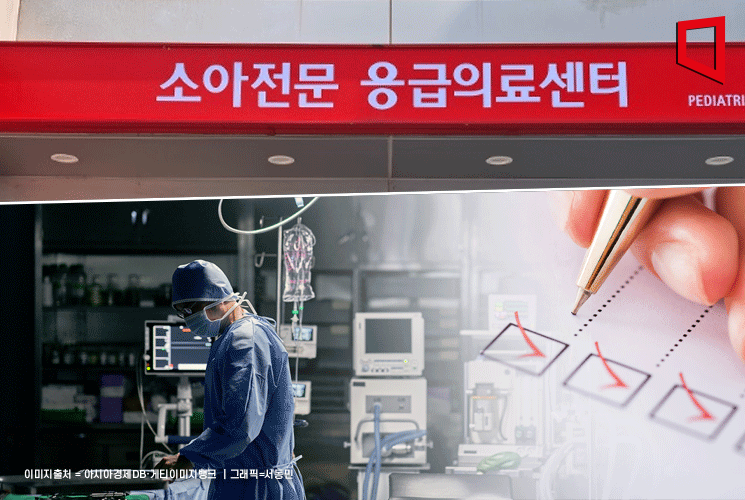
On an annual average, centers located in Gyeonggi and Incheon will receive 230 million KRW, and other regional centers will receive 520 million KRW. Vice Minister Park said, "The proportion of premature infants has increased from 5.8% in 2010 to 9.8% in 2022, and the number of high-risk newborns in Korea continues to rise. We will work to eliminate regional disparities in essential medical care so that high-risk newborns can safely receive treatment anywhere in the country."
Meanwhile, the government reiterated its commitment to fully complete the ongoing medical reform. Vice Minister Park said, "Medical reform is not an issue limited to the medical profession but concerns all citizens directly. There will be no overturning of medical reform desired by the majority of the public through bargaining with specific professions."
He continued, "We will not repeat the unfortunate history of yielding to specific professions at the expense of 50 million citizens. We will break the bad practice of specific professions undermining government policies in ways that threaten the lives and health of the people and restore the rule of law," he emphasized.
To residents and medical school professors, he proposed, "We invite you to come to the dialogue table and engage constructively with the government. We ask the medical community to participate more actively in deciding investment priorities for medical reform tasks in the 2025 budget and in discussing specific budget allocations."
© The Asia Business Daily(www.asiae.co.kr). All rights reserved.
![Clutching a Stolen Dior Bag, Saying "I Hate Being Poor but Real"... The Grotesque Con of a "Human Knockoff" [Slate]](https://cwcontent.asiae.co.kr/asiaresize/183/2026021902243444107_1771435474.jpg)

















