Seongdong-gu, Seoul & Boryeong-si, Chungnam
Positive Response to Hair Loss Support Program
Priority and Reverse Discrimination Controversies Also Arise
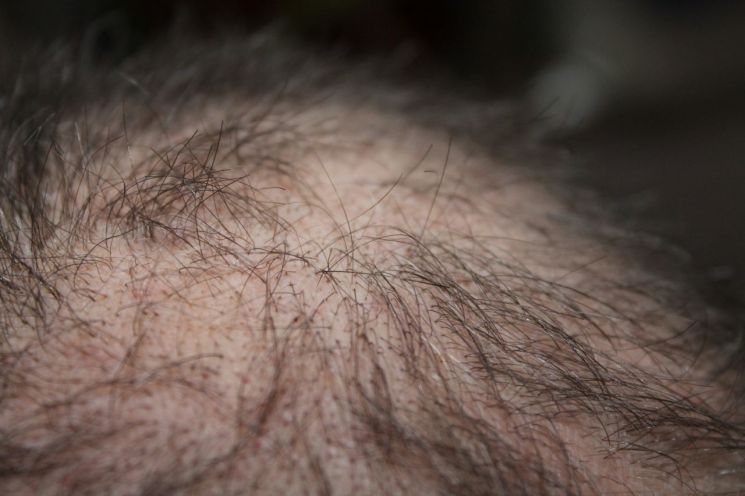
The era of 250,000 people suffering from hair loss. The stress and pain caused by hair loss have also become subjects of welfare policies. Local governments are preparing ordinances to support medical expenses for young people experiencing hair loss.
The first place to promote a hair loss treatment expense support project was Seongdong-gu. With the purpose of encouraging young people to enjoy confident and vibrant daily lives, the related ordinance was passed by the city council in May 2022, and the project officially started in March last year. This project targets Seongdong-gu residents aged 39 or younger who have been registered residents of Seongdong-gu for more than three months as of the application date and have been diagnosed with hair loss at a medical institution.
Support is provided through a pre-purchase, post-support method. If the applicant pre-purchases treatment up to 80% of their out-of-pocket expenses within an annual limit of 200,000 KRW, the amount spent will be reimbursed. In the early stages of the project, from March to June last year, only 50% of treatment costs were supported, but from July of the same year, the support rate was expanded to 80%. Last year, 988 young people received support for hair loss treatment expenses.
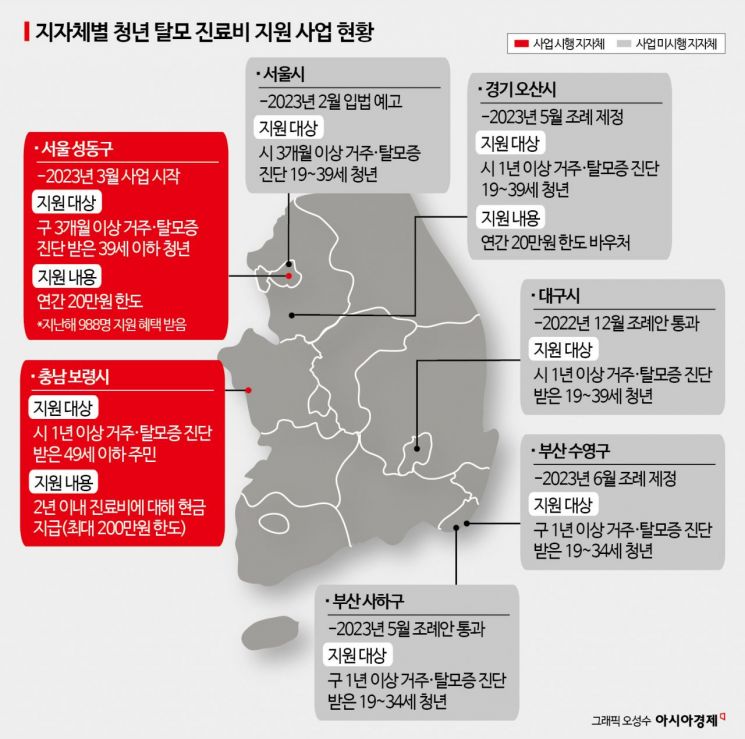
Boryeong City in Chungnam supports hair loss medical expenses for residents aged 49 or younger, not just youth. They support the out-of-pocket costs for medical treatment and medication. The support is provided up to 150,000 KRW per month and 500,000 KRW per year for a maximum of two years. Through this project, 350 people received treatment support last year, and a similar scale of the project is underway this year.
The youth hair loss support projects started due to the negative perception of hair loss. Especially for young people, hair loss is said to negatively affect job seeking, dating, and marriage. There is also research showing that people in their 20s experience more stress from hair loss than other age groups. According to a survey conducted by the research firm Embrain in March last year targeting 1,000 adult men and women on perceptions related to hair loss, 25.6% of respondents in their 20s said they hesitated to meet people or go out because of hair loss, the highest among all age groups. This was followed by 40s (17.0%) and 30s (16.9%).
The number of hair loss patients in Korea is on the rise. According to the Health Insurance Review & Assessment Service's "Statistics on Diseases and Medical Practices in Daily Life," the number of domestic hair loss patients increased from 224,840 in 2018 to 247,915 in 2022. The scale of medical expenses also rose by about 35%, from 27.1 billion KRW in 2018 to 36.8 billion KRW in 2022. This is why some local governments' hair loss treatment expense support projects are receiving positive responses.
However, just because an ordinance is prepared does not mean the project immediately starts. There are several regions where progress has stalled during project preparation, budget formulation, and review processes. To start the project, social consensus must first be achieved, but criticism arises questioning whether hair loss should be prioritized over serious diseases like cancer. There are also opinions that youth policies should focus more urgently on housing and jobs. Additionally, since stress from hair loss is felt across all age groups, limiting support only to youth raises issues of reverse discrimination and fairness.
Accordingly, the Seoul Metropolitan Council has postponed the review of the youth hair loss treatment support ordinance, and Daegu City did not include the hair loss support project budget in this year's budget. Osan City in Gyeonggi Province also has an undecided project start date. The original support plan, according to the "Osan City Youth Hair Loss Treatment Support Ordinance" passed in April last year, was to support 250 young residents who have lived in the city for more than one year with 200,000 KRW annually for hair loss treatment, but the project is currently stalled in the review process. Daegu City and Suyeong and Saha Districts in Busan have also not yet started the project.
Other than these, Bucheon City in Gyeonggi Province has prepared an ordinance to support youth hair loss medical expenses. On the 26th, the "Bucheon City Youth Hair Loss Support Ordinance," which supports hair loss treatment expenses for residents aged 19 to 39, passed the city council. Although the support amount has not yet been finalized, the likely plan is to reimburse actual treatment expenses up to 200,000 KRW per person. If an annual budget of 80 million KRW is allocated, it would be possible to support hair loss treatment expenses for 400 people each year.
© The Asia Business Daily(www.asiae.co.kr). All rights reserved.


















