Approximately 3.57 Million Confirmed Cases So Far
"Likely to Surpass All-Time High Record"
Dengue fever is spreading uncontrollably across the Americas. Especially in South America, including Brazil and Paraguay, where patients are emerging rapidly, the annual number of infections this year is expected to reach an all-time high.
The Pan American Health Organization (PAHO), the regional office of the World Health Organization (WHO) for the Americas, stated at a press conference held via YouTube live broadcast on the 28th (local time), "Currently, all four dengue virus serotypes are observed in virtually all regions of the Americas except Canada," adding, "In some countries, multiple serotypes are circulating simultaneously." Serotypes refer to the unique reaction properties to specific antigens or antibodies, and infection with different serotypes is known to increase the risk of severe dengue and death.
Including the United States, the total number of dengue infections recorded so far this year in the Americas is 3,578,414 cases. The number of deaths is identified as 1,039. PAHO reported, "This figure is three times the scale of infections reported at the same time last year." It also predicted that this year’s total infections will surpass the previous record high of 4,569,464 cases recorded last year.
The situation in Brazil is particularly serious. Brazil has reported 2,966,339 dengue cases this year alone, accounting for 1.4% of the total population. This is the largest scale since Brazilian health authorities began compiling related statistics in 2000. In neighboring Paraguay, 191,923 people, or 3% of the total population, have contracted dengue fever. Argentina, Peru, and Colombia are also accumulating daily patient numbers. In Puerto Rico, a U.S. territory, hundreds of dengue infections have been reported despite its relatively isolated island status. A public health emergency has been declared in Puerto Rico.
WHO health officials pointed to abnormal high temperatures, rapid urbanization, droughts and floods related to climate change, and poor sanitation conditions in some countries as causes of the surge in dengue fever. The Brazilian Ministry of Health particularly noted that the heavy rains from November last year to January this year and the high temperatures caused by El Ni?o have led to an explosive increase in mosquitoes, the vectors of infection.
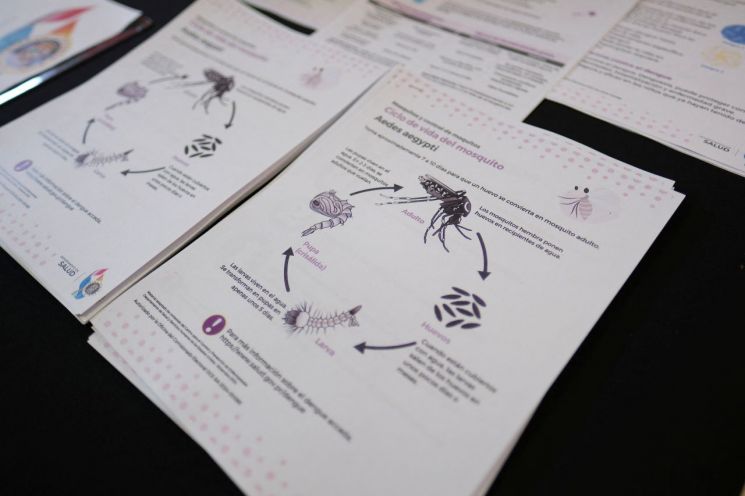
Dengue fever is transmitted through mosquitoes carrying the dengue virus. The main symptoms include high fever, headache, joint and muscle pain, and rash, and in severe cases, it can lead to death. In some countries, special bred mosquitoes that can kill dengue-infected mosquitoes have been deployed to suppress the spread.
© The Asia Business Daily(www.asiae.co.kr). All rights reserved.
![Clutching a Stolen Dior Bag, Saying "I Hate Being Poor but Real"... The Grotesque Con of a "Human Knockoff" [Slate]](https://cwcontent.asiae.co.kr/asiaresize/183/2026021902243444107_1771435474.jpg)















