ExxonMobil, Shell, Chevron, etc.
Investing in Carbon Capture, Utilization, and Storage Technologies
Competing to Secure Drilling Space and Rights in Indonesia and Malaysia
Amid the global 'Net Zero (carbon neutrality)' movement, a fierce battle for survival is unfolding among the 'oil giants.' Massive fossil fuel companies such as ExxonMobil, Shell, and Chevron have identified carbon capture technologies as their future growth engines and are securing infrastructure in Southeast Asian countries.
The oil field wars are a thing of the past... now it's a competition for net zero infrastructure
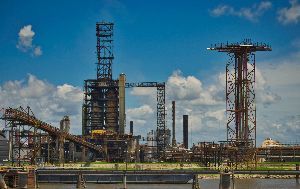
On the 28th (local time), Bloomberg reported, "While the world's largest oil companies competed for oil fields thousands of kilometers away a century ago, they are now courting Indonesia and Malaysia to secure carbon capture, utilization, and storage technologies (CCUS·CCS+CCU), which could potentially become multi-billion-dollar revenue sources." CCUS refers to the technology that captures carbon from emission facilities, transports it via ships or pipelines to storage facilities under the seabed (CCS), and further utilizes it where needed (CCU). As major developed countries such as the United States and Europe pressure fossil fuel companies to achieve carbon neutrality, these companies view CCUS as a new growth engine.
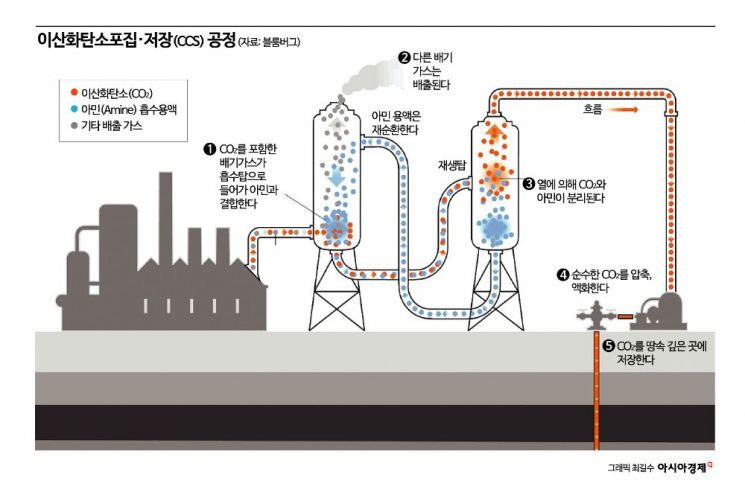
Indonesia and Malaysia are considered countries actively promoting foreign investment to build their own CCUS infrastructure. Given their continued high dependence on the fossil fuel industry, they aim to secure CCUS capabilities in advance. The Indonesian government passed a presidential decree last month providing incentives to carbon storage operators. Malaysia aims to draft legislation on carbon import and storage in the first quarter of next year.
According to the Norwegian consulting firm Rystad Energy, CCUS in Southeast Asia could generate approximately $16 billion in annual revenue by 2050. Line Mann Bergsmark, head of CCUS research at Rystad Energy, noted, "There is competition among fossil energy companies to secure drilling space and rights to store carbon here."
ExxonMobil, Shell, Chevron, and other oil giants accelerate their lead
ExxonMobil, Shell, and Chevron are representative examples. ExxonMobil signed a $2.5 billion contract last year with Indonesia's state-owned oil company Pertamina to develop storage facilities. Chevron also signed a joint research agreement with Pertamina to explore CCUS technology development. Shell agreed to collaborate with Malaysia's state-owned oil company Petronas to investigate potential CCUS sites. TotalEnergies invests about $100 million annually in global CCUS development. Etienne Angles Doriac, Vice President in charge of CCS at TotalEnergies, stated, "The investment scale will triple within ten years."
The International Energy Agency (IEA) projects that to achieve global carbon neutrality by 2050, over 1 billion tons of carbon must be captured and stored annually within the next decade. However, only about 4% of this capacity is currently available worldwide. Large oil companies can lease storage space for a fee, creating new revenue streams.
Challenges ahead
The problem lies in infrastructure construction costs. Bloomberg forecasts that capturing and storing one ton of carbon dioxide could cost over $1,000. If high prices cannot be set for carbon emissions, oil companies may not be able to make even low-cost capture and storage projects financially viable.
Even if carbon capture succeeds in the long term, the development of ships capable of transporting carbon is necessary. It also takes years to explore suitable storage sites. Aquifers based on rock formations that hold sufficient water are considered promising carbon storage locations.
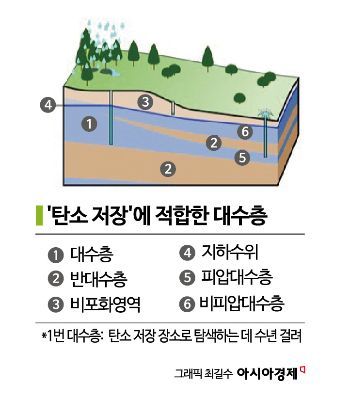
Oil companies emphasize the importance of building business models with governments at the early stages. Yuri Ping, Shell's Asia-Pacific CCS General Manager, stressed, "In recent years, the pace of collaboration between the industry and governments has accelerated, and it must continue to do so."
© The Asia Business Daily(www.asiae.co.kr). All rights reserved.



















