Doctors' Collective Action Central Disaster and Safety Countermeasures Headquarters Meeting
"Number of Doctors in 16 Cities and Provinces Except Seoul: 1.93"
"Plan to Improve Medical School Education Conditions in April"
The government reiterated its commitment to increasing medical school quotas, calling it a "necessary condition to initiate the normalization of healthcare" for the first time in 27 years. In particular, it urged dialogue with the government, stating that "healthcare reform is for all citizens as well as for healthcare professionals."
On the 27th, Lee Sang-min, Minister of the Ministry of the Interior and Safety and the 2nd Deputy Head of the Central Disaster and Safety Countermeasures Headquarters (CDSCH) for the doctors' collective action, said before the meeting, "The government will prioritize the lives and health of the people and mobilize all available resources across the government to ensure that there are no gaps in the emergency medical system focused on critically ill and emergency patients," emphasizing this point.
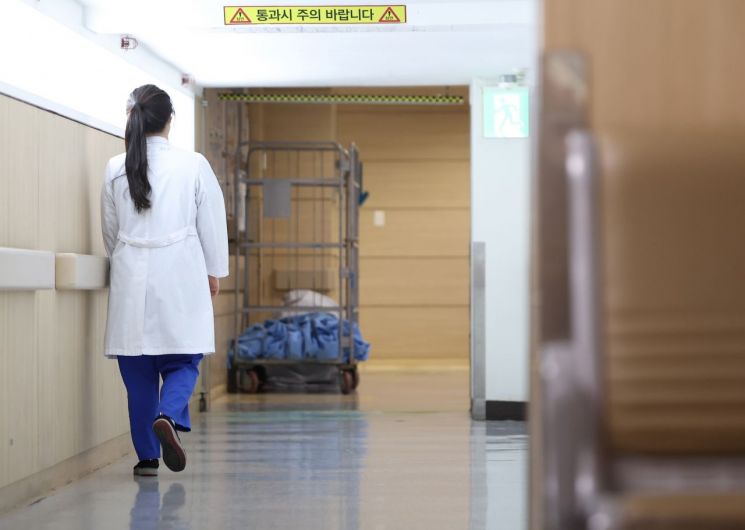
On this day, Minister Lee emphasized the government's expansion of medical school quotas as a 'necessary condition,' pointing out that "the number of doctors per 1,000 people in OECD countries averages 3.7, but in 16 out of 17 cities and provinces in Korea, excluding Seoul, the number of doctors per 1,000 people is only 1.93." He added, "In response to aging populations, countries around the world have steadily increased medical school admissions. The United States has increased admissions by 7,000 over the past 20 years, France by 6,150, and Japan by 1,759."
He also explained that a demand survey by university has begun regarding faculty increases and the expansion of educational and practical training facilities to prepare the necessary educational conditions for increasing medical school quotas. Minister Lee said, "Through the second meeting of the Medical Education Support TF yesterday, we started a university-specific demand survey covering eight areas, including faculty increases. We plan to actively reflect each university's demands and prepare measures to improve medical education conditions by April."
He also called for dialogue with the government. Minister Lee said, "We ask healthcare stakeholders to stop fruitless conflicts, come to the table for constructive dialogue, and work together to solve the pressing challenges in the medical field and to concretize and develop plans for healthcare normalization. We also urge medical school professors to persuade residents to return as soon as possible and to actively engage in dialogue with the government."
Meanwhile, the day before, the government met with key figures in the medical community to discuss forming a 'medical-government consultative body' to address the current situation but gained no tangible results. Prime Minister Han Duck-soo visited Seoul National University College of Medicine in Jongno, Seoul, and conveyed the position that "I believe the public wants those involved and capable of resolving the issues to form a constructive dialogue body to foster mutual empathy and understanding," but it is reported that the scale of the medical school quota increase itself was not discussed.
© The Asia Business Daily(www.asiae.co.kr). All rights reserved.

















