Controversy Over Explicitness of Guideline Illustrations
A Japanese local government presented guidelines after controversy arose over the 'swimsuit-clad women photo shoot' being sexualized, but the attached images were too explicit, sparking another controversy.
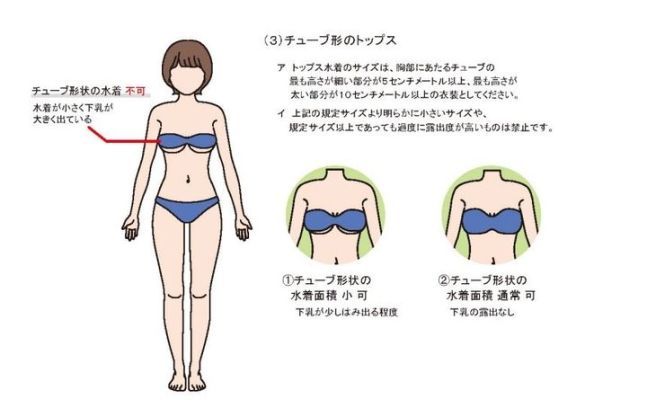
On the 21st, the local media Sankei Shimbun published an article titled “Saitama Prefecture Park Association’s overly detailed guidance on swimsuit photo shoots.” It stated, “The Saitama Prefecture Park Greenery Association proposed new conditions for swimsuit photo shoots, but there are criticisms that the details are too explicit.”
The issue concerns the “women’s swimsuit photo shoot” held at the Shirakobato Water Park, a prefectural park operated by Saitama Prefecture. It is an event photographing gravure idols (models for revealing photo books), mainly attended by men who pay tens of thousands of yen as an entrance fee. Since 2018, about 120 swimsuit photo shoots have been held at the prefectural park.
Last year, the Japanese Communist Party’s Gender Equality Committee and affiliated members of the Saitama Prefectural Assembly reviewed past photos of the swimsuit photo shoots and judged that “it is clear that the event is for sexual commodification, with women in swimsuits posing obscenely. There were also minors participating.” They requested that the prefectural park not be rented for related events.
The Park Greenery Association, which manages the park, requested a blanket suspension of six photo shoots scheduled to be held at two parks within the prefecture. They cited the park rental condition that “swimsuits that are excessively revealing or provocative poses should be avoided.”
Participants were outraged. They said, “Feminists and left-wing communists are suppressing freedom of expression like Nazis,” and expressed strong anger, warning that if this continues, Japan’s unique gravure culture might disappear. In response, the association presented new permit conditions: banning entry for youths under 18 and requiring that the photo shoot be shielded so it cannot be seen from outside.

Additionally, wearing swimsuits that expose certain parts or are likely to do so is prohibited. Certain poses are also banned during shooting. The association said, “We added specific illustrations to make the permit conditions easier to understand,” and released images that were so explicit and graphic that they fueled further controversy.
In Japan, photo shoots of young women in bikini swimsuits are called “gravure” and are recognized as a publishing genre. Gravure photo shoots were considered a gateway to the entertainment industry, and there was a time when even elementary school students could be photographed without legal issues. Recently, awareness and criticism regarding “sexual commodification” and “child sexual exploitation” have increased in Japan, leading to many challenges against gravure shoots involving minors and those held in public places.
© The Asia Business Daily(www.asiae.co.kr). All rights reserved.