As the United States is reportedly considering sanctions against Huawei's partners, China criticized this move as a "typical practice of economic bullying." It also indicated a response policy, stating that if the U.S. sanctions are actually implemented, it will take measures to protect the rights and interests of Chinese companies.
At a regular briefing on the 21st, Ministry of Commerce spokesperson He Yadong stated, "China has always opposed the politicization and weaponization of economic, trade, and technological issues," and pointed out, "In recent years, the United States has abused export control measures and pressured Chinese companies through unreasonable sanctions, seriously disrupting and damaging the global semiconductor industry and supply chains."
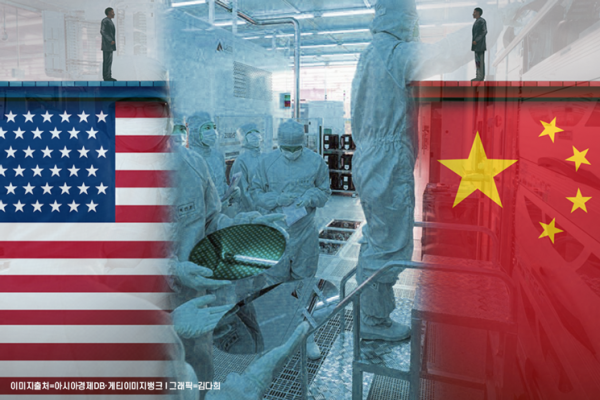
Spokesperson He warned, "If the United States continues to mobilize national power to pressure Huawei and imposes sanctions on more Chinese companies under the pretext of so-called relevance, this is typical economic bullying," adding, "It violates international economic and trade rules and damages the sustainability of economic and trade relations, earning the contempt of the international economic and trade community." He further emphasized, "China urges the United States not to engage in such wrongful practices" and "will take appropriate measures to protect the legitimate rights and interests of Chinese companies."
Earlier, Bloomberg News reported, citing sources, that the U.S. government is considering placing Chinese Huawei partners on a blacklist to impose sanctions. According to the report, companies that produced 7nm (1nm = one billionth of a meter) class semiconductors installed in Huawei's smartphone 'Mate 60 Pro,' released in August last year, are expected to be included in the new sanctions list. The related companies mentioned include Chinese chip manufacturers Qingdao Xian and Changxin Memory Technology, semiconductor equipment manufacturers Shenzhen Fengjin High-Tech and SiCarrier, among others. Most of these were confirmed to be either acquired by Huawei or partners, as announced by the U.S. Semiconductor Industry Association last year.
The background to the U.S. intensifying pressure on China is interpreted as being triggered by Huawei's new product launch. In August last year, Huawei surprised the world by releasing the new smartphone 'Mate 60 Pro,' equipped with a Chinese-made 7nm process processor. Despite Huawei being added to the U.S. trade restriction list in 2019 and its smartphone business suffering for several years, it boldly introduced an advanced application processor (AP) to the market. The U.S. is reportedly convinced that the companies listed on the blacklist have formed a secret network to assist Huawei's semiconductor development.
© The Asia Business Daily(www.asiae.co.kr). All rights reserved.
![Clutching a Stolen Dior Bag, Saying "I Hate Being Poor but Real"... The Grotesque Con of a "Human Knockoff" [Slate]](https://cwcontent.asiae.co.kr/asiaresize/183/2026021902243444107_1771435474.jpg)















