Observations Considering Negative Impacts Related to the General Election
Hwang Sang-mu, Senior Secretary for Civil Society at the Presidential Office, resigned on the 20th. This came just six days after he sparked controversy by mentioning the 1980s military intelligence command's brutal attack on journalists and suspicions surrounding the May 18 Democratic Movement during a lunch with reporters, including those from MBC, who cover the Presidential Office.
President Yoon Suk-yeol accepted Hwang's resignation on the same day, the Presidential Office announced in a press release. However, it has not been disclosed when exactly Hwang conveyed his intention to resign to President Yoon. In fact, Hwang attended a meeting chaired by Lee Gwan-seop, Chief Secretary of the Presidential Office, on the 18th and performed his duties normally, including coming to work as usual the day before.
Earlier, on the 14th, MBC reported that during a meal with some reporters, Hwang said, "MBC, listen carefully," followed by inappropriate remarks. At this gathering, Hwang mentioned, "I came from the intelligence service, and in 1988, an economic newspaper reporter was stabbed twice with a knife at the Hyundai Apartment in Apgujeong."
The incident Hwang referred to was the so-called "Intelligence Service Knife Terror Incident," in which Oh Hong-geun, then social affairs chief reporter of an economic newspaper in August 1988, was attacked by assailants with a large knife in front of his home, suffering deep cuts 4 cm deep and over 30 cm long on his thigh. The investigation at the time revealed that the assailants were active-duty soldiers belonging to the military intelligence command, acting under orders from superiors displeased with Oh's critical columns about the military.
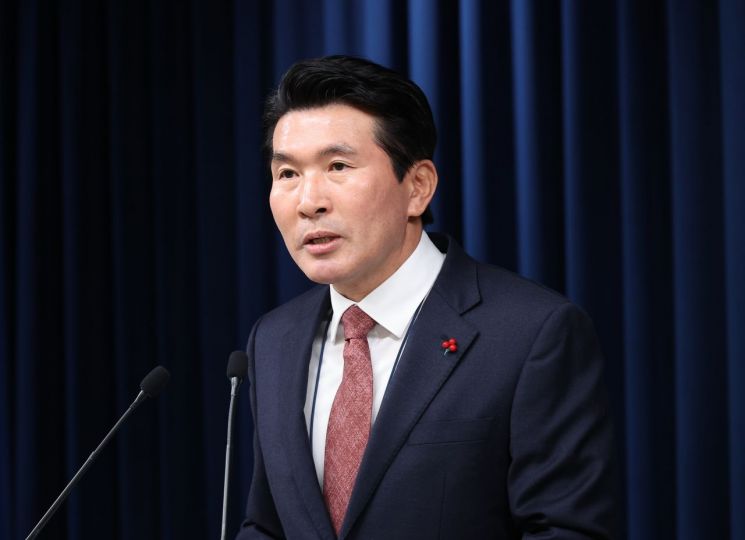
Following the report of Hwang's remarks, criticism spread widely. Opposition parties such as the Democratic Party and the Green Justice Party, as well as press organizations including the Korea Journalists Association, demanded Hwang's dismissal or resignation. In particular, the bereaved family of the late Oh Hong-geun also called for Hwang's removal through interviews with the media.
In response, on the 16th, Hwang issued a public apology through the media, saying, "I apologize for causing concern to the public with my words and actions," but he effectively rejected calls for resignation by adding, "From now on, I will be especially careful with my words and actions as a public official and act more responsibly." The Presidential Office also denied a report by Munhwa Ilbo on the 18th that "Hwang had decided to resign voluntarily," stating it was untrue.
However, it is understood that concerns arose over the negative impact of Hwang's inappropriate remarks, especially with the general election less than a month away. As the controversy did not subside and reports emerged of worsening public opinion in the metropolitan area and elsewhere, pressure for Hwang to step down intensified, particularly from ruling party leaders and candidates running in the metropolitan area.
Han Dong-hoon, Emergency Committee Chairman of the People Power Party, also pressured Hwang to resign on the 17th, saying, "His remarks do not meet the public's expectations, and he should decide his own position." Han had previously stated that his stance on the controversy had not changed.
© The Asia Business Daily(www.asiae.co.kr). All rights reserved.

















