BOJ Member Also Votes Against: "Not Yet Suitable for Small and Medium Enterprises"
Deposit Rates Rise... But Mortgage Loans Remain a Burden
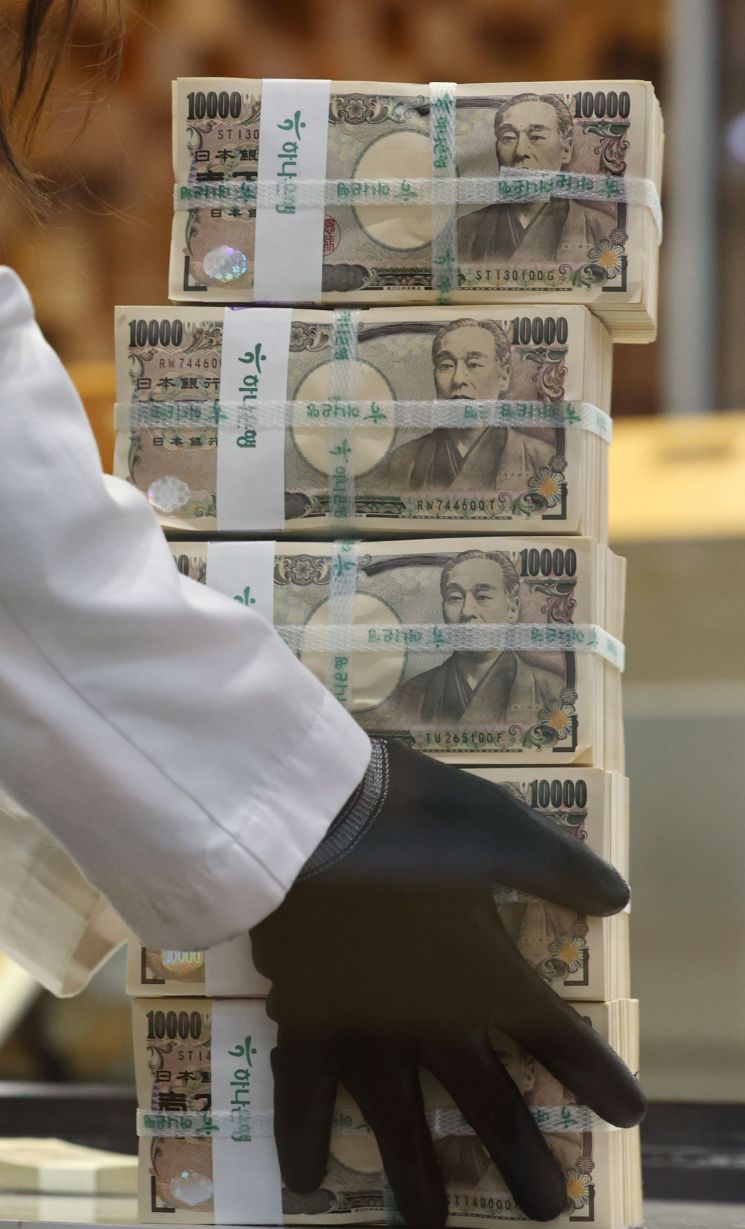
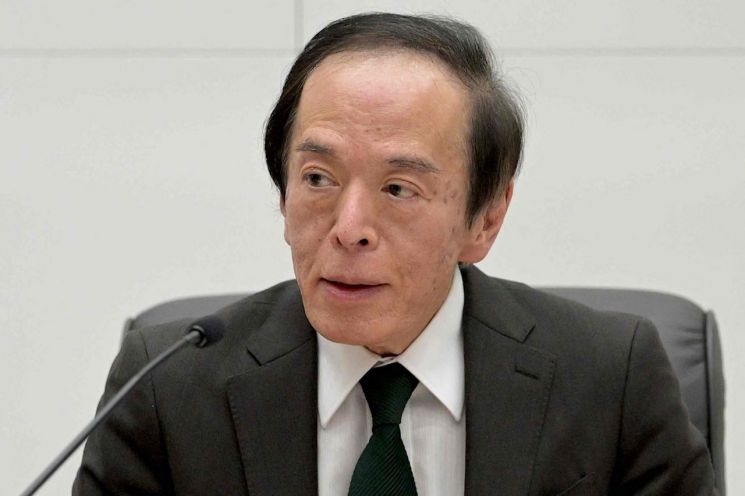
The Bank of Japan (BOJ), Japan's central bank, has lifted its negative interest rate policy. This marks the first interest rate hike in 17 years, leading to assessments that Japan's financial policy has reached a historic turning point, although reactions within Japan remain mixed.
On the 19th, the BOJ held a monetary policy meeting and decided to change its large-scale monetary easing measures. The main point was to lift the negative interest rate policy, which was the core of the monetary easing introduced in January 2016, and to manipulate short-term interest rates. The BOJ announced that it would raise the short-term policy rate from -0.1% to between 0% and 0.1%.
Along with the short-term interest rate adjustment, the BOJ will also end representative monetary easing policies such as yield curve control (YCC), which suppresses long-term interest rates, and purchases of exchange-traded funds (ETFs). However, it will continue purchasing government bonds at a level similar to the current one.
Regarding the reason for this policy change, the BOJ explained, "It is because the situation has become such that the achievement of the 2% price stability target, accompanied by wage increases, can be anticipated." However, even after lifting the negative interest rate policy, the BOJ plans not to rush additional rate hikes and will maintain an accommodative stance for the time being.
It's Okay to Lift vs. Small and Medium Enterprises Still Struggling
The negative interest rate policy was introduced by the BOJ to impose negative interest rates on a portion of deposits from financial institutions, creating an environment where accumulating deposits would result in losses, thereby encouraging financial institutions to continue spending money.
Since its introduction, corporate loan interest rates and mortgage rates have dropped significantly, but this did not lead to inflation. As a result, side effects such as adverse impacts on financial institutions' profits and pension fund management emerged. NHK evaluated, "While negative interest rate policies have been introduced by central banks in European countries, the BOJ is the only one continuing it amid global inflation."
In this context, Japan's recent inflation rise, coupled with wage increases, led the BOJ to judge that now is the right time to lift the negative interest rate. Due to the impact of COVID-19 and the Ukraine war on energy and grain supply chains, the consumer price index excluding fresh food has remained above the BOJ's 2% target level from April 2022 through January this year.
Additionally, the spring wage negotiations (Chuntu) this year saw an average wage increase rate of 5.28%, the highest in 33 years, which seems to have influenced the policy shift by enabling a virtuous cycle driven by wages.
However, some analyses argue that the policy shift is premature. Even in this year's Chuntu, the wage increase gap between large corporations and small and medium enterprises (SMEs) has widened. The 5.28% figure is the average wage increase rate for all companies including large corporations, but when classified by SMEs only, the average increase rate is 4.42%, which is 0.86 percentage points lower than the overall average. Compared to 2023, when the difference was 0.35 percentage points, the wage increase gap between large corporations and SMEs has widened.
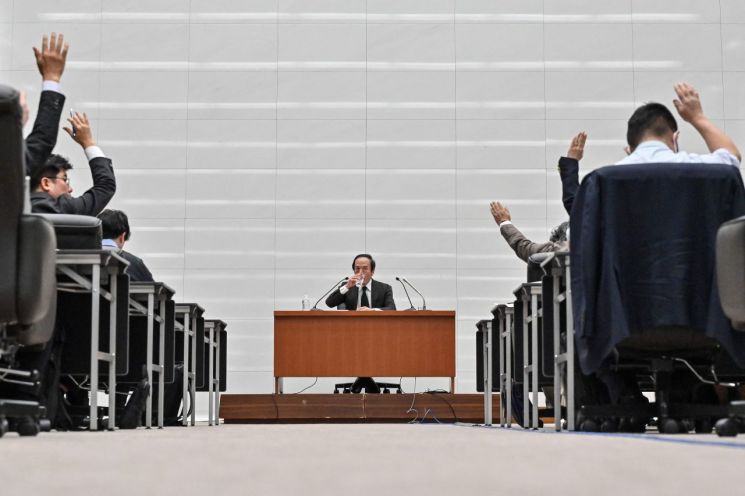
This was also a point of contention among BOJ policy board members regarding lifting the negative interest rate. The vote was decided with 7 in favor and 2 against. The dissenting members argued, "While I agree with ending ETF purchases, the negative interest rate policy should continue until it is confirmed that SMEs, whose performance recovery is slow, have increased wage-raising capacity."
What About Japanese Stocks and Exchange Rates... Japanese Media on Alert
NHK analyzed the potential impacts of this policy shift. Regarding bank deposits, interest rates were virtually zero, but with the lifting of the negative interest rate, deposit interest rates are expected to rise. However, since over 70% of mortgage users have variable interest rates, financial institutions will decide whether to raise interest rates going forward.
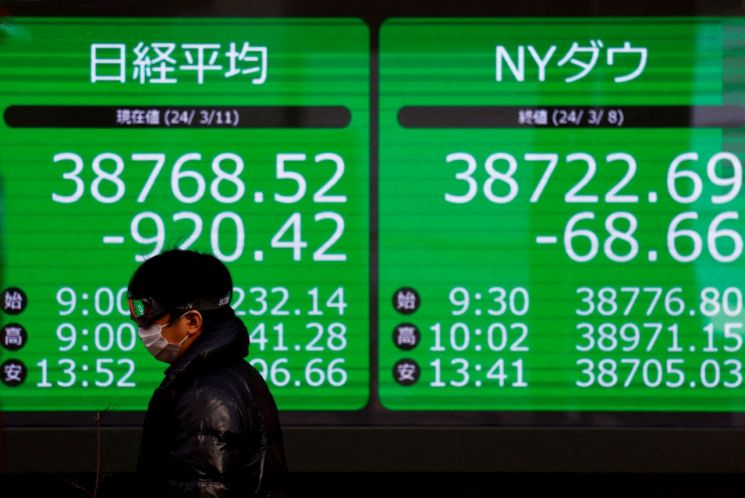
Attention is also focused on the Japanese stock market, which has been rising continuously. NHK reported, "One factor driving stock prices up was the spread of expectations for corporate earnings amid the BOJ's continued stance on monetary easing," adding, "Future stock prices will depend on how investors interpret this." Additionally, there is attention on whether the current weak yen will shift to yen appreciation. Since the interest rate differential between the U.S. and Japan has driven yen depreciation, some analyses suggest that with the narrowing interest rate gap this time, the yen's value could rise.
Government "No Disagreement"... Diverging Political Opinions
Finance Minister Junichi Suzuki stated regarding the lifting of the negative interest rate, "The BOJ and the government have no disagreement on the current status and outlook of the Japanese economy." This effectively shows alignment with the BOJ's decision and lends support.
He told reporters at the National Diet, "Considering the change in monetary policy, it is necessary to closely monitor the economy, financial markets, and foreign exchange markets," and added, "Going forward, the government and the BOJ will cooperate closely to conduct flexible policy operations based on economic and price trends."
However, he drew a line regarding some analyses that this means escaping deflation (price decline amid economic stagnation). The finance minister emphasized, "This policy change does not mean escaping deflation. Decisions must be made by comprehensively judging various indicators."
Politicians from both ruling and opposition parties also offered their evaluations. Jisaburo Tokai, chairman of the Liberal Democratic Party's Policy Research Council, said, "I view this major policy shift positively."
Hiroyuki Nakamura, co-leader of the LDP's "Parliamentary League for Responsible and Active Fiscal Policy," shared the same recognition but expressed doubts about the timing. In an interview with Nihon Keizai Shimbun (Nikkei), Nakamura said, "We should continue the current monetary easing policy." He pointed out, "The BOJ has failed in past easing changes. With weak personal consumption and increasing bankruptcies, shouldn't we wait a little longer?"
Katsuya Okada, secretary-general of the Constitutional Democratic Party, said, "(This lifting decision) is late. Despite various adverse effects already emerging, it was delayed. However, even if it is late, the fact that the direction can now be changed is commendable."
© The Asia Business Daily(www.asiae.co.kr). All rights reserved.



















