Ukraine's Attack on Russian Refineries
OPEC+ Continues Crude Oil Export Limits
Supply Factors Grow in Major Oil Producers
Strong Chinese Economic Indicators
Global Crude Oil Demand Expected to Rise
International oil prices have risen to their highest level in over four months. This is due to supply constraints caused by collusion among major oil-producing countries and geopolitical concerns, while global crude oil demand continues to increase.
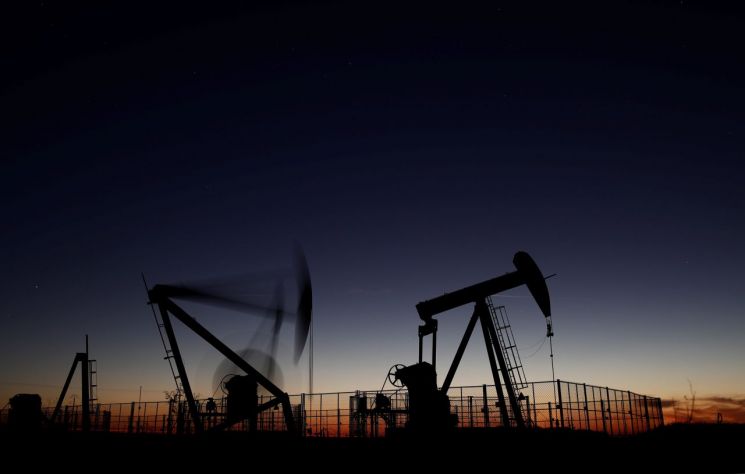
According to the London ICE Futures Exchange on the 18th (local time), the global oil benchmark Brent crude May delivery futures rose $1.55 (1.8%) from the previous trading day to $86.89 per barrel. The April delivery West Texas Intermediate (WTI) futures traded on the New York Mercantile Exchange closed at $82.72, up $1.68 (2.1%) from the previous day. Both Brent and WTI recorded their highest levels since late October last year. International oil prices have jumped 15% since the beginning of this year.
The recent rise is attributed to geopolitical concerns triggered by Ukraine's drone attacks on Russian refining facilities. Last week, three refineries located in Ryazan, Kstovo, and Kirishi in Russia were targeted by Ukrainian drone attacks, and the day before, the Slavyansk refinery in Krasnodar Krai was hit, causing a fire. This refinery processes about 170,000 barrels of crude oil per day. Earlier, a fire also broke out at the Syzran refinery in the Samara region of central Russia.
Stephen Innes, Managing Partner at SPI Asset Management, explained, “The Russian authorities' short-term reduction in crude oil exports to mitigate the impact of Ukraine's attacks on refining facilities has acted as upward pressure on oil prices.”
Expectations that China's economic recovery will increase crude oil demand have also pushed prices higher. According to China's National Bureau of Statistics, industrial production in China from January to February increased by 7.0% year-on-year, surpassing the forecast (5.0%) and the growth rate in December last year (6.8%). XS.com noted in an investment memo that China's crude oil demand is becoming a partial upward factor.
Export restrictions by major oil-producing countries are expected to continue. Iraq has capped its maximum crude oil exports at 3.3 million barrels per day in accordance with the OPEC+ (Organization of the Petroleum Exporting Countries (OPEC) members and non-OPEC coalition) production cut agreement. Saudi Arabia, the largest oil producer, has seen a decline in crude oil exports for two consecutive months, continuing from December last year into January this year.
There is also analysis suggesting that oil supply may not keep up with demand this summer, potentially driving prices even higher. The International Energy Agency (IEA) raised its global crude oil demand forecast from 1.2 million barrels per day to 1.3 million barrels per day in a report released on the 14th. OPEC expects global crude oil demand to reach 2.2 million barrels per day this year.
Morgan Stanley raised its Brent crude price forecast for the third quarter by $10 to $90 in an investment memo released on the same day.
© The Asia Business Daily(www.asiae.co.kr). All rights reserved.
![Clutching a Stolen Dior Bag, Saying "I Hate Being Poor but Real"... The Grotesque Con of a "Human Knockoff" [Slate]](https://cwcontent.asiae.co.kr/asiaresize/183/2026021902243444107_1771435474.jpg)











