Raw Material, Labor, and Transportation Cost Increases Prevent Price Adjustment
Suppliers Turn to High-End Brands Like 300 Yen Shops for Survival
Japan's '100-en shops,' which have grown through a strategy of selling a wide variety of products at around 100 yen (890 won) each, are now at a crossroads. This is because suppliers, who must keep prices at 100 yen despite rising costs, are beginning to go bankrupt one after another. As even companies capable of supplying products are reluctant to deliver to 100-en shops, concerns are rising that the industry is in jeopardy.
According to NHK's investigation on the 18th, at least six wholesale companies supplying goods to 100-en shops have gone bankrupt since 2022. Previously, in September last year, a manufacturer in Osaka City that supplied daily necessities to Japan's Daiso applied for civil rehabilitation (similar to reorganization procedures in Korea), sparking fears of the 'end of 100-en shops.' This company, which produced hundreds of millions of items, stated that the rise in raw material prices and labor costs worsened profits, leading to bankruptcy.
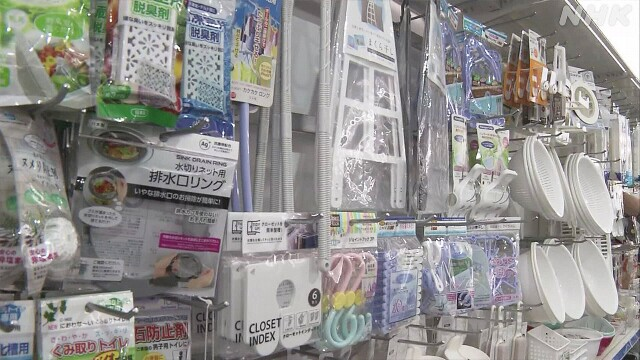
The situation is similar for other companies. Facing difficulties, suppliers have chosen the path of shrinkflation by reducing product size or quantity when delivering. NHK reported on the case of the Sanada Group, which manufactures and supplies plastic kitchenware and storage boxes to 100-en shops.
Sanada Group's profits have significantly deteriorated due to the sharp rise in naphtha prices, a raw material for plastic, and increased transportation costs. Although costs have risen, the delivery price must remain fixed at 100 yen, so the company is trying various cost-cutting methods. For example, the plastic document baskets, which sell up to 300,000 units per month, have been reduced in height by 1.5 cm compared to 2021. While costs have increased by 20% since 2021, the company cannot raise prices, so it adopted a strategy of reducing product size. Despite these efforts, cost-cutting has limits, and some items have inevitably been discontinued.
Sanada Kazuyoshi, president of the company, said, "There is anxiety about how long we can maintain this price. With labor and logistics costs rising every year, we are concerned about whether we can continue to meet the 100 yen price in the future."
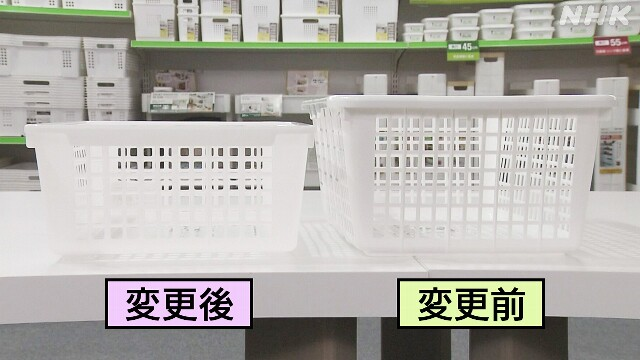
In response, suppliers have begun adopting a strategy of trading with 300-en (2,700 won) shops or home furnishing companies that offer better quality but are more expensive than 100-en shops, in search of new opportunities. As a result, the market share of 100-en shops is expected to gradually shrink.
NHK analyzed that the wave of supplier bankruptcies is due to a widespread corporate mindset in Japan since the collapse of the bubble economy that 'prices must not be changed.' Companies have pushed themselves to meet unit prices, ultimately leading to business closures. The 100-en shops, their clients, grew through low-price competition during the long-term recession known as the 'Lost 30 Years.'
NHK explained, "Even when costs rise, adjusting through other means was a demonstration of managerial skill," but also noted that "these actions accumulated and eventually created a deflationary economy."
© The Asia Business Daily(www.asiae.co.kr). All rights reserved.


















