Russian President Vladimir Putin secured his fifth term with an overwhelming approval rating in the 87% range in the 2024 presidential election, ascending as the '21st-century Tsar.' This effectively paves the way for lifetime rule.
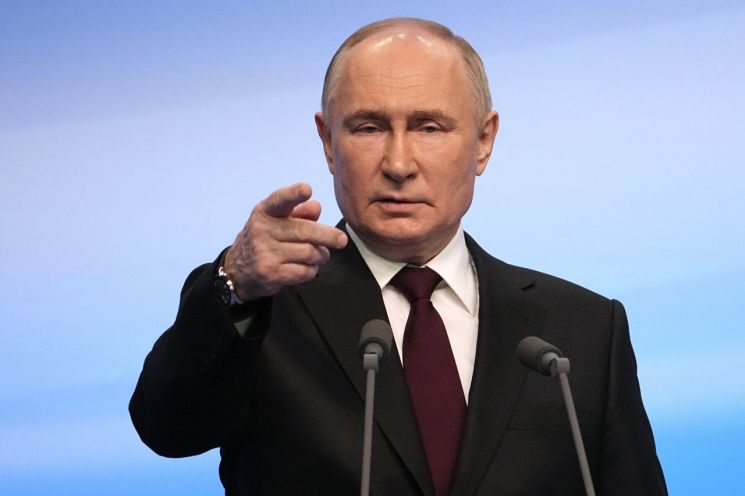
The Russian Central Election Commission announced on the 17th (local time) that President Putin's vote share in the concluded Russian presidential election stood at 87.32% based on 95% of the votes counted. This is the highest vote share ever recorded. Earlier exit polls for the Russian presidential election also showed Putin's vote share at 87%. The pro-Putin candidates who ran as 'stooges' each garnered less than 5% support. The overall voter turnout also reached a record high in the 74% range.
After confirming his fifth term on the day, President Putin stated, "Russia must be stronger and more effective," adding, "The source of Russian power is the Russian people. It is impossible to suppress the will of Russians from outside." Having been in power since 2000, including his time as Prime Minister, President Putin will extend his rule until 2030. This surpasses the 29-year record of Joseph Stalin, the former Soviet Communist Party Secretary. Moreover, the 2020 constitutional amendment has opened the path for President Putin to remain in power until 2036.
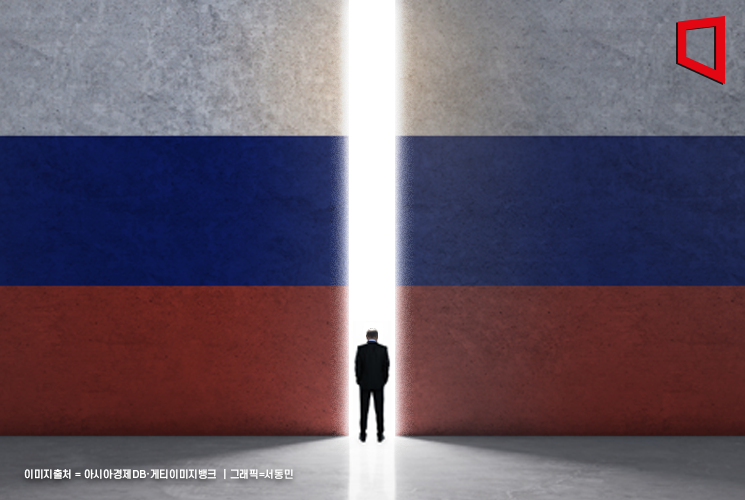
With President Putin's success in securing a fifth term, attention is also drawn to the potential impact of his future actions on international affairs. Given the high vote share that confirms the justification for the Ukraine war, concerns are mounting that the fifth-term administration will confront the West and prolong the war. The deepening ties between North Korea and Russia also raise concerns about potential security threats to the Korean Peninsula.
For President Putin, who seeks to justify the invasion of Ukraine (special military operation), this election is virtually a national referendum. Accordingly, having laid the foundation for long-term rule with the highest-ever vote share in the 87% range, President Putin now believes he has secured strong domestic support for the war's justification, making it highly likely that he will expand offensives against Ukraine. Consequently, the possibility of finding a peace solution through negotiations diminishes.
The confrontation between the West and Russia is also expected to intensify. Ahead of the election, President Putin issued so-called nuclear warnings, stating, "If sovereignty is threatened, Russia is always ready to use nuclear weapons." He is also expected to strengthen anti-Western alliances in response to NATO's eastward expansion.
The close ties between Russia and North Korea heighten security concerns on the Korean Peninsula. As the Ukraine war drags on, Russia is showcasing an increasingly close relationship with North Korea, including receiving much-needed ammunition supplies. Following a meeting with State Affairs Commission Chairman Kim Jong-un in Russia last September, President Putin is expected to visit North Korea soon. Russia has also confirmed its intention to strengthen strategic cooperation with China. The close trilateral ties among North Korea, China, and Russia not only deepen the new Cold War dynamics but also inevitably affect the situation on the Korean Peninsula.
© The Asia Business Daily(www.asiae.co.kr). All rights reserved.


















