Key Points: Economic Outlook and Dot Plot Revisions at March FOMC
Interest Rate Decisions in Japan and UK... BOJ Likely to End Negative Interest Rate Policy
This week, major central banks including the U.S. Federal Reserve (Fed), Japan, and the United Kingdom will hold a series of 'big events' to decide their benchmark interest rates. The key issue is whether the Fed, which attracts the attention of investors worldwide, will maintain its existing forecast of cutting interest rates by a total of 0.75 percentage points over three times this year. The market expects to find clues about the timing and magnitude of U.S. rate cuts through the Fed's economic and interest rate outlooks and the messages from Fed Chair Jerome Powell.
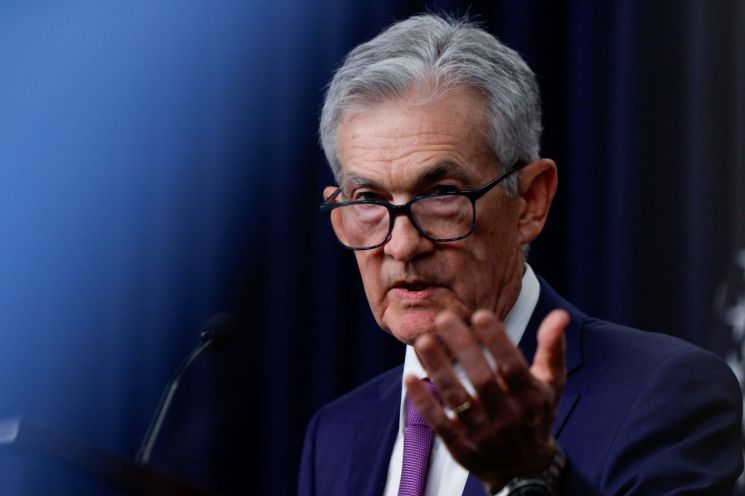
According to the Fed on the 17th (local time), the FOMC will be held on the 19th-20th. At this second meeting of the year, the Fed is expected to keep the benchmark interest rate at the current level of 5.25-5.5%. According to the Chicago Mercantile Exchange (CME) FedWatch, the federal funds futures market on that day reflects a 98% probability that the Fed will keep the benchmark interest rate unchanged at the March FOMC.
The key point is whether the Fed will revise its economic outlook, which it releases every three months. Following January, February's Consumer Price Index (CPI) and Producer Price Index (PPI) exceeded expert expectations, confirming persistent inflation, raising attention on whether the Fed will revise its economic outlook.
There is also speculation that the Fed may revise the dot plot showing its interest rate projections. At the December FOMC last year, the Fed projected the median federal funds rate for this year to be 4.5-4.75%, anticipating three rate cuts of 0.25 percentage points each over the year, totaling a 0.75 percentage point reduction. It also forecasted an additional 1 percentage point cut in 2025. However, since inflation has been stronger than expected since the beginning of the year, some expect the Fed to reduce the number of rate cuts this year from three to two.
The market still maintains the forecast of three rate cuts this year. According to FedWatch, investors expect the Fed to make its first rate cut in June-July and to lower rates three to four times this year. In a Bloomberg survey, most economists also predict three rate cuts within the year, starting with a pivot in June.
Meanwhile, there is a forecast that U.S. demand is rapidly shrinking, and with pandemic stimulus measures losing their effect, the U.S. economy may cool quickly, increasing the need for rate cuts. Nick Timiraos, a Wall Street Journal (WSJ) reporter known as the 'unofficial spokesperson' for the Fed due to his close understanding of senior Fed officials' intentions, said, "A resilient economy weakens arguments that monetary policy is too tight, but the situation could change soon." Temporary supply increases such as rising immigration and expanded labor market participation have driven steady economic growth, but supply-side recovery is not expected to continue. Earlier, Chair Powell also stated at the January FOMC press conference that the supply-side recovery "will not last forever" and that "if the situation stops, the tightening effects could appear more sharply."
Meanwhile, this week, besides the Fed, the Bank of Japan (BOJ) and the Bank of England (BOE) will also decide on monetary policy. The BOJ is expected to hold a Monetary Policy Meeting on the 18th-19th and lift its negative interest rate policy, raising rates for the first time in 17 years. The BOE will decide its benchmark interest rate on the 21st.
Bloomberg News reported, "This week, the Fed and BOJ will lead interest rate decisions," adding, "The Fed will watch for signals for rate cuts, while the BOJ may raise rates."
© The Asia Business Daily(www.asiae.co.kr). All rights reserved.
![Clutching a Stolen Dior Bag, Saying "I Hate Being Poor but Real"... The Grotesque Con of a "Human Knockoff" [Slate]](https://cwcontent.asiae.co.kr/asiaresize/183/2026021902243444107_1771435474.jpg)
















