Excessive Competition in Short-Term Lump-Sum and Tertiary Hospital Single Room Admission Fees
Financial Supervisory Service "Concerns Over Consumer Harm... Will Take Action"
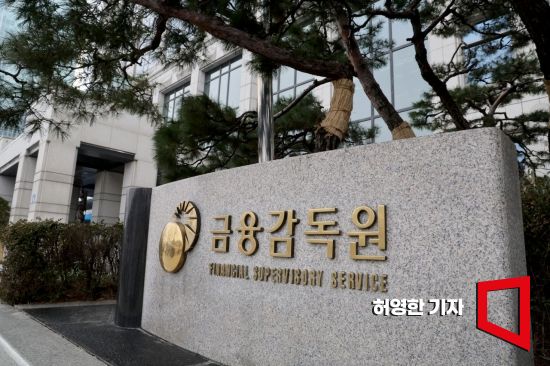
On the 17th, the Financial Supervisory Service (FSS) issued a 'Consumer Alert (Caution)' due to excessive competition in insurance products such as short-term payment whole life insurance and single-room hospitalization fees at advanced hospitals. Consumer alerts are issued to minimize potential consumer damage and are divided into three levels?caution, warning, and danger?depending on the severity.
Recently, some insurance companies have emphasized and informed that they guarantee coverage limits for advanced general hospitals or single-room hospitalization costs up to 00 million won. Some non-life insurers have even raised the daily hospitalization insurance payment for single rooms in advanced hospitals to 600,000 won per day.
There are only 47 advanced general hospitals nationwide, and some regions have none or only one, resulting in low accessibility. The number of single rooms is very small compared to the total number of hospital beds, so even if the insured wishes to use a single room, there is a possibility of restriction. Last year, the proportion of single rooms was about 6.8% in advanced general hospitals and 6.1% in general hospitals.
Mr. A joined a special rider for daily hospitalization benefits at advanced general hospitals and single rooms (both advanced general hospitals and general hospitals) after hearing from an agent that 430,000 won would be guaranteed daily. Mr. A paid a total of 470,000 won in premiums for the rider over 10 years and was recently diagnosed with thyroid cancer. He planned to receive six rounds of chemotherapy at a general hospital in Seoul with a referral from a local clinic and requested single-room use each time he was admitted, but due to lack of availability, he was admitted to a multi-bed room and thus did not receive the single-room rider insurance payment.
An FSS official explained, "Coverage for advanced general hospitals or single-room hospitalization costs has a low likelihood of use at the relevant medical facilities, so the actual insurance payout may be less than or even absent compared to the insured’s expectations (coverage limits). Also, subscribing to multiple similar hospitalization cost coverages can unnecessarily increase premium burdens, so caution is advised."
This year, insurance companies also engaged in overheated competition over refund rates for short-term payment whole life insurance with no or low surrender value. In this process, some consumers were induced to subscribe in a way that could cause confusion between protection-type insurance and savings-type insurance through aggressive marketing.
No or low surrender value products are mainly protection-type insurance focusing on death benefits and are not suitable for savings purposes. If consumers subscribe based solely on high short-term refund rates, they may suffer significant financial losses as surrender values upon early termination may be none or very low, contrary to their expectations. From 2018 to 2022, the five-year cumulative industry average lapse rate for low surrender value whole life insurance was 45.8%.
Mr. B subscribed to a low surrender value whole life insurance (7-year payment) and paid premiums for about five years. Due to sudden worsening financial circumstances, he found it difficult to maintain the contract and surrendered the policy early. If Mr. B had subscribed to a standard whole life insurance, he could have received about 24.05 million won in surrender value. However, having subscribed to a 50% low surrender value whole life insurance, he received only about 13.56 million won (56% of the standard type), resulting in an additional loss of 10.49 million won compared to the standard type.
An FSS official stated, "No or low surrender value products are mainly protection-type insurance and may not be suitable for those subscribing for savings purposes. While premiums are cheaper than standard products, surrender values upon early termination may be low or nonexistent, so caution is necessary."
When switching insurance contracts (replacement contracts), it is important to carefully compare the advantages and disadvantages between the existing and new contracts before subscribing. Terminating an existing insurance contract and subscribing to a new one with similar coverage may cause financial losses. Premiums may increase due to age or risk rate increases, or unexpected disadvantages such as coverage restrictions on some riders may occur during the re-fulfillment of the 'pre-contract disclosure obligation.'
An FSS official said, "We will closely monitor the possibility of incomplete sales caused by overheated competition such as aggressive marketing by insurance companies and immediately demand corrections for any consumer damage concerns found during this process. In the future, we will actively respond through all supervisory and inspection measures, including on-site inspections, against insurance companies and general agencies (GAs) with high risks of unfair replacement due to insufficient voluntary correction efforts or low contract retention rates."
© The Asia Business Daily(www.asiae.co.kr). All rights reserved.
![Clutching a Stolen Dior Bag, Saying "I Hate Being Poor but Real"... The Grotesque Con of a "Human Knockoff" [Slate]](https://cwcontent.asiae.co.kr/asiaresize/183/2026021902243444107_1771435474.jpg)















