Toyota's Highest in 25 Years... Rengo Average 5.85%
Key Data on Negative Interest Rates... "Policy Confidence"
"Uncertainty in SME Spread"
As major Japanese corporations consecutively raise wages significantly, expectations are growing that the Bank of Japan (BOJ) may end its negative interest rate policy as early as next week.
On the 13th (local time), major foreign media outlets such as Kyodo News and Bloomberg reported that Toyota raised wages by the largest margin in 25 years.
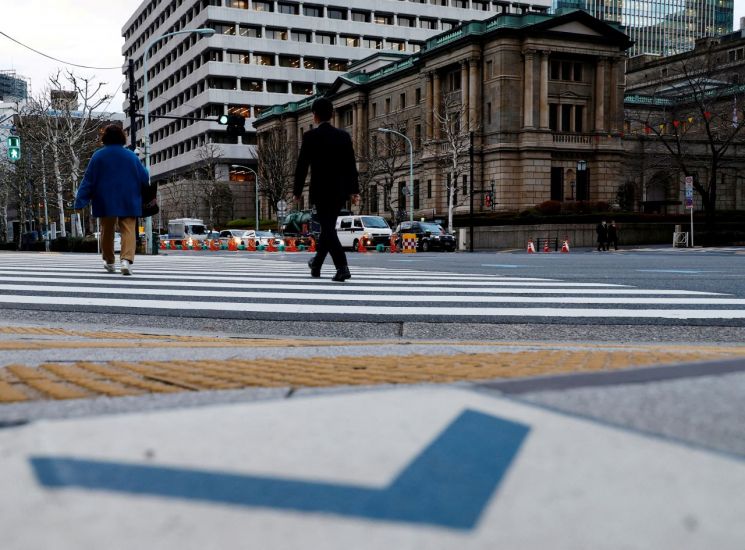
Toyota agreed to increase monthly salaries by 28,440 yen (approximately 253,435 KRW) and to pay record-breaking bonuses. The percentage increase in wages was not disclosed. Nissan decided to raise the average monthly wage by 18,000 yen (approximately 160,402 KRW), marking the largest increase since the current wage system was introduced in 2005. Nippon Steel agreed to increase base pay by 35,000 yen (approximately 311,854 KRW) per month, exceeding the union's demand. Honda Motor agreed to raise monthly wages by 21,500 yen (approximately 191,567 KRW), the largest increase since 1989, and Japan Airlines agreed to a 12,000 yen (approximately 106,921 KRW) raise, the largest in 33 years.
Rengo (Japanese Trade Union Confederation), Japan's largest labor union, is demanding an average wage increase of 5.85% this year. If this is realized, it would be the first time in 31 years that the increase rate exceeds 5%. Rengo plans to compile and announce the results of the first wage negotiations on the 15th.
The Japanese government has prioritized expanding wage increases, which had remained minimal over the past few years, to stimulate consumer spending. Ahead of the BOJ's monetary policy meeting scheduled for the 18th and 19th, the results of wage negotiations are being closely monitored as key data to determine the timing of ending the negative interest rate policy.
BOJ Governor Kazuo Ueda has stated that this year's wage negotiation results are very important in deciding when to end the negative interest rate policy. The current wage negotiation outcomes are widely seen as likely to pave the way for the BOJ to raise interest rates.
Koichi Fujishiro, Chief Economist at Dai-ichi Life Research Institute, said, "The degree of wage increases was larger than expected," adding, "I believe the BOJ has become more confident about ending the negative interest rate policy."
According to a recent Bloomberg survey, 54% of 50 economists expect the BOJ to end negative interest rates in April, down from 59% in January. Conversely, those forecasting a rate hike in March increased sharply from 8% in January to 38% recently.
However, there are concerns that wage increases are not easy for small and medium-sized enterprises (SMEs), which account for 70% of employment in Japan. Hisashi Yamada, Chief Economist at the Japan Research Institute and a labor issues expert, estimated the overall wage increase rate to be 4.2?4.3%, with top companies exceeding 5%. He cited global wage growth trends, labor shortages within Japan, and inflation as causes for rising wage increases, but noted, "It is uncertain whether strong wage increases are sustainable and whether the wage increase trend will spread to SMEs."
© The Asia Business Daily(www.asiae.co.kr). All rights reserved.
![Clutching a Stolen Dior Bag, Saying "I Hate Being Poor but Real"... The Grotesque Con of a "Human Knockoff" [Slate]](https://cwcontent.asiae.co.kr/asiaresize/183/2026021902243444107_1771435474.jpg)















