From Prehistoric Times to Modern Era, 23 Million Years of Cenozoic Natural Heritage
From Preservation Concept to Maintenance and Utilization for Citizens' Cultural Enjoyment
Since May of this year, Pohang City has officially changed the term ‘cultural heritage’ to ‘national heritage’ and aims to move beyond the concept of preservation to actively maintain and utilize these assets so that citizens can enjoy their cultural value.
Currently, Pohang City possesses a total of 181 national heritage sites, including 25 nationally designated heritage sites, 58 provincially designated heritage sites, and 98 Pohang local cultural heritage sites.
From cultural heritage born of excellent artistic techniques from the prehistoric era to the modern and contemporary periods, to natural heritage formed by geological activity 23 million years ago, Pohang can be considered a treasure trove of national heritage where outstanding culture and nature converge.
The city is working to identify the academic, historical, and artistic values of its latent national heritage resources and to designate or elevate them as nationally designated heritage sites, laying the foundation for historical and cultural resources that citizens can enjoy.
The ‘Bokyeongsa Cheonwangmun Gate’ is expected to be designated as a nationally designated cultural heritage (treasure) within the first half of the year, and ‘Bunokjeong’ and ‘Yonggyejeong’ are anticipated to be designated as treasures after review by the Cultural Heritage Administration within this year.
Once these cultural heritages are designated as treasures, Pohang City will hold a total of five wooden architectural structures designated as treasures, including ‘Bokyeongsa Jeokgwangjeon Hall’ and ‘Sangdalam Hermitage’.
Additionally, academic and excavation surveys are underway to elevate the Bronze Age rock painting ‘Chilpori Petroglyphs,’ the earthen fortress ‘Nammijilbuseong’ said to have been built in 504 during the Silla period, and the ‘Ipam 28 Views,’ where mid-Joseon Neo-Confucian scholar Master Yeo Hyeon Jang Hyeongwang resided and praised various natural scenic spots, to nationally designated heritage status.
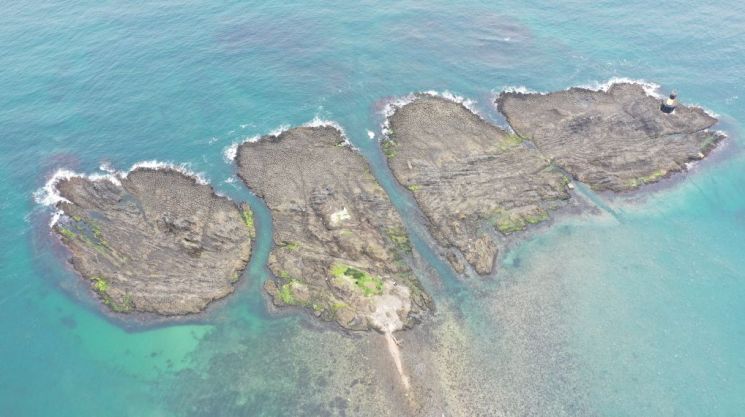
Furthermore, last year, three geological heritages in Pohang?‘Geumgwang-ri Cenozoic Tree Fossils,’ ‘Odori Columnar Joints,’ and ‘Geumgwang Formation Cenozoic Fossil Site’?were designated as nationally designated natural heritage (natural monuments).
In particular, with the designation of ‘Odori Columnar Joints,’ Pohang became the only local government in the country to possess two of the five columnar joint sites designated as natural monuments nationwide (Daljeon-ri and Odori).
The city plans to establish a comprehensive maintenance plan necessary for the tourism resource development of the ‘Odori Columnar Joints’ and ‘Geumgwang Formation Cenozoic Fossil Site,’ incorporate natural heritage utilization infrastructure development into mid- to long-term plans, and promote phased maintenance based on this.
Also, the neorok mineral extracted from Neseongsan Mountain in Janggi-myeon is a rare mineral uniquely found in Korea.
This year, the city is confirming the range of additional neorok discoveries around Neseongsan Mountain to expand the designated area and is also conducting a basic plan study for the construction of a ‘Neorok Research Center’ to manufacture domestic neorok pigment and supply it to cultural heritage restoration sites.
Mayor Lee Kang-deok stated, “We are exploring various measures not limited to preservation but also necessary for maintenance and utilization to discover and share the diverse values of national heritage located in the region,” adding, “We will continue to create Pohang as a premium historical and cultural tourism city loved by citizens through active maintenance and utilization of national heritage.”
© The Asia Business Daily(www.asiae.co.kr). All rights reserved.
![Clutching a Stolen Dior Bag, Saying "I Hate Being Poor but Real"... The Grotesque Con of a "Human Knockoff" [Slate]](https://cwcontent.asiae.co.kr/asiaresize/183/2026021902243444107_1771435474.jpg)















