Jang Sang-yoon Senior Secretary for Social Affairs Radio Interview
Sustainability through Health Insurance Reserves and Medical Reform
Shortage of Doctors Even with 2,000 Additional Staff
Medical School Professors' Work as Doctors Subject to Medical Law
The Presidential Office on the 13th drew a clear line, stating that despite medical reforms such as increasing medical school quotas and adjusting essential medical fees, there will be no increase in health insurance premiums. They plan to utilize the accumulated health insurance reserves while also implementing measures to reduce non-covered items. Regarding the collective resignation movement of medical school professors following the collective action of residents, they stated they will respond according to principles.
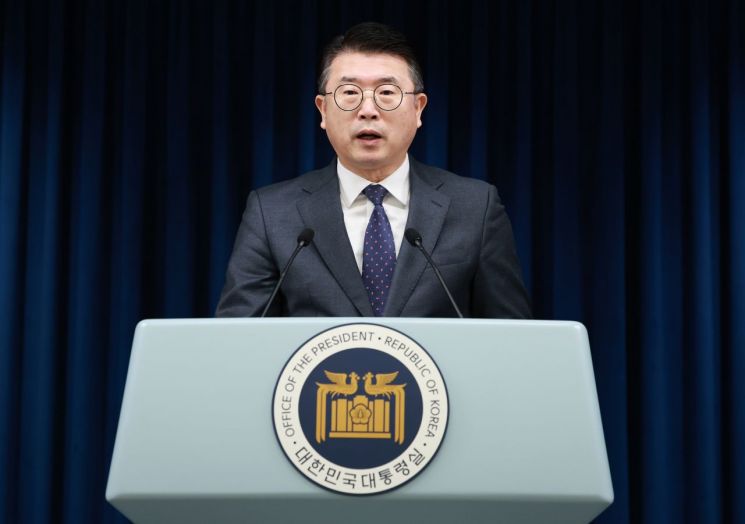
Jang Sang-yoon, Senior Secretary for Social Affairs at the Presidential Office, appeared on SBS Radio that morning and said this in response to the question, "The government said it will invest 10 trillion won over five years to improve essential medical care. From the public's perspective, there is concern that health insurance premiums might increase."
Senior Secretary Jang explained, "Health insurance is structured to collect revenue for one year and spend it within that year. Unlike the National Pension, health insurance is designed to spend all its income, and if there is a shortfall, government finances support it." He added, "In 2022, the income was 88 trillion won, and expenditures were 85 trillion won, leaving 3 trillion won surplus, and the accumulated reserves currently amount to about 27 trillion won." He continued, "Even if more than 10 trillion won is spent, there are measures to reduce excessive medical expenses and non-covered items through medical reform, alongside the 27 trillion won reserves, so there are mechanisms to save health insurance finances. We can execute the plan sustainably without necessarily raising health insurance premiums."
Regarding the medical community's opposition to increasing medical school quotas by 2,000, he made it clear that there is no intention to reconsider. The 2,000 increase was decided after comprehensively reviewing scientific data such as the number of doctors per 1,000 people in OECD countries, changes in Korea's aging rate, and the universities' desired increase numbers. Moreover, since increasing medical school quotas is a government decision, it cannot be a subject of negotiation. Senior Secretary Jang said, "The 2,000 we are considering is an essential scale for medical reform," and pointed out, "Even with a 2,000 increase, the graduates will come out 10 years later. We planned for 10 years ahead, and even then, we realistically see a shortage of doctors."
Regarding the Seoul National University Medical School Professors' Association Emergency Committee's proposal to form a consultative body, entrust the appropriate increase scale to an external institution, and decide next year, he said, "Even if we start increasing by 2,000 from next year, it will take a very long time, so delaying by one year means delaying medical reform by one year," and added, "The damage from delaying one year will be even greater, so that is not a viable alternative. The government must take responsibility and decide; entrusting it to an external institution is just avoiding government responsibility."
When asked whether license suspension measures for residents who have not returned will become a reality, he emphasized, "As we announced last month, collective action is illegal," and said, "We issued work commencement orders, notified them to return, confirmed, and finally told them to return by February 29. Despite that, they did not return, so we will proceed according to principles." Regarding the submission of collective resignation letters by medical school professors, he warned, "Medical school professors do two things: teach at medical schools and provide treatment and surgeries at hospitals," and said, "Medical work is subject to the Medical Service Act, and similarly, leaving (the hospital) without personal special reasons such as collective resignation violates the work commencement order under the Medical Service Act."
Senior Secretary Jang also mentioned that in tertiary general hospitals where inpatient numbers decreased by 40% and surgeries by over 50% due to collective actions by residents and fellows, there has been little change in intensive care units, and emergency rooms and general hospitals are operating without major disruptions. However, he noted, "If the collective action prolongs, the medical staff and nurses there will experience so-called 'burnout'." He added, "The government is most concerned about this and is focusing on supporting and maintaining sustainability." In this regard, the government plans to reinforce medical staff by deploying physician assistants (PAs), military doctors and public health doctors, hiring external doctors and nurses, managing demand by preventing mild patients from visiting tertiary general hospitals, and providing rest for medical staff.
© The Asia Business Daily(www.asiae.co.kr). All rights reserved.
![Clutching a Stolen Dior Bag, Saying "I Hate Being Poor but Real"... The Grotesque Con of a "Human Knockoff" [Slate]](https://cwcontent.asiae.co.kr/asiaresize/183/2026021902243444107_1771435474.jpg)
















