SK Ecoplant, Green Hydrogen·Used Battery
Hyundai Construction, SMR·Solar Power Generation
Hanyang, Solar Power Generation·LNG
Amid the cold wave in the housing construction market, construction companies have embarked on securing new growth engines. They have rolled up their sleeves to expand their presence in non-construction sectors such as used batteries, renewable energy, and Small Modular Reactors (SMR). Although these industries differ from the core purpose of construction, the companies’ strategy is to invest with a long-term perspective and turn them into new sources of revenue.
From Renewable Energy to Used Batteries... SK Ecoplant's Sales Share Soars to 30%
According to the construction industry on the 13th, SK Ecoplant recently completed a value chain for producing green hydrogen using electricity generated from renewable energy and has begun targeting overseas markets.
Earlier this month, SK Ecoplant announced plans to carry out a joint project in Egypt with China State Construction Engineering Corporation (CSCEC), the largest state-owned construction company in China. The two companies will build a total of 778MW renewable energy power plants at the Suez Canal in Egypt, including 500MW of solar power and 278MW of onshore wind power. Then, using Bloom Energy’s Solid Oxide Electrolyzer Cell (SOEC), they will produce about 50,000 tons of green hydrogen from water. This green hydrogen will be converted into green ammonia (about 250,000 tons), which is easier to store and transport, for export. The total project cost is approximately 2.6 trillion KRW.
Separately, SK Ecoplant invested 708.2 billion KRW to acquire shares in Bloom Energy, which owns SOEC technology. SOEC is a type of water electrolysis equipment that is highly economical because it can produce a large amount of hydrogen with relatively low electricity consumption.
SK Ecoplant is also expanding its territory in the offshore wind power market. Through its subsidiary SK Oceanplant, which manufactures offshore wind power substructures, the company is broadening its business to include offshore substations and floating structures. In 2021, SK Ecoplant acquired SK Oceanplant, Asia’s top offshore wind power substructure manufacturer, for 460 billion KRW.
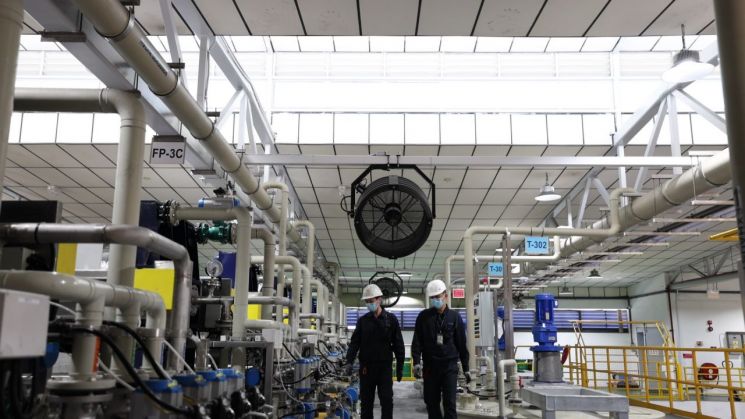
SK Ecoplant is also a leader in electric vehicle (EV) used battery recycling, operating 50 EV used battery hubs across 23 countries. To prepare for the activation of the used battery market, the company has established hubs in key battery industry locations and regions with high EV adoption such as North America, Europe, and Asia, serving as a hub connecting major points for securing supply. These hubs were originally secured by TES, which SK Ecoplant acquired with an investment of 1.2 trillion KRW.
As of the third quarter of last year, SK Ecoplant’s environmental and energy business sales amounted to 2.2846 trillion KRW (927.2 billion KRW from environment and 1.3573 trillion KRW from energy). The share of these businesses in total sales increased to 35% within just over three years since entering the sector, a significant rise compared to 2021 when sales were 954.2 billion KRW (15.3%).
'Nuclear Power Leader' Hyundai Engineering & Construction Shines in SMR Business
Hyundai Engineering & Construction (Hyundai E&C) is also actively developing next-generation energy. Having built nuclear power plants domestically and internationally for over 50 years, Hyundai E&C is making a mark in the SMR business, which complements large nuclear power plants. SMRs, small modular reactors with an electric output of 300MW or less, integrate the pressurizer, steam generator, and reactor into a single vessel, making site acquisition easier compared to conventional nuclear power plants.
Hyundai E&C has partnered with U.S. nuclear company Holtec International and started preparations to win the SMR project in the UK. If the two companies are selected in the UK Nuclear Decommissioning Authority’s SMR operator selection project, they can participate in the UK’s first SMR project starting in 2030. Since 2021, Hyundai E&C has held an exclusive contract with Holtec International for SMR development and joint business entry, becoming the first Korean construction company to design the U.S.’s first SMR.
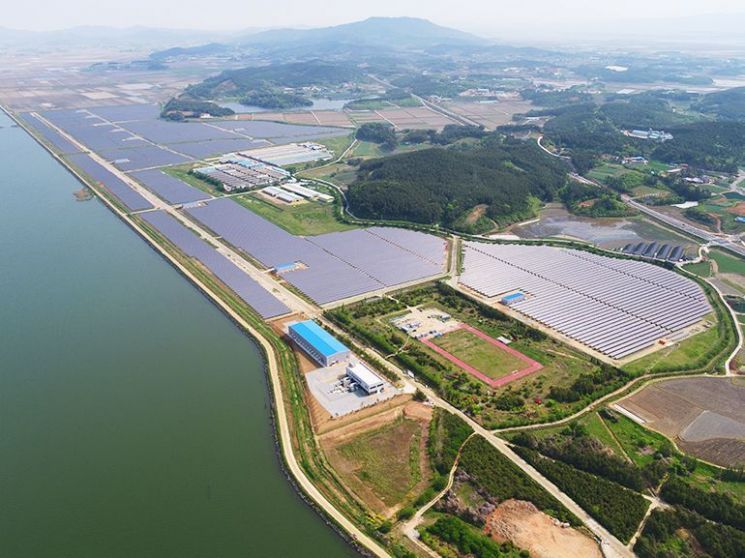
Hyundai E&C is also leading in clean energy power generation projects. The company demonstrated its technological capabilities by independently handling all processes from design to construction and operation of the Seosan solar power plant, the largest solar power plant in Korea. Currently, 185,724 solar modules of 350W generate 65MW of solar power, which is stepped up to 154kV at the substation within the plant and transmitted directly to the Korea Electric Power Corporation’s Anmyeon substation. At the end of last year, Hyundai E&C established a public-private partnership with Korea Midland Power, Korea Infrastructure Safety & Technology Corporation (KIND), and others to jointly develop solar power projects in the United States.
Hanyang Stabilizes Solar Power Generation... Accelerates LNG Terminal Development
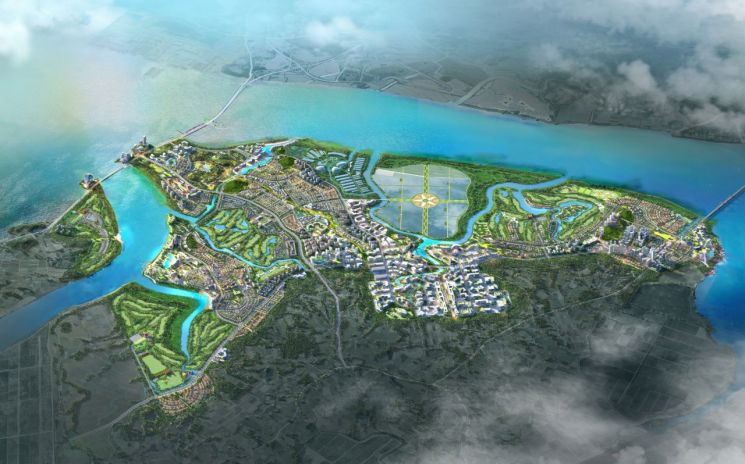
Mid-sized construction company Hanyang is also accelerating its energy business. The solar power plant built in the future city Solarsido in Yeongam and Haenam, Jeollanam-do, in 2020 has the largest power generation capacity (98MW) for a single plant in Korea and the world’s largest Energy Storage System (ESS) with 306MWh capacity. This plant has entered a stabilization phase, generating annual sales of 20 to 30 billion KRW. Hanyang plans to build the Solarsido Renewable Energy Hub Terminal, which will directly supply renewable energy such as solar and wind power produced near Solarsido to the Solarsido Data Center Park and other facilities.
Hanyang is also promoting the ‘Northeast Asia Liquefied Natural Gas (LNG) Hub Terminal’ project around Myodo Island in Yeosu, Jeollanam-do. This is Korea’s first purely commercial LNG terminal capable of LNG storage and shipment. Currently, four LNG storage tanks with a capacity of 200,000 kiloliters each, vaporization and transmission facilities, and a berth facility with a maximum capacity of 100,000 tons are being constructed, with completion targeted for 2027. Hanyang is making every effort to discover LNG demand sources to ensure the successful progress of the project.
© The Asia Business Daily(www.asiae.co.kr). All rights reserved.
![Clutching a Stolen Dior Bag, Saying "I Hate Being Poor but Real"... The Grotesque Con of a "Human Knockoff" [Slate]](https://cwcontent.asiae.co.kr/asiaresize/183/2026021902243444107_1771435474.jpg)

















