Many Changes Among Women, Married Individuals, and Small Businesses
Workers whose employment status changed from regular to non-regular positions were found to be about twice as likely to contemplate extreme measures.
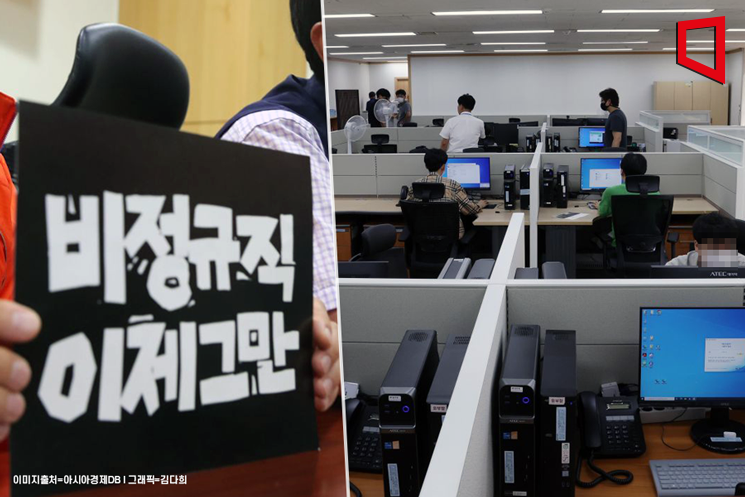
On the 11th, Dr. Yoon Jae-hong from Seoul National University Hospital, Dr. Kim Ji-hwan from Seoul National University Graduate School of Public Health (co-first authors), and Professor Kim Seung-seop from Seoul National University Graduate School of Public Health (corresponding author) published a paper titled "Causal Effects of Changes in Employment Status on Suicidal Ideation and Depressive Symptoms." The study found that workers whose employment conditions changed from regular to non-regular were about twice as likely to consider extreme measures compared to those who maintained regular employment. The paper was published in the international journal on occupational health, Scandinavian Journal of Work, Environment & Health.
The research team analyzed data from 3,621 wage workers aged 19 and older from waves 8 to 15 (2013?2020) of the Korea Welfare Panel Study. All participants were regular workers at the time of panel registration. The researchers defined "regular employment" as meeting all four conditions: ▲contract period longer than one year ▲full-time ▲direct employment (excluding subcontracted, dispatched workers, and self-employed) ▲indefinite contract. If any one of these conditions was not met, the worker was classified as "non-regular." Among the subjects, 10.8% experienced a change to non-regular employment the following year. Changes in employment status were more common among ▲women ▲married individuals ▲those with lower educational levels ▲service sector workers ▲employees of small and medium-sized enterprises ▲workers at non-unionized workplaces ▲and those with chronic illnesses.
Suicidal ideation and depression among the subjects were measured through self-reported surveys with questions such as "Have you seriously thought about dying by suicide in the past year?" The results showed that the group whose employment status changed from regular to non-regular had a 2.07 times higher likelihood of suicidal thoughts compared to those who maintained regular employment. The prevalence of depression was also significantly higher.
Meanwhile, instead of using the commonly employed logistic regression analysis to examine the causal relationship between changes in employment status and suicidal ideation, the study utilized machine learning. Machine learning, a technology primarily used in business to study corporate profits and other metrics, was applied here to explore health issues among socially vulnerable populations. The research team emphasized that this is the first study to analyze the impact of employment status changes on mental health outcomes such as suicidal ideation using machine learning algorithms.
※ If you or someone around you is struggling with difficult feelings such as depression, you can receive 24-hour professional counseling through suicide prevention hotline ☎1393, mental health counseling ☎1577-0199, Hope Call ☎129, Lifeline ☎1588-9191, Youth Hotline ☎1388, the youth mobile counseling app 'Da Deureojul Gae,' KakaoTalk, and other services.
© The Asia Business Daily(www.asiae.co.kr). All rights reserved.
![Clutching a Stolen Dior Bag, Saying "I Hate Being Poor but Real"... The Grotesque Con of a "Human Knockoff" [Slate]](https://cwcontent.asiae.co.kr/asiaresize/183/2026021902243444107_1771435474.jpg)
















