Sweden Ski Pass Sales Surge 22%
"Only 37% of the Alps Covered in Snow"
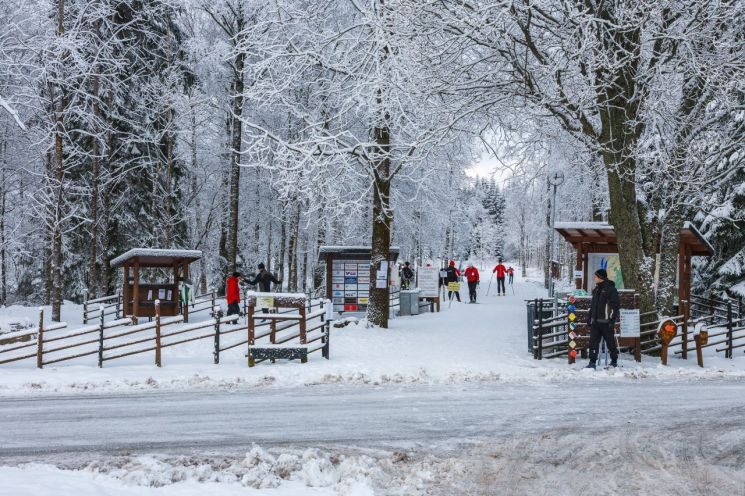
Due to the impact of global warming, the snowfall in the traditional European ski tourism area of the Alps has significantly decreased, leading ski tourists to visit Sweden, which is much further north. At the end of last year, the Swiss and French Alps, which experienced the warmest winter, saw the snow-covered areas drop to the 30% range, putting some ski resorts at risk of closure. If the snow in the Alps continues to decline at an even faster rate, it is expected that ski resorts and related infrastructure will all move to the Nordic region.
Skiers flock to Swedish resorts... Increase in newly established resorts
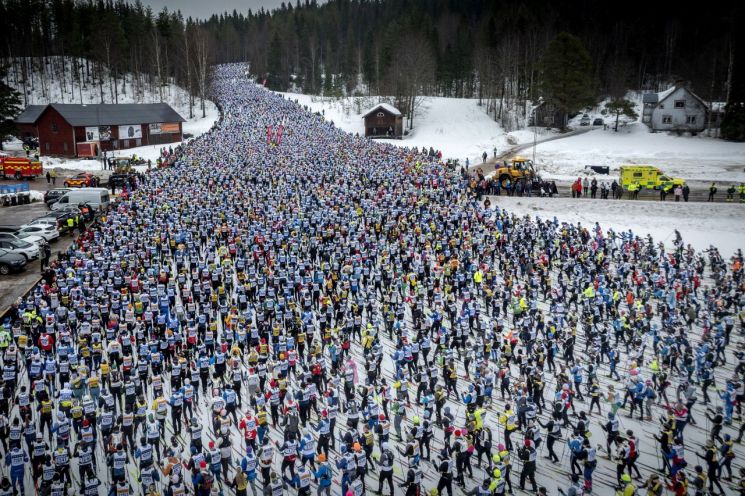

According to Bloomberg on the 10th (local time), the purchase amount of the unlimited ski pass for the winter season at the Swedish ski resort area of St?ten increased by 22% compared to the previous year. As ski tourists from around the world flock in, the number of newly established resorts has also greatly increased. Johan Son, CEO of the alpine resort in St?ten, said in an interview with Bloomberg, "We opened new ski lodges totaling 49 buildings to accommodate more tourists this season," adding, "From 2025 to 2026, we will invest 150 million kronor (approximately 19.3 billion KRW) to expand lifts and the resort."
The main reason why more ski tourists flocked to Sweden this winter is believed to be the significantly lower snowfall in the Alps region compared to usual. The Copernicus Climate Change Service (C3S), an EU research agency, announced last month that the global average temperature was 1.77 degrees Celsius higher than the February average during the pre-industrial period (1850?1900), marking the warmest February on record.
Due to the warm weather and sharp decrease in snowfall, about 25% of alpine resorts in the Alps had already closed by early February. In contrast, the Swedish region experienced continuous heavy snowfall, attracting many ski tourists.
Snow shortage in the Alps from February... Impact of global warming
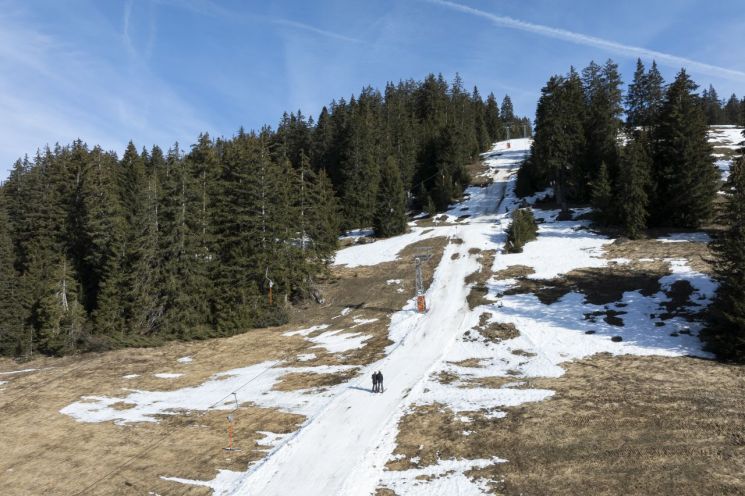 The appearance of an Alpine ski resort in Switzerland on the 6th of last month, where most of the snow had almost melted. [Image source=EPA·Yonhap News]
Unlike Sweden, the Alps region saw almost no snow from late January to mid-February, resulting in a significant increase in resorts without snow cover. According to Radio France Internationale (RFI), only 37.7% of the high mountain areas in the Alps were covered with snow last month. Especially in the western Alps, located along the France-Switzerland border, almost no snow fell from January 27 to February 21, exposing muddy grounds in many areas. RFI pointed out, "Many holidaymakers had to navigate through mud instead of the expected snow-covered landscapes."
Although some areas in the southern Alps are expected to receive snow in the future, partially resolving the snow shortage, the operation of ski resorts in the Alps will inevitably become more difficult if global warming continues. In contrast, the northern regions, including Sweden, have experienced continuous heavy snowfall since October last year, providing sufficient snowfall for ski resort operations. As a result, there is a possibility that ski resort-related infrastructure may significantly shift entirely to the Nordic region.
© The Asia Business Daily(www.asiae.co.kr). All rights reserved.
![Clutching a Stolen Dior Bag, Saying "I Hate Being Poor but Real"... The Grotesque Con of a "Human Knockoff" [Slate]](https://cwcontent.asiae.co.kr/asiaresize/183/2026021902243444107_1771435474.jpg)


















