Since 2021, Implemented to Encourage Resident Participation Including Lunar New Year Policy Planning
No 'Application Form' for Online Participants...Effectively Unable to Receive Points
Low Budget Execution...District Says "Will Improve Inte
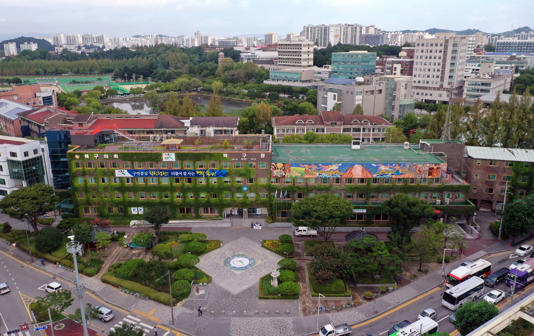
Gwangju Metropolitan City's Buk-gu district has been implementing the 'Resident Participation Point System' for over three years, but its sloppy operation, such as the absence of participant lists, has come under scrutiny. With a large number of incentives omitted, there are calls for improvements to align the system with its original purpose of 'activating resident participation in district administration.'
According to Buk-gu on the 11th, the Resident Participation Points system was launched in 2021 with the goal of encouraging active resident participation in the processes of policy formulation, implementation, and evaluation of district administration.
Residents receive points by proposing policies or participating in surveys through the district office's website. They also earn incentives by directly participating in various meetings hosted by the district or in resident education events. Accumulated points can be converted into Onnuri gift certificates, which residents can use in their daily lives.
This system was implemented to encourage residents to directly participate in district administration by providing such incentives.
However, unlike offline participation, there is no separate collection of a 'Resident Participation Point Grant Application' for online participants. To grant points to residents, it is necessary to verify their name, date of birth, contact information, etc., but in reality, there is no 'list' at all.
For example, 148 residents participated in the ongoing 'Public Data Opening Demand Survey' on the district office website, but there is no procedure for collecting and obtaining consent for the use of personal information required to grant points to participants. In effect, residents participate in district administration but do not receive points.
Looking at the annual point allocation status clearly reveals these issues. In the first year of implementation, 2021, 36 online participants received 45,000 points, and 70 offline participants received 120,500 points. In 2022, there were 0 online participants and 457 offline participants (1,383,000 points), and in 2023, 3 online participants (3,000 points) and 1,669 offline participants (3,312,000 points).
The lack of administrative efforts to activate online participation in the point system is analyzed as the reason for the poor performance. Given this situation, the budget was not fully utilized. Last year, a budget of 5 million KRW was set, but only 770,000 KRW was spent. The payment rate compared to the budget was 15.5%.
Shin Jeong-hoon, a member of the Buk-gu council, stated, "There should be no cases where residents suffer due to passive administration by public officials," and suggested, "We need to consider the current problems of the Resident Participation Points system and future activation measures together."
A Buk-gu official said, "Frequent personnel changes and inadequate handovers seem to have caused shortcomings in the operation of the Resident Participation Point System," adding, "We will establish an organic cooperation system between departments and work to improve it."
© The Asia Business Daily(www.asiae.co.kr). All rights reserved.
![Clutching a Stolen Dior Bag, Saying "I Hate Being Poor but Real"... The Grotesque Con of a "Human Knockoff" [Slate]](https://cwcontent.asiae.co.kr/asiaresize/183/2026021902243444107_1771435474.jpg)















