'Lightly Cooked' Instead of 'Rare':
National Institute of Korean Language Suggests User-Friendly Terms
for Kiosks to Help Seniors Use Unmanned Devices More Easily
'How about using "lightly cooked" instead of "rare"?'
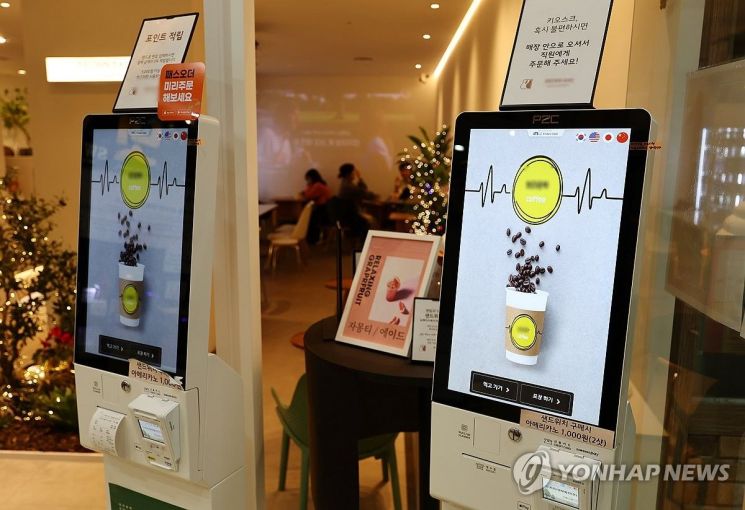
On March 5, the National Institute of Korean Language proposed an improvement plan suggesting the use of Korean language on unmanned devices (kiosks), given that many seniors experience difficulties when using digital devices in daily life. Kiosks refer to terminals installed in places such as banks, restaurants, and rest areas.
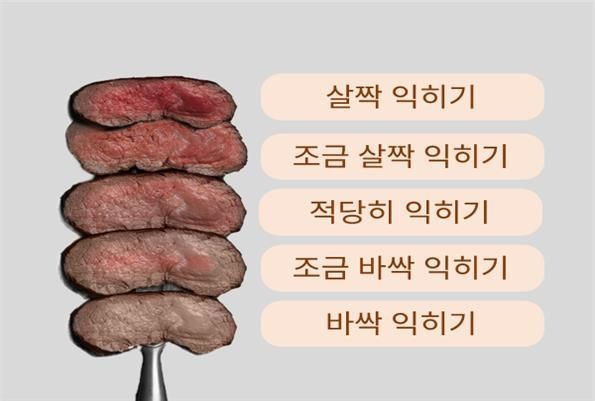 Example of Language Use on Unmanned Restaurant Devices
 Photo by National Institute of Korean Language
The number of unmanned devices in operation in the public and private sectors has increased rapidly, more than doubling from 189,951 units in 2019 to 210,033 units in 2021, and then to 454,741 units in 2022. These devices, which operate by users tapping the screen with their fingers to input information, are being adopted in more locations due to their cost-saving and efficient management benefits. However, there are growing concerns that information-vulnerable groups may face difficulties using them.
The improvement plan published by the National Institute of Korean Language includes examples of easy-to-understand language and screen guide models. Terms that are unfamiliar or difficult for the elderly to understand, as well as foreign words and loanwords, have been replaced with more accessible Korean expressions. The plan also suggests language guidelines and screen designs tailored to the context in which each device is used.
For example, it recommends replacing steak doneness terms like "rare," "medium," and "well done" with "lightly cooked," "moderately cooked," and "well cooked." Additional explanations about ingredients or cooking methods, as well as the use of illustrations or photos, are also suggested. Instead of writing "pasta" in English, it proposes displaying it in Korean with an explanation such as "an Italian noodle dish stir-fried with various types of sauces," making it easier for older adults to understand.
For devices used in banks, it suggests replacing the term "statement printout" with simpler expressions like "get statement" or "print statement," recommending that language be made more user-friendly from the user's perspective.
This improvement plan was developed based on a survey of 200 seniors in their 70s and 80s regarding their use of unmanned devices at banks and rest area restaurants. After identifying unfamiliar and difficult terms, the use of Roman letters, foreign words, and loanwords, the institute prepared language improvement measures and screen guide models, then finalized the results based on a survey of their acceptance.
The National Institute of Korean Language emphasized that it is best to use comfortable and familiar expressions on unmanned devices. The report stated, "Using everyday speech and writing in Hangul, while including other scripts in parentheses when necessary, may help with understanding."
Meanwhile, although current laws stipulate that unmanned devices must be accessible to people with disabilities and the elderly, there have been ongoing concerns that it is realistically difficult to provide customized convenience for everyone. While the government and local authorities are offering kiosk usage training for digitally vulnerable groups, it has been pointed out that these efforts provide limited practical help, as it is impossible to educate users on every type of kiosk encountered in daily life.
Previously, since last year, the Seoul Metropolitan Government has been running a campaign to display signs reading "It's okay to take your time" at stores, movie theaters, and other locations where unmanned devices for ordering or payment are widely used. This campaign aims to foster a culture of waiting so that people can use unmanned terminals without feeling pressured by those behind them, and to build social consensus around the need to consider digitally marginalized groups in our communities.
© The Asia Business Daily(www.asiae.co.kr). All rights reserved.