Illegal Private Loan Damage Report Center Handles Over 60,000 Consultations
Damage Reports and Consultations Increase by 26% Compared to Last Year
Illegal Debt Collection Damage
Increase in Reports of Illegal Loan Brokerage Fees Received
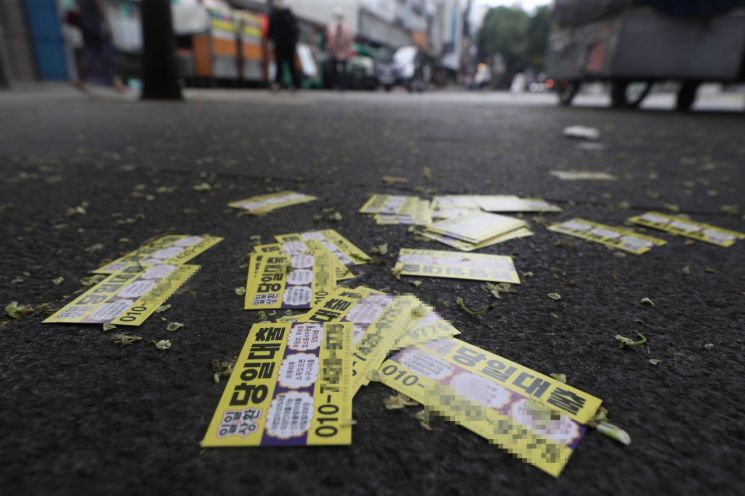
#Mr. A sent contact information of acquaintances, resident registration certificates, family relation certificates, and information about the nursing hospital where his father is staying to an illegal lender named Mr. Choi and borrowed 200,000 won. The condition was to repay 400,000 won after one week. Later, when repayment became difficult and he asked for understanding, Mr. Choi notified about the debt to over 600 acquaintances and harassed Mr. A by sending unwanted deliveries to his home and business premises with payment on delivery.
#Mr. B received a contact offering a low-interest refinancing loan and transferred 500,000 won, but the loan was never processed. When he demanded a refund of the fee, the other party claimed that their bank account was a "dapo" (proxy) account, making tracking difficult, and then cut off contact.
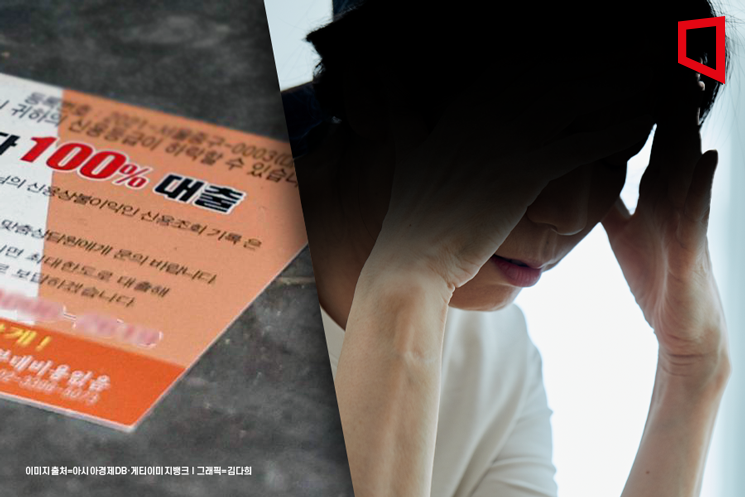
Increase in Reports of Illegal Debt Collection and Illegal Loan Brokerage Fees
According to the Financial Supervisory Service (FSS) on the 5th, reports and consultations regarding illegal debt collection and illegal loan brokerage fee collection, such as the cases above, are increasing.
The FSS announced that last year, the Illegal Private Finance Damage Reporting Center handled a total of 63,283 damage reports and consultations. Reports and consultations regarding damage (or potential damage) numbered 13,751, an increase of 2,838 cases (26%) compared to the previous year, while simple inquiries and consultations were 49,532, similar to the previous year.
Among damage reports and consultations, reports related to illegal lending increased by 2,534 cases (24.5%) to 12,884 compared to the previous year. Reports of illegal loan brokerage fee damage nearly tripled to 606 cases, and illegal debt collection damage also rose significantly by 876 cases (79%) to 1,985 cases.
The FSS explained that many cases involved exploiting the desperate situations of low-income people by illegally charging fees under the pretense of brokering low-income financial support products such as the Sunshine Loan. There were also many malicious cases where debtors’ debt information was disclosed to acquaintances or the general public, even spreading photos.
Reports of similar deposit fraud also increased by 304 cases (54%) to 867 cases compared to the previous year. Many cases involved investment in virtual assets and new, trendy technology businesses (255 cases). Traditional similar deposit fraud methods disguised as agricultural cooperatives or cooperative associations also continued with 50 cases.
The FSS requested suspension of phone numbers (8,465 cases) and deletion of posts (20,153 cases) related to illegal advertisements suspected of illegal private finance damage and reported 503 cases for investigation.
The FSS stated that it will actively promote the eradication of online illegal advertisements through cooperation with the government-wide task force (TF) to eliminate illegal private finance. It also plans to continuously crack down on unhealthy business practices by loan brokerage platforms and lenders. Support for lawsuits invalidating antisocial lending practices will also be expanded.
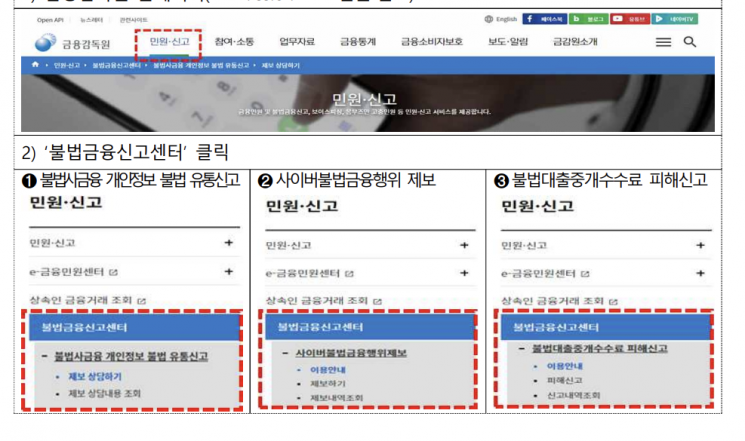
"Loan Brokerage Fees Are Illegal...Check Policy Low-Income Financial Products"
The FSS advises confirming first whether the other party in a loan transaction is a licensed financial company. You should verify whether the lender is registered through the integrated registered lender inquiry and confirm that the advertising phone number submitted at registration matches.
Requesting fees under the name of loan brokerage is illegal. According to Article 11 of the Loan Business Act, it is prohibited to receive compensation from consumers for loan brokerage. Even if you receive a loan, you do not need to pay fees if money is demanded under names such as success fees, upfront fees, or referral fees.
Advertisements via text messages, phone calls, or social networking services (SNS) are highly likely to be impersonations, so caution is required. If you are asked for your address book, photo files, or app installation, you should immediately stop loan consultations. Advertisements guaranteeing principal protection and high returns are likely to be illegal similar deposit operators, so be careful.
Additionally, if you need a small or urgent loan, first check whether policy low-income financial products are available. If you suffer from high interest rates or illegal debt collection, you can use the "Free Support System for Debtor Representatives."
© The Asia Business Daily(www.asiae.co.kr). All rights reserved.
![Clutching a Stolen Dior Bag, Saying "I Hate Being Poor but Real"... The Grotesque Con of a "Human Knockoff" [Slate]](https://cwcontent.asiae.co.kr/asiaresize/183/2026021902243444107_1771435474.jpg)


















