Incheon City is accelerating preparations for certification evaluation, including identifying international value and establishing infrastructure, with the goal of designating Baengnyeong and Daecheong National Geoparks as UNESCO Global Geoparks by 2026.
The city announced on the 4th that the Ministry of Environment recently held the 29th Geopark Committee meeting and selected Ongjin-gun's Baengnyeong and Daecheong National Geoparks as candidates for UNESCO Global Geoparks. UNESCO Global Geoparks are places that protect geologically valuable sites and landscapes worldwide and are specially managed for education on climate change and geological disasters, as well as sustainable development. Currently, there are 195 sites in 48 countries, and South Korea has five certified Global Geoparks, including Jeju Island and Cheongsong.
Incheon City submitted an application to the Ministry of Environment in June last year to obtain UNESCO Global Geopark certification for the Baengnyeong, Daecheong, and Socheongdo areas, which were designated as National Geoparks in 2019.
Despite its small area of 66㎢, this region boasts outstanding scenery and numerous geological heritages comparable to world natural heritage sites. Due to its geological characteristics and geographical location different from the mainland, it holds clues to the evolutionary process of the East Asian crust. Notably, it contains rocks from the Neoproterozoic era, dating back 1 billion to 700 million years ago, which are rarely observed on the Korean Peninsula. It is also the site where the oldest stromatolites (fossils formed by cyanobacteria activity) in Korea were discovered.
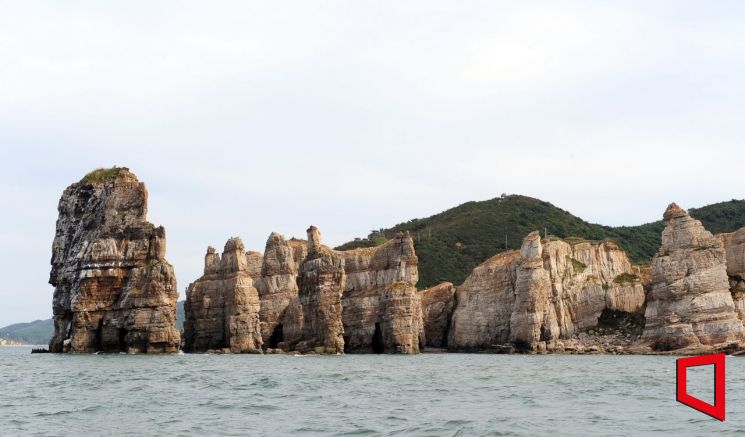
Incheon City plans to submit a letter of intent for UNESCO Global Geopark designation to the Ministry of Environment in June and submit the official application to UNESCO around November. Following written and on-site evaluations by UNESCO, the city aims for final approval by the UNESCO Executive Board in 2026.
To receive UNESCO Global Geopark certification, 101 certification requirements must be met, including identifying international geological value, establishing infrastructure, GEO cooperation systems, and educational activities related to cultural heritage. To this end, the city secured two international academic papers last year and is constructing an Ecotourism Center and a Geopark Center. Additionally, it communicates with citizens through student experience programs, citizen participation events, and photo exhibitions.
Last year, the city published significant research results proving the international geological value of Baengnyeong and Daecheong Islands in the latest issue of the prestigious geology journal "Precambrian Research."
According to the research, Baengnyeong and Daecheong Islands in Incheon, where the oldest biological trace fossils in South Korea remain, were formed from sand and mud deposited between 1.04 billion and 950 million years ago. Socheongdo was found to have formed between approximately 900 million and 890 million years ago.
Furthermore, the rocks that intruded (the process where magma enters rock cracks and solidifies into igneous rock) after the deposition of Baengnyeong, Daecheong, and Socheongdo indicate that this area is related to the formation of a large igneous province that occurred in Northeast Asia about 940 million years ago.
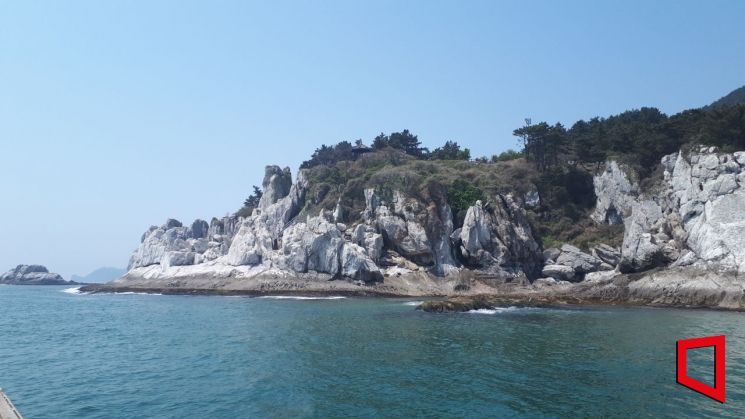
To strengthen the identification of international value, the city plans to conduct additional academic research this year and focus on establishing infrastructure such as English signage at the Global Geopark information center and cooperation facilities, as well as revitalizing the local economy through community-linked operations like Geo Village, Geo School, and Geo Partner programs. Previously, geological attractions newly developed after the National Geopark certification, such as the basalt at Jinchon-ri in Baengnyeongdo and Bunbawi and Woltti in Socheongdo, have become new tourist resources contributing to the local economy.
An official from Incheon City stated, "We will strive to achieve UNESCO Global Geopark certification to secure the international value of Baengnyeong, Daecheong, and Socheongdo and to lead to regional economic revitalization. In particular, we hope that the synergy effect with the upcoming Baengnyeong Airport will help this area emerge as a world-class tourist destination."
© The Asia Business Daily(www.asiae.co.kr). All rights reserved.
![Clutching a Stolen Dior Bag, Saying "I Hate Being Poor but Real"... The Grotesque Con of a "Human Knockoff" [Slate]](https://cwcontent.asiae.co.kr/asiaresize/183/2026021902243444107_1771435474.jpg)
















