85 Seoul Travel Products Sold on Online Platforms Suspected of Dumping
List Shared with Relevant Agencies Including Ministry of Culture and Chinese Embassy... Complete Blockade Planned
'Tourism Ombudsman' to Operate for Continuous Monitoring of Illegal and Unfair Tourism Practices
The Seoul Metropolitan Government is launching a major crackdown on 'dumping tourism' products that damage not only the image of Seoul tourism but also the city's dignity. In cooperation with the government, it plans to block the distribution of dumping tourism products altogether and inform the embassies of the respective countries to request sanctions.
On the 3rd, Seoul announced that it will conduct a fact-finding survey on dumping tourism products for Korea distributed online and will work to restore the tourism industry through systematic pre- and post-measures. A Seoul city official explained, "This reflects our determination to enhance the image of Seoul tourism by eradicating dumping tourism and illegal activities and to realize the '3·3·7·7 Seoul Tourism Era' ahead of schedule."
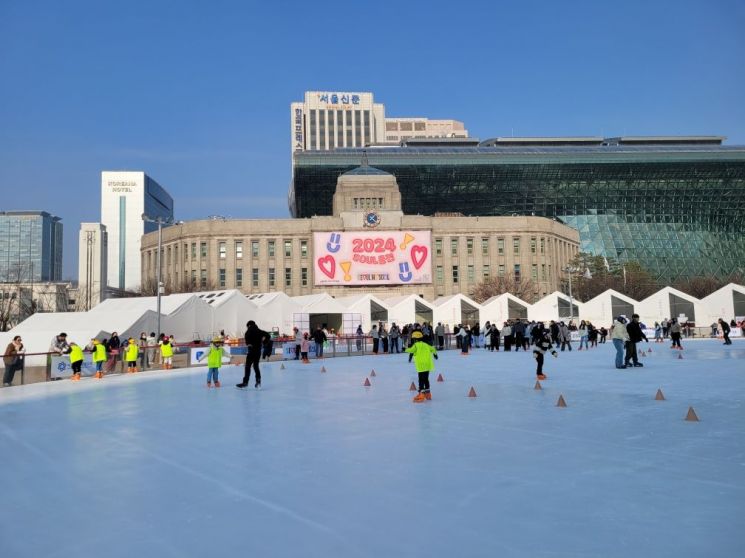
The '3·3·7·7 Tourism Era' is Seoul's future tourism vision to achieve '30 million foreign tourists, 3 million KRW spending per person, 7 days of stay, and a 70% revisit rate.' However, the image of Seoul tourism has been tarnished by 'dumping tourism products,' where travel agencies attract tourists at prices below normal rates and then conduct itineraries focused on visiting shopping centers to cover losses through shopping commissions.
In response, Seoul has been working jointly with district offices to eradicate dumping tourism products and establish a healthy tourism market through measures such as ▲cracking down on illegal guides (October 2023) ▲cracking down on illegal accommodations (September?October 2023) ▲a Korea-China joint cooperation resolution to prevent the distribution of low-quality products (November 2023) ▲operation of a Tourism Illegal Report Center (from December 2023). Currently, the number of foreign visitors to Seoul is at 65.4% of the pre-COVID-19 (2019) level, and dumping tourism is somewhat subdued. However, there is a possibility of recurrence and rapid spread if full recovery occurs, so proactive measures are necessary to protect Seoul's tourism image.
In particular, Seoul revealed that among 3,097 Seoul travel products sold on the four major Chinese online travel agencies (OTAs), 100 products were selected in order of lowest price, and 85 of them were suspected to be dumping tourism products. However, among these 85, 68 products, accounting for 80%, had no reservations or fewer than five bookings, indicating generally poor sales.
The criteria for selecting dumping tourism products were defined as products that include shopping in the itinerary and have a selling price lower than the sum of airfare and ground expenses (local stay costs). The investigation involved in-depth analysis of ▲length of stay ▲number of shopping visits (shopping schedule) ▲product cost, and expert group interviews were also conducted to enhance the accuracy and validity of the analysis.
Among the 85 suspected dumping products, 45 (52.9%) were confirmed to include 6 to 8 visits to shopping centers during a 4-night, 5-day itinerary. To reduce costs, unqualified guides were often hired or shopping commissions (up to 50% of sales) were provided as incentives instead of wages, resulting in frequent visits to shopping centers throughout the travel schedule. The shopping centers visited were mainly downtown duty-free shops and foreign tourist souvenir shops. Industry experts noted that tourists often complained about the high prices of health functional foods mainly purchased at foreign tourist souvenir shops.
As a preemptive measure, Seoul plans to share the results of this fact-finding survey with the Ministry of Culture, Sports and Tourism and the Chinese Embassy to block the domestic distribution of dumping tourism products as much as possible. Seoul requested cooperation from the Ministry of Culture, Sports and Tourism, which supervises travel agencies responsible for group tourist recruitment, to prevent the distribution of dumping tourism products identified this time, and will inform the Chinese Embassy to urge sanctions under China's Tourism Law.
As a post-measure, Seoul plans to investigate and crack down on dumping tourism products and various illegal and unfair acts occurring in the tourism field through the 'Tourism Ombudsman System,' which is an expanded and reorganized version of the 'Tourism Illegal Report Center.' While previously mainly handling reported cases, the Tourism Ombudsman will now actively respond by conducting pre-monitoring as well as mediation and arbitration roles.
Kim Young-hwan, Director of the Seoul Tourism and Sports Bureau, said, "Acts that undermine tourism order, such as dumping tourism products, lower the satisfaction of foreign tourists and can damage the attractiveness of Seoul tourism, which has struggled to recover, so thorough preparation is necessary." He added, "We will do our utmost to eradicate illegal practices and establish a fair tourism ecosystem through cooperation with the tourism industry and related organizations."
© The Asia Business Daily(www.asiae.co.kr). All rights reserved.
![Clutching a Stolen Dior Bag, Saying "I Hate Being Poor but Real"... The Grotesque Con of a "Human Knockoff" [Slate]](https://cwcontent.asiae.co.kr/asiaresize/183/2026021902243444107_1771435474.jpg)
















