This Year’s Tesla Subsidy Scale May Also Decrease
Last year, the electric vehicle subsidies provided for vehicles manufactured and sold by Hyundai Motor Company and Kia decreased by 2% and 11% respectively compared to the previous year. In contrast, Tesla's electric vehicle subsidies increased by 50% year-on-year.
On the 3rd, Park Sang-hyuk, a member of the National Assembly Land, Infrastructure and Transport Committee from the Democratic Party of Korea, revealed data on the 'Electric Vehicle Subsidy Payment Status from 2020 to 2023' submitted by the Ministry of Environment. It showed that the subsidies paid for Hyundai Motor Company vehicles (passenger cars, vans, and trucks) last year amounted to 633.348 billion KRW and 46.276 billion KRW respectively, representing decreases of 2% and 11% compared to the previous year.
 An electric vehicle is plugged into a charger at an electric car parking lot in Seoul.
 [Photo by Yonhap News]
Previously, subsidies for Hyundai Motor Company and Kia vehicles had continuously increased from 2020 to 2022.
Subsidies related to Hyundai Motor Company rose from 256.34 billion KRW in 2020 to 648.014 billion KRW in 2022, approximately 1.5 times, while Kia's subsidies increased from 116.687 billion KRW in 2020 to 459.359 billion KRW in 2022, about 2.5 times.
However, the upward trend slowed last year, and the number of vehicles eligible for subsidies decreased.
The number of Hyundai Motor Company vehicles eligible for subsidies increased from 18,931 units in 2020 to 42,583 units in 2021 and 70,608 units in 2022, but dropped by 16% to 59,044 units last year compared to the previous year. Kia also saw a sharp increase from 8,657 units in 2020 to 28,585 units in 2021 and 49,214 units in 2022, followed by a 7% decrease to 45,918 units last year compared to the previous year.
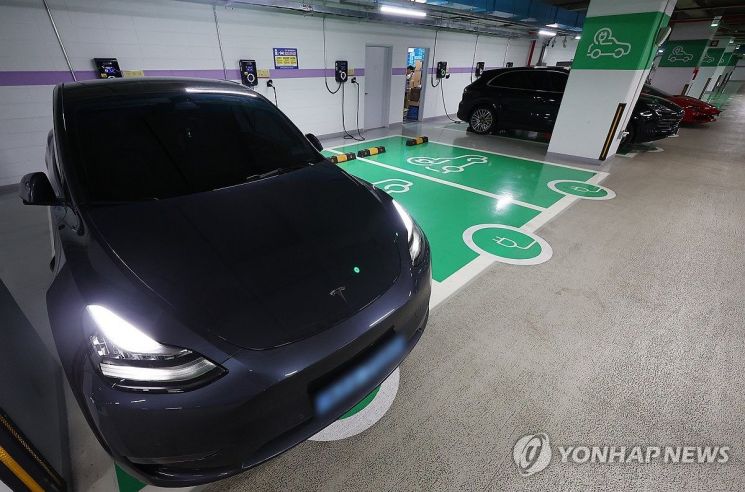 Electric Vehicle Subsidy Confirmed... Tesla Model Y Subsidy Reduced to One-Third Level Photo by Yonhap News
Subsidies for Tesla purchases increased significantly last year. Since 2020, Tesla has received the third-largest amount of subsidies after Hyundai Motor Company and Kia. Last year, Tesla buyers received subsidies totaling 68.777 billion KRW, a 51% increase from 45.57 billion KRW the previous year.
The amount sharply declined from 107.865 billion KRW in 2021 to 45.57 billion KRW in 2022, then rebounded last year. The number of subsidized vehicles also decreased from 17,823 units in 2021 to 14,570 units in 2022, then rose again to 15,443 units last year.
This is largely attributed to the impact of the Model Y rear-wheel-drive (RWD) model. In July last year, Tesla launched the Model Y RWD model priced to fully qualify for the electric passenger car subsidy. This model achieved high sales of 13,885 units last year alone, becoming the third best-selling imported car model after the Mercedes-Benz E-Class and BMW 5 Series.
However, the scale of subsidies for Tesla vehicles is expected to decrease this year compared to last year. Last month, the Ministry of Environment finalized a plan to revise electric vehicle subsidies by differentiating payments based on battery density and recycling value.
Subsidies will be allocated based on scores reflecting electric vehicle driving range and battery performance. For Tesla's Model Y RWD equipped with Chinese-made lithium iron phosphate (LFP) batteries, the government subsidy will be only 1.95 million KRW, about one-third of the previous amount.
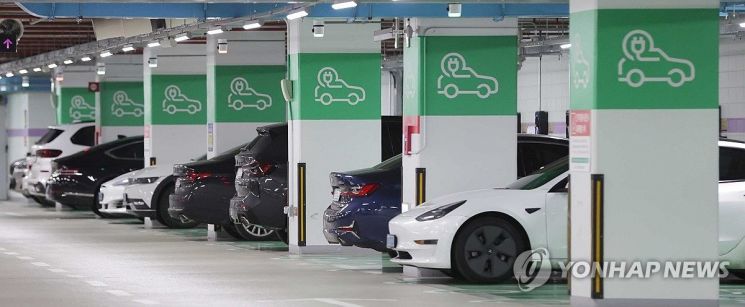
Domestic electric vehicles receive relatively higher subsidies. The Hyundai Motor Company Ioniq 6 Long Range model receives the maximum government subsidy of 6.5 million KRW and additionally benefits from a manufacturer discount incentive (20% of the discount amount). The actual government subsidy paid increases to 6.9 million KRW. Adding local government subsidies, the total support can range from 8.4 million KRW (Seoul) to 18.3 million KRW (Geochang).
For example, the Kia EV6 Long Range model can receive a government subsidy of 6.84 million KRW, and with local government subsidies, support ranges from 8.29 million KRW (Seoul) to 17.87 million KRW (Geochang).
Meanwhile, recipients of electric vehicle subsidies must comply with a mandatory usage period of two years. If the address is changed or the vehicle ownership is transferred to a resident of another local government during this period, partial recovery of the subsidy may occur depending on the holding period. Subsidy recovery also applies if the actual residence differs from the subsidy recipient's registered address.
© The Asia Business Daily(www.asiae.co.kr). All rights reserved.



















