Real Estate R114 Analysis: Jeonse Prices Rising Mainly in Seoul
Sale Prices Remain Stable
Buying Sentiment Expected to Stay Cautious
 On the 14th, in a real estate-dense shopping district in Songpa-gu, Seoul, apartment listings with prices are posted amid the ongoing decline in real estate prices and a transaction freeze. Photo by Kang Jin-hyung aymsdream@
As apartment prices remain weak, demand for jeonse (long-term lease) has increased instead of sales, leading to a continued rise in jeonse prices for apartments in the Seoul metropolitan area ahead of the spring moving season.
According to Real Estate R114 on the 3rd, tenant demand flowed mainly into mid- to low-priced areas rather than high-priced areas where the burden of jeonse prices is significant. In January, the number of jeonse transactions in Gyeonggi Province slightly increased to 17,467 from 17,057 in the previous month. In Incheon, transactions rose from 2,937 in December last year to 3,135 in January.
A Real Estate R114 official said, "In Seoul, the increase in jeonse transactions has been relatively slow," adding, "This is believed to be due to the heavy burden of high jeonse prices, contract renewals, and the dispersion of demand moving to the metropolitan area."
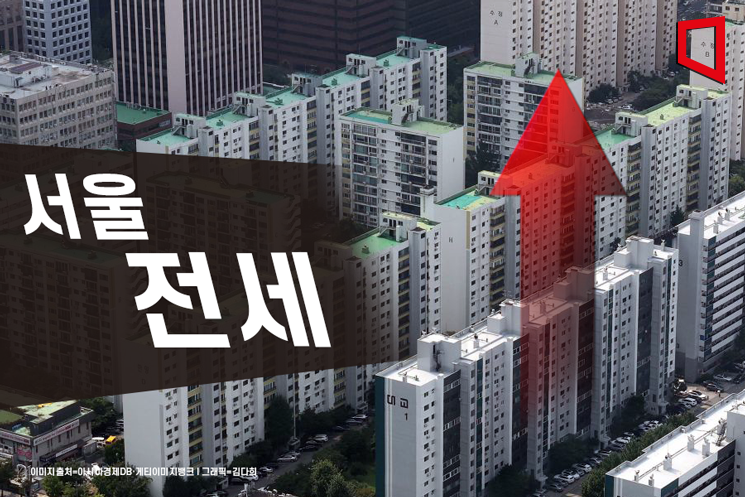
Jeonse prices in Seoul, where new housing supply is insufficient, rose by 0.02%. Among the 25 districts in Seoul, jeonse prices increased in 13 districts, with no areas showing a decline. By region, prices rose mainly in medium to large-sized units in Seocho (0.07%), Seongdong (0.06%), Eunpyeong (0.04%), Yongsan (0.04%), Seongbuk (0.04%), and Seodaemun (0.04%).
Jeonse prices in new towns and Gyeonggi/Incheon remained flat (0.00%). In new towns, only Pyeongchon (0.04%) saw an increase, while other areas showed no change. In Gyeonggi and Incheon, prices rose in Suwon (0.04%), Anyang (0.01%), and Incheon (0.01%). Conversely, Uijeongbu (-0.03%) and Uiwang (-0.01%) experienced downward adjustments.
There were no notable changes in sales prices either. The buying sentiment in the Seoul metropolitan apartment market has become cautious, resulting in minimal price movements. Seoul apartment prices remained flat (0.00%) for seven consecutive weeks. While redevelopment prices rose by 0.02%, general apartment prices showed no change. Prices declined in Eunpyeong (-0.02%), Nowon (-0.01%), Seongbuk (-0.01%), Songpa (-0.01%), and Yeongdeungpo (-0.01%), but increased in Seocho (0.03%) and Mapo (0.01%).
New towns maintained a flat trend for five consecutive weeks, and Gyeonggi/Incheon for six consecutive weeks. In new towns, Sanbon (-0.04%) and Bundang (-0.01%) declined, while Paju Unjeong (0.02%) rose. In Gyeonggi and Incheon, Ansan (-0.05%) and Bucheon (-0.02%) fell, whereas Paju (0.02%) and Incheon (0.02%) increased.
A Real Estate R114 official analyzed, "With the implementation of the Debt Service Ratio (DSR) system for variable interest rate loans, which applies additional interest rates considering future interest rate fluctuations, loan limits are reduced, likely encouraging cautious buying behavior. Transactions are expected to continue mainly among buyers with financial capability or those eligible for low-interest policy products, or in areas where the price gap between sales and jeonse prices narrows due to rising jeonse prices, resulting in noticeable differences in market temperature depending on region and price."
© The Asia Business Daily(www.asiae.co.kr). All rights reserved.
![Clutching a Stolen Dior Bag, Saying "I Hate Being Poor but Real"... The Grotesque Con of a "Human Knockoff" [Slate]](https://cwcontent.asiae.co.kr/asiaresize/183/2026021902243444107_1771435474.jpg)
















