31 out of 40 Applied Areas Passed
9 Failed Areas to be Reassessed in May-June
Includes Neulbom School, Multicultural Education, etc.
Lee Ju-ho: "No Limit on Number of Special Zones"
The Ministry of Education announced 31 first-phase pilot areas designated as ‘Education Development Special Zones’ aimed at fostering local talent. These areas will undergo a three-year pilot operation period before the final designation is decided, with each zone eligible to receive up to 10 billion KRW in government support.
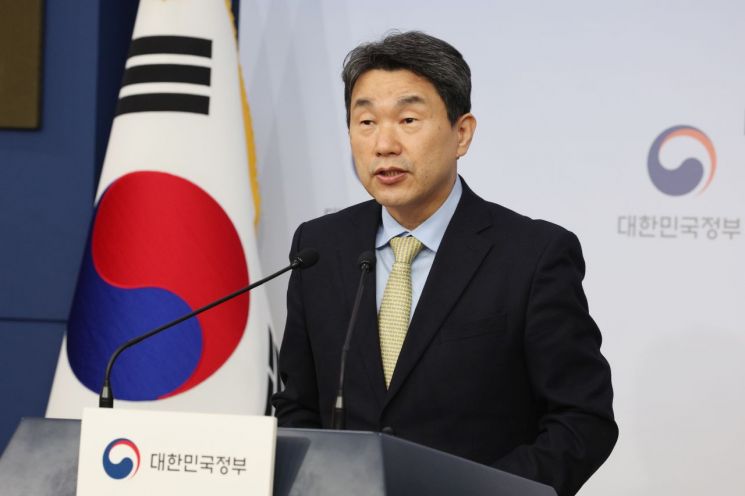
On the morning of the 28th, Deputy Prime Minister and Minister of Education Lee Ju-ho held a press conference at the Government Seoul Office to reveal the results of the first-phase pilot area designations for the Education Development Special Zones. The Education Development Special Zones are a key educational reform policy of the Yoon Seok-yeol administration, introduced to improve the quality of local public education through cooperation among local governments, education offices, universities, and industries. Once designated as a special zone, each zone will receive special grants ranging from 3 billion to 10 billion KRW and be subject to various regulatory exemptions.
Among basic local governments (Type 1), 20 out of 29 applications were selected, excluding 9. These include ▲Gyeonggi (Goyang, Yangju, Dongducheon, Ganghwa) ▲Gangwon (Chuncheon, Hwacheon, Wonju) ▲Chungbuk (Chungju, Jecheon, Okcheon, Jincheon-Eumseong, Goesan) ▲Chungnam (Seosan) ▲Gyeongbuk (Pohang, Gumi, Sangju, Chilgok, Uljin, Bonghwa) ▲Jeonnam (Gwangyang).
Among metropolitan local governments (Type 2), all six regions were selected: ▲Busan ▲Daegu ▲Gwangju ▲Daejeon ▲Ulsan ▲Jeju. In basic local governments designated by metropolitan local governments (Type 3), all five regions were designated: ▲Chungnam (Asan) ▲Gyeongbuk (Andong-Yecheon) ▲Gyeongnam (Jinju, Sacheon, Goseong, Changwon, Gimhae, Yangsan, Geoje, Miryang) ▲Jeonbuk (Iksan, Namwon, Wanju, Muju, Buan) ▲Jeonnam (Naju, Mokpo, Muan, Sinan, Yeongam-Gangjin).
The nine areas that failed to be selected as pilot zones were classified as preliminary designated areas. These regions will be re-evaluated during the second round of applications, reflecting the improvements suggested in the first evaluation. The second application period will run from May 1 to June 30. The preliminary designated areas include ▲Gyeonggi (Yeoncheon, Paju, Pocheon) ▲Chungbuk (Boeun) ▲Chungnam (Nonsan, Buyeo) ▲Gyeongbuk (Ulleung) ▲Gyeongnam (Geochang) ▲Jeonnam (Haenam).
To manage the performance of the pilot areas, they will be divided into 19 leading areas and 12 managed areas. Leading areas will be officially designated as special zones after a comprehensive evaluation by a committee following the three-year pilot operation period.
Deputy Prime Minister Lee stated, "Through the Education Development Special Zones, we will actively promote the creation of a child-friendly environment, enhance school education quality through public education innovation, and foster local talent, thereby establishing favorable living conditions in local areas and realizing the era of local autonomy."
The main initiatives by region include ▲creating a child-friendly environment ▲improving educational capacity through public education innovation ▲strengthening connections between local elementary, middle, and high schools and universities ▲fostering local talent and enhancing industrial competitiveness through education.
Regarding the budget allocation, Deputy Prime Minister Lee said, "The specific amount will be determined based on the contents of individual proposals. There were far more applications than initially expected. We believe more investment is necessary, and the response has exceeded our expectations."
On follow-up management plans for regions that were not selected as special zones, he responded, "This special zone initiative is not concentrated but expansive. We have the intention to spread it as widely as possible, and if a wave of change occurs, ultimately almost all regions will benefit." He emphasized that there is "no limit on the number" of special zones to be designated.
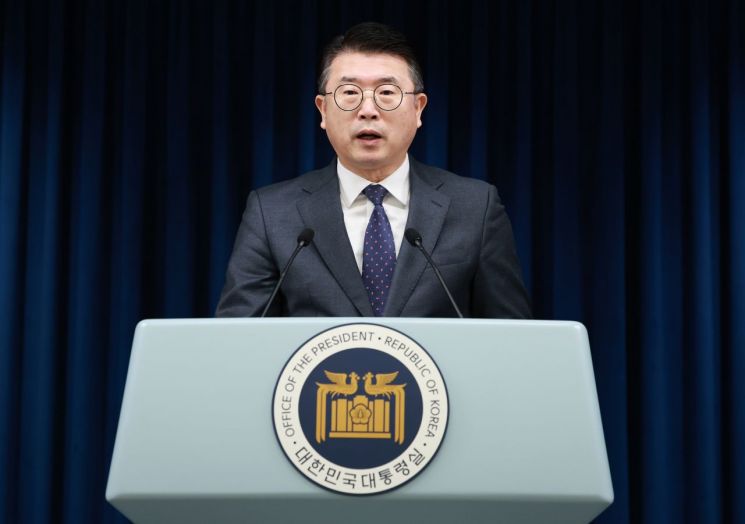
Earlier that morning, Jang Sang-yoon, Senior Secretary for Social Affairs at the Presidential Office, also supported the initiative by introducing region-specific customized education programs during a briefing at the Yongsan Presidential Office. For Chuncheon City in Gangwon, home to Korea’s first animation museum, plans include developing Gangwon Animation High School into a specialized high school focused on animation broadcasting through partnership agreements, while designating Chuncheon High School, a prestigious local high school, as an autonomous public high school.
Additionally, Gangwon National University, designated as a glocal university, will collaborate with Hallym University and Korea Polytechnic University to establish new departments such as Food Tech and Bio Science, thereby revitalizing employment and entrepreneurship education specialized for the Chuncheon region’s industries.
Busan City plans to work with the Busan Metropolitan Office of Education to expand 24-hour care centers like Neulbom Center and Busan-style 365-hour childcare centers, ensuring comprehensive care for all children from birth to sixth grade, aiming to become a child-friendly city.
As an international maritime and shipping city, Busan will provide experiential English learning programs and edu-tech-based English education content in elementary and middle schools, and establish a Busan K-pop High School (tentative name) to attract foreign students.
In Gyeongsangnam-do, the Jinju-Sacheon-Goseong area will be developed as a specialized aerospace special zone, nurturing Gyeongsang National University into an excellent university in the aerospace field linked with local research institutes and companies.
In particular, the region plans to expand the local talent admission quota for related departments to over 50%, enabling graduates to advance annually to related departments, the Aerospace Defense Science and Technology Institute, and the Aerospace Defense Research Institute.
Senior Secretary Jang explained, "The Education Development Special Zones are a core policy of the Yoon Seok-yeol government’s realization of the local era, aimed at revitalizing regions through the power of education and saving them from the crisis of regional extinction and low birth rates."
© The Asia Business Daily(www.asiae.co.kr). All rights reserved.
![Clutching a Stolen Dior Bag, Saying "I Hate Being Poor but Real"... The Grotesque Con of a "Human Knockoff" [Slate]](https://cwcontent.asiae.co.kr/asiaresize/183/2026021902243444107_1771435474.jpg)












