Rising Prices Delay Independence for MZ Generation
Increasing 'Two or Three Generations Under One Roof' Kangaroo Families
A daughter's story about struggling with her mother demanding financial support as soon as she became an adult has been shared. On the 27th, an online community posted a thread titled "My mom says I have to pay living expenses now that I'm an adult." The author, A, introduced herself as a young woman who just became an adult and said, "I did not go to college and work part-time 2 to 3 times a week.
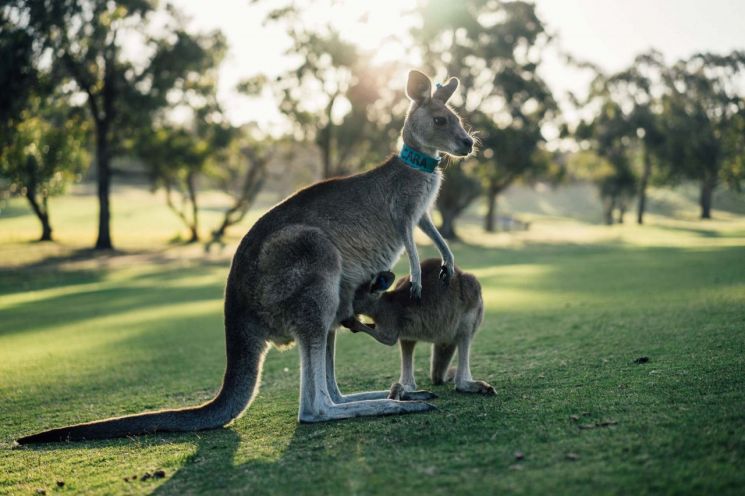 The term "Kangaroo Tribe" refers to adult children who, despite being old enough to live independently, do not find employment and continue to live with their parents.
 [Photo by Pixabay]
Starting in March, I plan to find a full-time job and become independent as soon as I save enough money," she explained her situation. She continued, "Yesterday, when I told my mom that I would start working full-time, she immediately said, 'Now that you're an adult, you have to contribute to living expenses.' She said, 'How long do I have to support a grown child? It's only natural for you to pay living expenses.'" When A asked how much she should pay, her mother replied that it should be at least 300,000 won per month. She also urged A to hurry up and become independent.
A said, "Even 30,000 won right now is a lot of money, and I feel overwhelmed and don't know what to do." She lamented, "Listening to my mom, I feel like a bad daughter who is trying to leech off her parents even though I'm already twenty years old." Finally, she asked for advice, "How should I negotiate with my mom? Is it really right to give her the 300,000 won she wants every month?"
Netizens were divided between opinions that the parents were harsh and that it was natural to pay living expenses. One netizen comforted A, saying, "It's really too much to demand 300,000 won in living expenses from a child who just became an adult and is working part-time. I feel sorry for a daughter who just turned twenty." On the other hand, another netizen commented, "Now that she's an adult, she should take adult responsibilities," and "She didn't go to college and is earning money, so it's right for her to practice taking responsibility for her own life."
'Kangaroo Generation' is a Global Phenomenon, Not Just in Korea
Since the pandemic, inflation, prolonged high interest rates, and aging populations have combined to delay independence among the MZ generation, increasing the number of 'kangaroo generation' households where parents live with their married children. The term 'kangaroo generation' refers to adult children who live with their parents despite being old enough to live independently because they are unemployed. Recently, there has also been a notable rise in 'returner kangaroos'?those who became independent but returned to their parents' home due to financial burdens. Co-residence due to economic difficulties is intertwined with mutual interests such as parental support and cost savings.
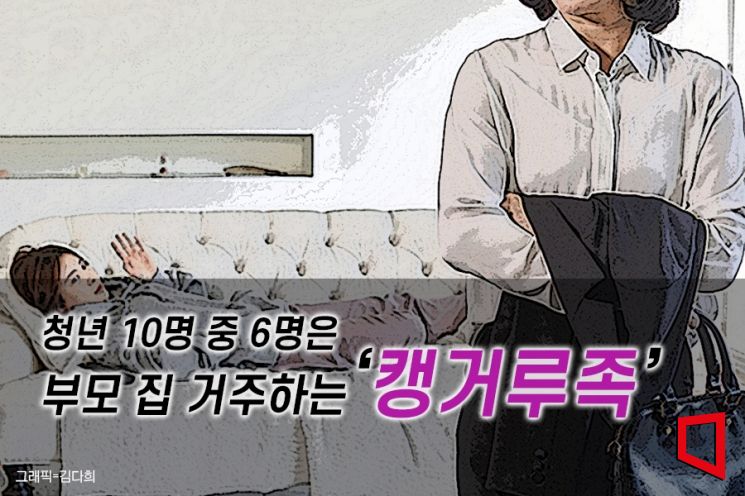 In November of last year, Statistics Korea announced the results of the "Changes in the Young Generation in Korea from 2000 to 2020 Analyzed through the Population and Housing Census." According to this data, as of 2020, 55.3% (5,321,000 people) of young adults live with their parents. This means that about 6 out of 10 young adults live with their parents.
 [Photo by Kim Dahee]
In November last year, Statistics Korea released results analyzing changes in the youth generation in Korea from 2000 to 2020 based on the Population and Housing Census. According to this data, as of 2020, 55.3% (5,321,000 people) of young people live with their parents. About 6 out of 10 youths live with their parents.
The number of kangaroo generation youths has steadily increased since 2000. In 2015, it even reached 58.4%. By age group, 25-29-year-olds, who are job seekers or early career workers, accounted for 35%, an increase of 2.8 percentage points compared to 2015. Among 30-34-year-olds, who are typically employed, 19.4% lived with their parents. The highest was among 19-24-year-olds continuing their studies, at 45.7%.
The phenomenon of needing parental financial support is not limited to Korea. Similar social terms include Japan's 'Kisei Dokushin,' France's 'Tanguy,' Italy's 'Bamboccioni,' meaning 'big babies,' and the UK's 'Keepers,' referring to those who drain their parents' retirement funds. In the U.S., this in-between generation is called 'Twixters.'
China, facing its worst employment crisis and economic downturn, has also coined the term 'full-time children.' 'Full-time children' are unemployed offspring who take care of household chores like cleaning and cooking and receive a monthly salary from their parents. Typically, after graduating from college, they live at their parents' home doing housework and receive about 720,000 to 1,000,000 won monthly. Considering that the average monthly wage for urban workers in China last year was about 1,000,000 won, this is a significant amount. They receive this money as a salary, not just pocket money, to sustain their livelihood.
Conflicts Between Parents and Children Escalate to 'Eviction Lawsuits'
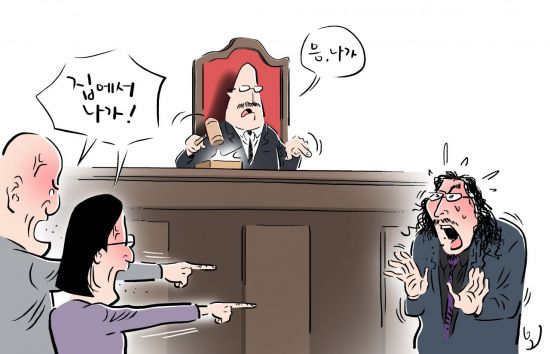 As the number of children relying on their parents increases, conflicts between parents and children are also continuing. In some cases, lawsuits have even been filed to drive out the so-called "Kangaroo Generation."
 [Photo by Asia Economy DB]
As the number of children relying on their parents increases, conflicts between parents and children continue. This is because the burden of supporting children persists even after parents retire, preventing proper preparation for old age. In some cases, parents have even filed lawsuits to evict their 'kangaroo' children. Last October, a 70-year-old mother in Italy won an eviction lawsuit against her two sons in their 40s. The sons were 42 and 40 years old. Although both had jobs, they did not contribute to living expenses and did not do any household chores.
The court ruled, "Initially, the men were protected under the 'parental obligation to provide support,' but considering they are over 40 years old, this can no longer be justified." The mother told The Guardian, "I tried to persuade my two sons several times to find a more independent lifestyle, but they did not listen."
© The Asia Business Daily(www.asiae.co.kr). All rights reserved.
![Clutching a Stolen Dior Bag, Saying "I Hate Being Poor but Real"... The Grotesque Con of a "Human Knockoff" [Slate]](https://cwcontent.asiae.co.kr/asiaresize/183/2026021902243444107_1771435474.jpg)
















