12.7 Trillion KRW Maturing in 2024
Three Additional Cases of Loss of Benefit of Term for Real Estate Since September Last Year
FSS: "Full or Partial Investment Recovery Also Possible"
As of the end of September last year, the scale of overseas real estate investment by the domestic financial sector was estimated at 56.4 trillion KRW, accounting for about 0.8% of the total assets of the financial sector. In particular, among the single real estate investment amounting to 35.8 trillion KRW, 2.46 trillion KRW experienced events of default on maturity benefits (EOD), and it was confirmed that three additional cases have occurred recently.
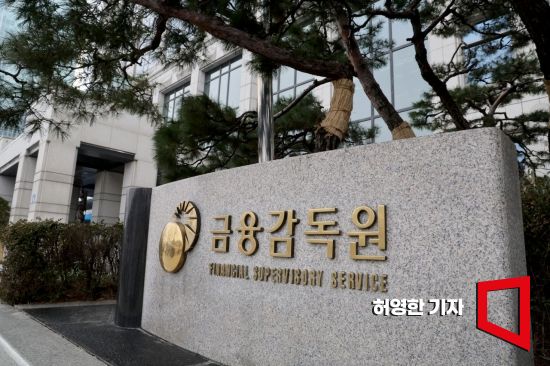
According to the Financial Supervisory Service on the 22nd, as of the end of the third quarter last year, the total overseas real estate alternative investment by the financial sector was 56.4 trillion KRW, with insurance companies investing the most at 31.9 trillion KRW, followed by banks with 10.1 trillion KRW. Securities invested 8.4 trillion KRW, mutual finance 3.7 trillion KRW, specialized credit finance companies 2.2 trillion KRW, and savings banks about 100 billion KRW.
By region, North American overseas real estate investment accounted for the largest share at 61.1%, or 34.5 trillion KRW, followed by Europe with 10.8 trillion KRW and Asia with 4.4 trillion KRW. By maturity, 12.7 trillion KRW is due by the end of this year, and 43.7 trillion KRW by 2030. Single-asset investments, which invest in individual real estate for development and leasing purposes, amounted to 35.8 trillion KRW, while investments in multiple real estate assets, mainly through blind funds and fund-of-funds, were about 20.5 trillion KRW.
Furthermore, assets that triggered events of default on maturity benefits due to unpaid interest and principal to senior creditors or failure to meet LTV (Loan-to-Value) conditions due to asset value decline were 2.31 trillion KRW as of the third quarter last year, accounting for 6.46% of the single project amount of 35.8 trillion KRW.
By type, the default rate was higher in mixed-use facilities and commercial property investments. Among the 4.2 trillion KRW invested by financial companies in mixed-use facilities, 19.09% experienced such events, and 9.22% of the 1.3 trillion KRW invested in commercial properties also showed the same issue.
Regarding this, Kim Byung-chil, Deputy Director of the Financial Supervisory Service, stated, "There were 28 reported projects with events of default on maturity benefits, and three additional projects have been identified since September last year." He added, "Although the investment scale by financial companies is 2.46 trillion KRW, it does not mean a total loss. It is possible to resolve the default through adjustments of loan conditions among investors, maturity extensions, or changes in major creditors. Even in asset sales, full or partial recovery of investment is possible depending on the distribution priority."
The Financial Supervisory Service plans to induce appropriate loss recognition and sufficient loss absorption capacity in preparation for the potential deterioration of the overseas real estate market, and to inspect risk management practices such as securing a database (DB) by project and investment, reflecting losses by financial companies, and provisioning reserves.
Deputy Director Kim said, "For assets with loss and default concerns, we will operate a rapid reporting system linked with financial companies and the Financial Supervisory Service’s overseas offices to strengthen real-time monitoring." He added, "To strengthen risk management by financial companies and assets, we will proactively identify and manage financial companies’ response plans for assets nearing maturity."
© The Asia Business Daily(www.asiae.co.kr). All rights reserved.
![Clutching a Stolen Dior Bag, Saying "I Hate Being Poor but Real"... The Grotesque Con of a "Human Knockoff" [Slate]](https://cwcontent.asiae.co.kr/asiaresize/183/2026021902243444107_1771435474.jpg)
















