Designated Along with Six Items Including 'Cheonsuwonmyeong Cheongdongbuk'
"Essential Materials for Research on Late Joseon Social and Economic History"
The government-compiled geographical record from the late Joseon period, Yeojidoseo (輿地圖書), is now managed as a nationally designated cultural heritage treasure. On the 21st, the Cultural Heritage Administration announced that it has designated it as a treasure along with 'Chilgok Songlimsa Stone Seated Samjang Bosal Statue and Wooden Ten Kings Statues Set (漆谷 松林寺 石造三藏菩薩坐像 및 木造十王像 一括)', 'Cheonsuwon-myeong Bronze Drum (薦壽院銘 金鼓)', 'Yenyeom Mita Doryang Chambeop Volumes 6?10 (禮念彌陀道場懺法 卷六~十)', 'Hyeopju Seokga Yeorae Seongdogi (夾註釋迦如來成道記)', and 'Geumgang Banya Gyeong Solron Chanyo Joyeonrok (金剛般若經疏論纂要助顯錄)'. They plan to systematically preserve and utilize these in cooperation with the relevant local governments and owners.
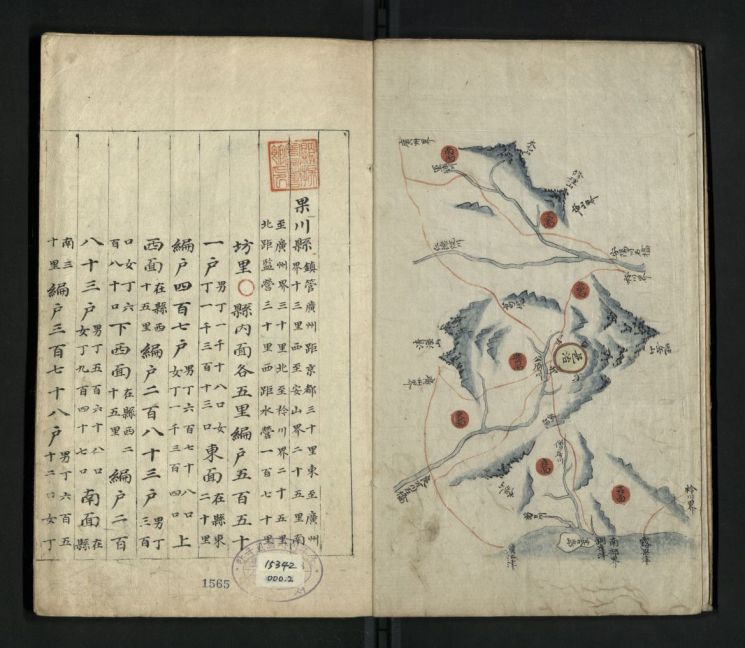
The Yeojidoseo held at the Korean Church History Research Institute is a geographical record compiled during King Yeongjo's reign in Joseon by gathering materials created by various counties and prefectures. Since it was compiled from materials made by each county and prefecture, the contents are diverse and not uniform. The production period is estimated to be around the 1760s. The Cultural Heritage Administration stated, "Based on the household and land tax data in each town record, it is judged to be based on the 35th year of King Yeongjo's reign (1759)."
Unlike other geographical records, Yeojidoseo includes maps before the county and prefecture records. It contains maps of six provinces excluding Gyeonggi-do and Jeolla-do, twelve Yeong and Jin maps, and 296 county and prefecture maps. These are hand-colored manuscripts drawn over one or two pages. Although the format, composition, and coloring vary, distances and directions are relatively accurate.
The Cultural Heritage Administration explained, "The contents cover thirty-eight categories such as county names, mountains and rivers, surnames, customs, and granaries, expanding beyond earlier geographical records like Dongguk Yeoji Seungnam. The addition of socio-economic items such as household and road data is a notable feature." They added, "It is an essential resource for research on the social and economic history, as well as historical and geographical studies of the late Joseon period, with outstanding academic value. As the only extant copy, the relatively well-preserved state of the original 55 volumes at the time of compilation gives it rarity and completeness."
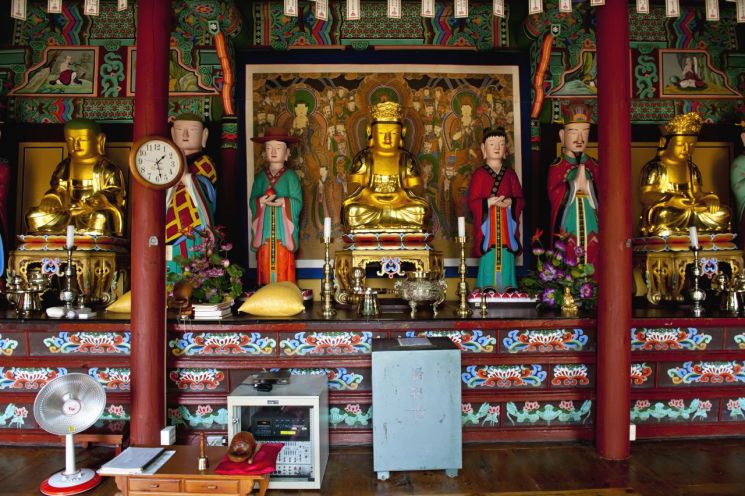
The Chilgok Songlimsa Stone Seated Samjang Bosal Statue and Wooden Ten Kings Statues Set were completed in 1665 (the 6th year of King Hyeonjong's reign) by sculptor monks Seungil and Seongjo and enshrined in Songlimsa's Myeongbujeon Hall. These statues represent some of the deities of the ten directions who received offerings during the Surukjae, a Buddhist ritual for the dead held at Joseon temples. The Samjang Bosal concept encompasses the heavens (Cheonjang Bosal), the earth (Jiji Bosal), and hell (Jijang Bosal). While usually depicted in Buddhist paintings, the Songlimsa Samjang Bosal statues are uniquely made as sculptures in Korea. The Cultural Heritage Administration noted, "From the restoration dedication inscription found on the Cheonjang Bosal statue, the creation period, artisans, and the fact of restoration around 1753 are confirmed. The statues retain their original appearance without significant damage or loss, making them highly valuable as historical materials."
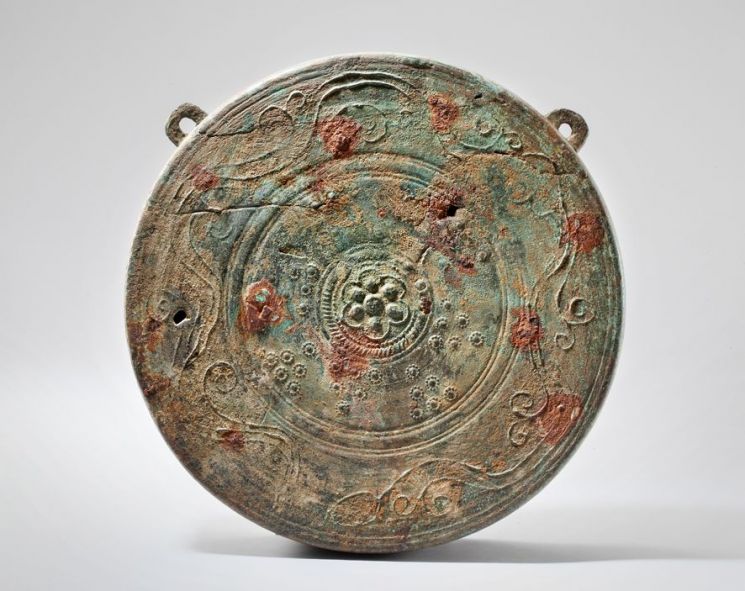
The Cheonsuwon-myeong Bronze Drum at the Onyang Folk Museum was made in 1162 (the 16th year of King Uijong's reign) during the Goryeo dynasty. Its surface is divided by thick and thin lines into three sections, each decorated with patterns. The central section features flower stamens stacked in triangular shapes, repeated in triangle and inverted triangle forms. The Cultural Heritage Administration explained, "This is the first case confirmed in a Goryeo bronze drum. The inscriptions on the side of the body include the production date, weight, temple name, and supervising monk, making it an important chronological resource from the mid-12th century."
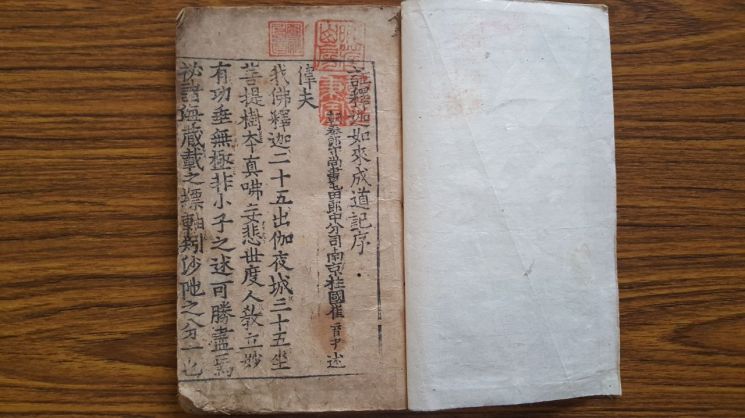
Hyeopju Seokga Yeorae Seongdogi is a commentary written by Master Hyeo of the Song dynasty to explain the Seokga Yeorae Seongdogi by Wangbal of the Tang dynasty in an easy-to-understand manner. It contains the life story of Shakyamuni from birth to nirvana. The Cultural Heritage Administration stated, "Publication information shows that the woodblocks carved in the 40th year of King Gojong of Goryeo (1253) were re-carved and printed by the Bunsadaejang Dogam. This confirms the operation and role changes of the Bunsadaejang Dogam in the mid-13th century." The Bunsadaejang Dogam was a temporary organization established around 1236 to share the workload of creating the Tripitaka Koreana.
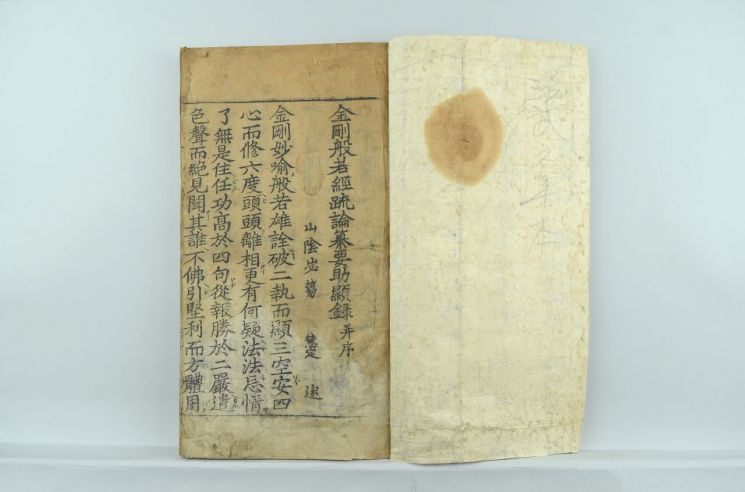
Geumgang Banya Gyeong Solron Chanyo Joyeonrok is a book by the Southern Song monk Hyejeong that explains Kum?raj?va's Korean translation of the Diamond Sutra in an easy-to-understand way. The Diamond Sutra, abbreviated as Geumgang Banya Gyeong or Geumgang Gyeong, is a widely revered Buddhist scripture in Korea. The Cultural Heritage Administration emphasized, "The colophon and publication records confirm that it was produced in 1373 (the 22nd year of King Gongmin of Goryeo) under the leadership of Eunbong Hyenyeong. It was created earlier than the previously designated treasure edition and is the only extant copy confirmed in Korea to date."
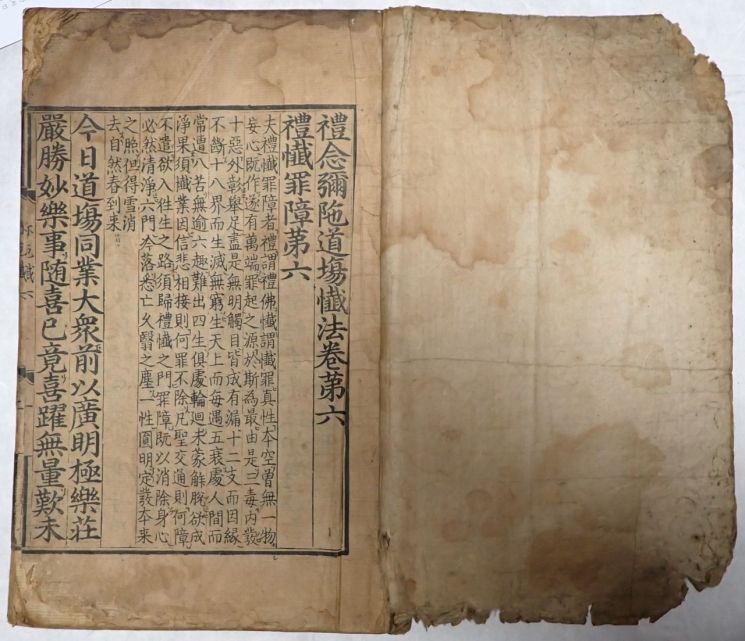
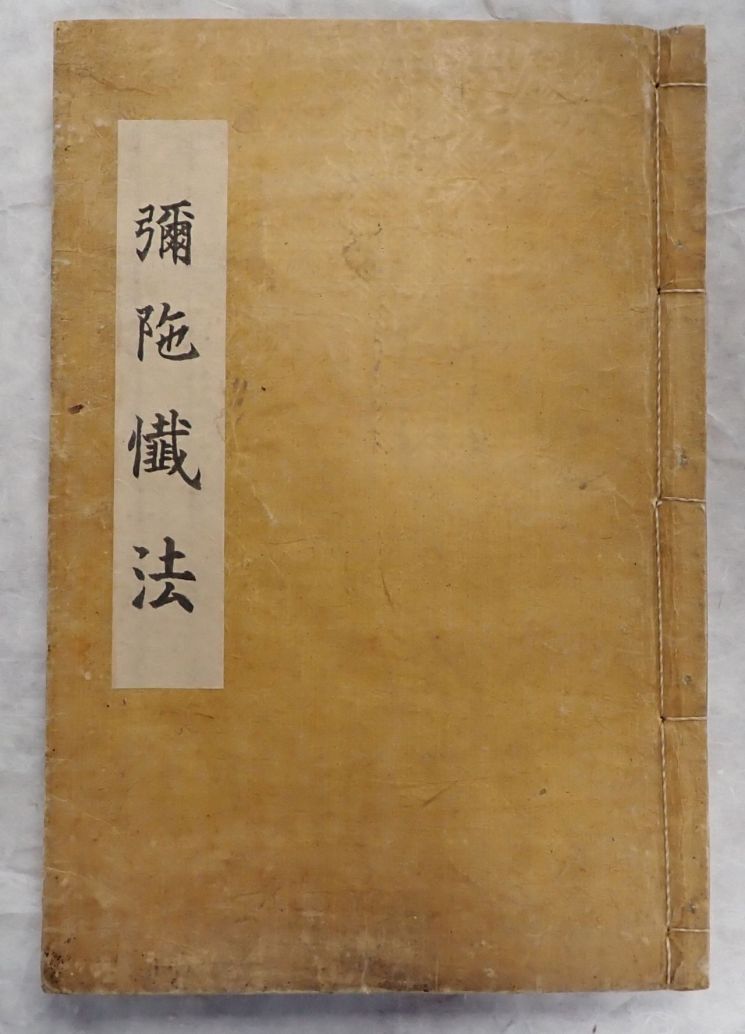
Yenyeom Mita Doryang Chambeop Volumes 6?10, called Jeongto Mun (淨土文), is a Buddhist ritual book containing thirteen ritual procedures performed during repentance and chanting to pray for rebirth in the Pure Land. It is a woodblock print edition from 1474 (the 5th year of King Seongjong's reign) produced by the Ganggyeong Dogam, a temporary organization established for Buddhist scripture translation and publication. It predates the Haeinsa edition, which is also designated as a treasure.
The Seongwangsa collection includes a colophon by Deokgok Hakjo printed with the initial casting gap-in characters (初鑄甲寅字), and the Chongmyeongsa collection contains a colophon by Kim Suon. When Queen Gonghye, consort of King Seongjong, passed away, Queen Jeonghui, consort of King Sejo and grandmother-in-law, commissioned the Ganggyeong Dogam to produce this edition to pray for her soul. The Cultural Heritage Administration commented, "This is a valuable resource that offers insight into the history and printing culture of the Joseon Seongjong period."
© The Asia Business Daily(www.asiae.co.kr). All rights reserved.
![Clutching a Stolen Dior Bag, Saying "I Hate Being Poor but Real"... The Grotesque Con of a "Human Knockoff" [Slate]](https://cwcontent.asiae.co.kr/asiaresize/183/2026021902243444107_1771435474.jpg)


















