Corporate Governance Forum Seminar
Culture of Face-Saving as a Factor for Institutional Establishment
A claim has emerged that the successful establishment of Japan's 'corporate value-up' system to resolve stock market undervaluation was supported by Japan's 'culture of valuing face,' 'characteristics of companies that follow well as latecomers,' and the 'influence of the Tokyo Stock Exchange (TSE).' However, advice has also been given that strong regulations must be implemented in parallel to suit Korean corporate culture for the system to be successfully established.
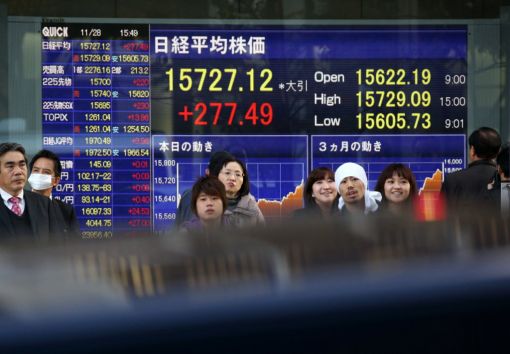 On the 28th of last month, the Nikkei 225 index at the Tokyo Stock Exchange in Japan soared to its highest level in six years due to the weak yen.
On the 19th, Ryushiro Kodaira, a senior reporter for Japan's Nikkei newspaper, revealed this at a seminar titled 'Learning from Japan's Corporate Governance Reform' hosted by the Korea Governance Forum. Reporter Kodaira is an expert who has covered the financial market for 30 years at the Nikkei newspaper and has authored books such as 'Global Corporate Governance,' 'Asian Capitalism,' and 'Understanding ESG.'
Reporter Kodaira mentioned three factors that contributed to the success of the TSE's PBR reform measures: the Japanese people's emphasis on face, the culture of faithfully following exemplary cases as latecomers, and the enormous influence of the exchange.
He said, "In Japan, when a company in the same industry announces a good plan to enhance shareholder value, other companies in the same industry follow suit. Otherwise, their face would be damaged," adding, "The stock exchange captures these corporate practices well and encourages (corporate value enhancement)."
He continued, "Japanese companies are better at following very good forms and best practices rather than expressing their own opinions," and "The Tokyo Stock Exchange has presented exemplary cases and good templates well." The culture of valuing face in Japan led Japanese companies to competitively propose and follow shareholder value enhancement measures.
Regarding the Tokyo Stock Exchange, which led the 'PBR reform,' he said, "It holds tremendous influence in the Japanese market and voices opinions alongside financial authorities."
Reporter Kodaira explained that due to the TSE's efforts and companies faithfully following them, companies like Mitsubishi communicate with the market through appointing a Chief Stakeholder Engagement Officer (CSEO) and creating a separate webpage for shareholders.
He added, "Thanks to Japan's cultural characteristics, the stock market was able to reform quickly," and "Many people follow authoritative institutions like the Tokyo Stock Exchange well, and I think Korea is similar in this regard."
Namwoo Lee, chairman of the Korea Corporate Governance Forum, stated, "Korea does not have Japan's culture of valuing face, and the status of the Korea Exchange is not comparable to the Tokyo Stock Exchange, so the government's proposed ‘corporate value-up program’ must be sophisticated," adding, "Since the Tokyo Stock Exchange received and reflected feedback through interviews with 90 major long-term investors, we also need to listen to the opinions of companies, institutions, and foreign investors."
Reporter Kodaira emphasized, "If the culture of valuing face and the authority of the exchange do not work in Korea, formalizing everything and embedding it into corporate culture might be an effective strategy," and "If stricter regulations and rules are considered more effective in Korea, the Korea Exchange should establish stricter and clearer regulations and apply them to listed companies."
© The Asia Business Daily(www.asiae.co.kr). All rights reserved.
![Clutching a Stolen Dior Bag, Saying "I Hate Being Poor but Real"... The Grotesque Con of a "Human Knockoff" [Slate]](https://cwcontent.asiae.co.kr/asiaresize/183/2026021902243444107_1771435474.jpg)














