Rebound in Chinese Beer Imports in January This Year
"Restoring Trust After Hygiene Controversy Is Key"
“Until the end of last year, there were hardly any tables ordering Qingdao beer, but since the new year, it seems that some customers have started to order it again occasionally.”
Park Jin-woo (pseudonym), who has been running a lamb skewer specialty restaurant in Gangseo-gu, Seoul for nearly 10 years, still feels dizzy when thinking about last year’s end. In October last year, the so-called “urine beer” controversy surrounding the Chinese beer 'Qingdao (靑島)' erupted, and the fallout even affected Park’s restaurant. He said, “After the incident, I thought it was unlikely since there was no problem with the lamb skewers, but the customers’ thoughts were different. The year-end is a time with many gatherings and company dinners, when sales should be at their peak, but last year sales actually dropped by more than 30-40%.” He added, “Fortunately, the worst period has passed, and sales are returning to normal.”
The situation of Lee Yong-jin (pseudonym), who runs a lamb skewer specialty restaurant in Mapo-gu, Seoul, was not much different. He said, “Before the incident, Qingdao accounted for 70-80% of total beer sales, but now domestic beers have replaced that share, with Qingdao and Harbin each making up about 10%. Some customers still order Qingdao, but it’s not like before, so we haven’t placed separate orders since the incident and are just using up existing stock.”
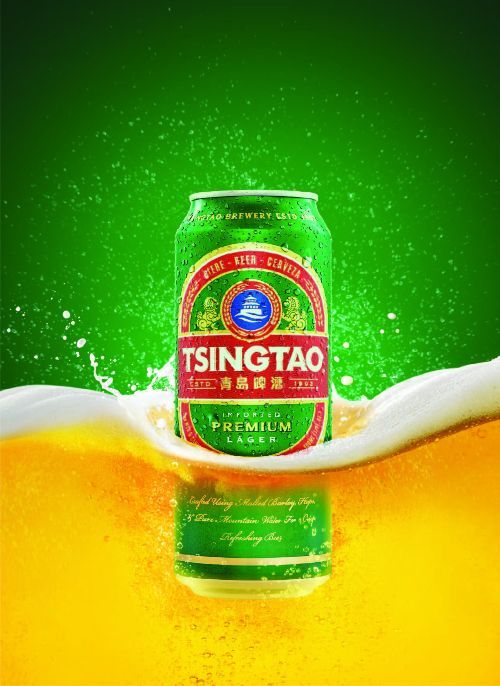
After facing a crisis last year due to the “urine terror” controversy, Chinese beer is now making a comeback in the new year. Although still modest compared to its peak when it was the top imported beer, imports are gradually recovering after hitting rock bottom.
According to customs import-export trade statistics on the 16th, the import volume of Chinese beer into Korea last month was 1,007 tons. This is about one-fifth of the volume during the same period last year (5,077 tons). Although it shrank to about 20% compared to early last year, considering that imports dropped sharply from 2,281 tons in October last year to 492 tons just one month after the urine beer incident, this indicates a recovery trend. Import value is also recovering. Last month, the import value of Chinese beer was $840,000 (about 1.1 billion KRW), which is one-fifth of the same period last year ($4.06 million), but it is moving away from the bottom recorded in November last year ($370,000).
Chinese beer was suddenly shunned by domestic consumers in October last year when a hygiene issue arose at the Qingdao brewery in Shandong Province, one of its flagship beers. Earlier, a video circulated on Chinese social media platform Weibo showing a man wearing work clothes and a helmet entering a malt storage area at Qingdao’s third factory in Pingdu City, Shandong Province, and apparently urinating there. This video spread domestically as well, prompting consumers to quickly cut ties with the brand.
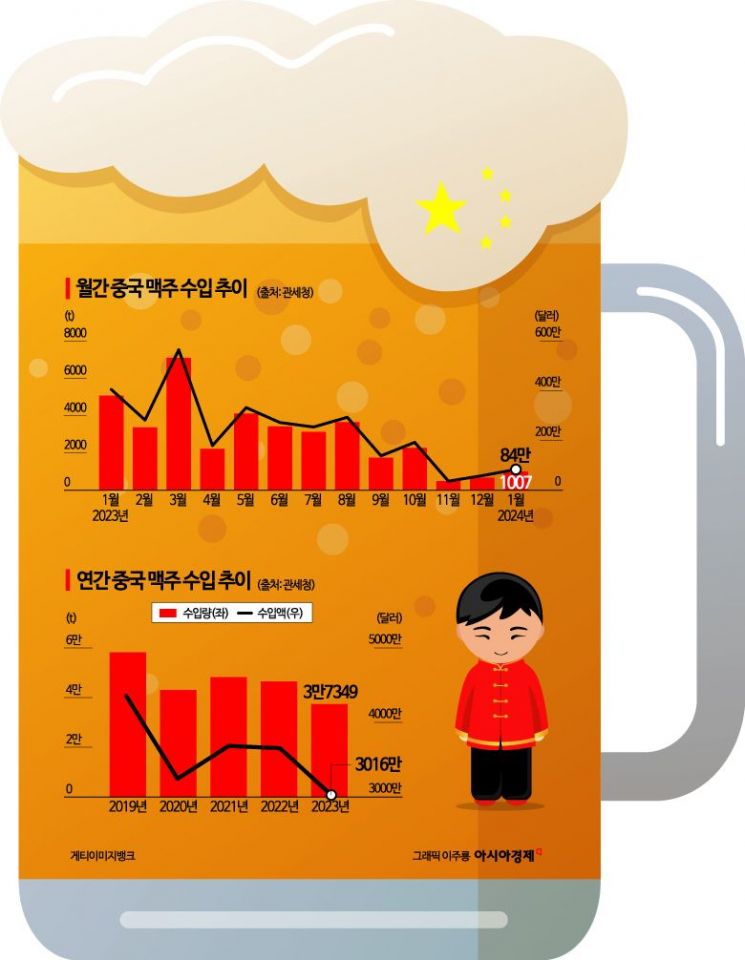
As domestic consumers boycotted, Chinese beer, which had enjoyed peak popularity, experienced a sudden fall. Chinese beer, which recorded 46,504 tons in imports in 2022 and ranked first among imported beers, maintained the top spot until early last year. However, combined with the rising popularity of Japanese beer represented by Asahi draft beer cans and the beer urination video scandal, imports fell to the 30,000-ton level for the first time in seven years since 2016 (36,159 tons), losing the top spot to Japanese beer.
As Qingdao faced the threat of being withdrawn from the domestic market, its Korean importer, BeerK, was also forced to worry about its survival. Since most of BeerK’s sales come from Qingdao, the company conducted restructuring last year, including offering voluntary retirement to about 120 employees due to the sharp drop in Qingdao sales. BeerK had recorded an operating loss of 2.1 billion KRW in 2022, and considering the poor sales performance in the second half of last year due to adverse events, a second consecutive year of losses seems inevitable.
After completing year-end restructuring, BeerK recently launched a limited edition beer, the “2024 Gapjin Year Bok Beer Edition,” signaling an attempt to turn the tide. A BeerK official said, “As a small independent importer, we faced great difficulties due to the incident. At the beginning of the issue, some consumers requested refunds, which we fully processed, but now all related matters have been resolved.” He added, “This year, we plan to work hard to restore the brand’s trust and image through various marketing activities.”
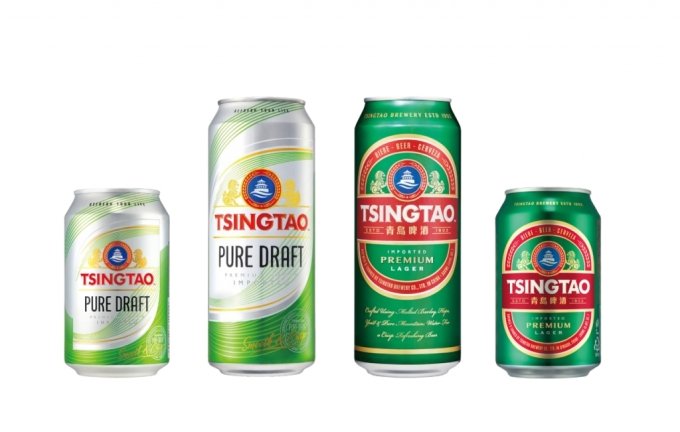
While Chinese beer has hit bottom and is rebounding, opinions in the industry are divided on its future prospects in the domestic market. A liquor industry insider said, “Because the overall perception of Chinese imported food products is not good, it will be difficult to regain the same popularity as before. The beer market is generally weak, and the abundance of alternatives is also a negative factor for Chinese beer.” On the other hand, another insider said, “Negative issues tend to fade over time. Although it is Chinese, it is hard to deny that Qingdao has product competitiveness, so I expect a quick recovery.”
Meanwhile, the top imported beer in Korea for the first month of the new year was Japanese beer, which showed strong performance last year. Last month, 5,613 tons of Japanese beer worth $4.77 million (about 650 million KRW) were imported, more than double the 2,553 tons and $2 million recorded in the same period a year ago. Following Japan, American beer ranked second with 1,973 tons imported and $1.97 million in import value, while Chinese beer ranked third.
© The Asia Business Daily(www.asiae.co.kr). All rights reserved.
![Clutching a Stolen Dior Bag, Saying "I Hate Being Poor but Real"... The Grotesque Con of a "Human Knockoff" [Slate]](https://cwcontent.asiae.co.kr/asiaresize/183/2026021902243444107_1771435474.jpg)


















